


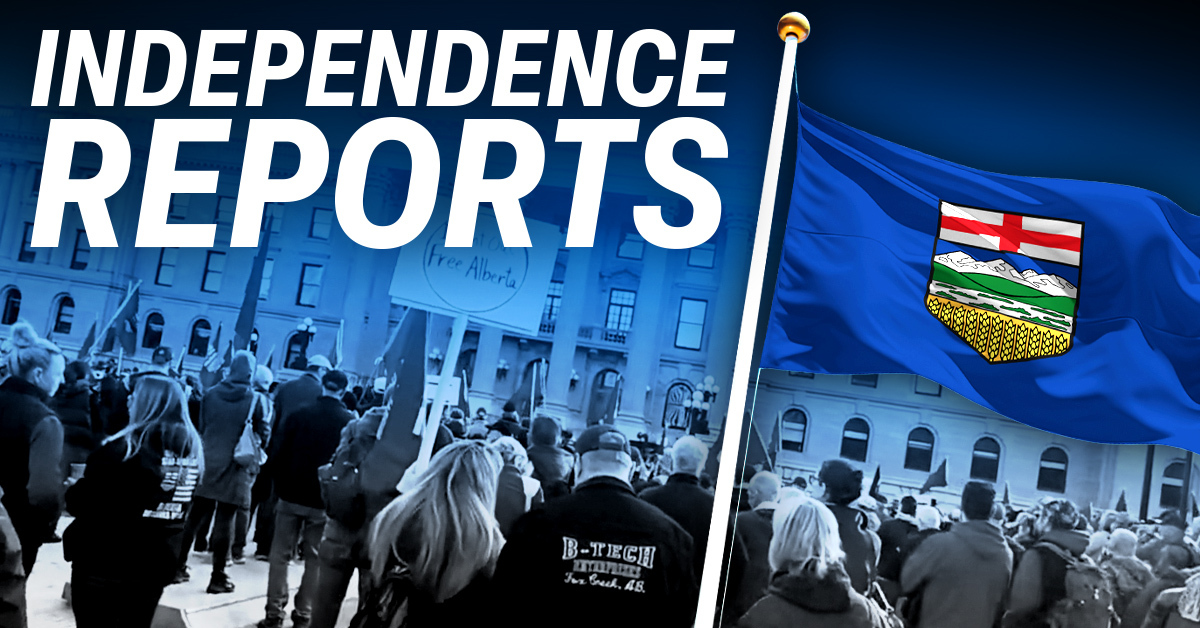

Fact Check: Have more than 100 countries emerged since Alberta became a province?
Defining an entirely “new” country depends on the historical definition being used. However, under any reasonable measure, well over 100 currently recognized countries obtained independence or assumed their present sovereign form after 1905.


Let Alberta Decide's Keith Wilson posted on X that more than 100 new countries have emerged since Alberta became a province in 1905.
The claim is accurate.
When Alberta entered Confederation on September 1, 1905, much of Africa, Asia, the Caribbean and the Middle East remained under European colonial control. Several present-day European countries were also governed as parts of larger empires.
The United Nations had only 51 founding members when it was established in 1945. Today, it has 193 member states, a net increase of 142 in just over 80 years.
UN membership is not a perfect measurement of newly created countries. Some countries existed before joining the organization, while others emerged through the division, dissolution or reorganization of existing states. But the increase still demonstrates how dramatically the political map has changed since Alberta became a province.
The United Nations reports that more than 80 former colonies have gained independence since 1945 alone. That number does not include all the countries created through the collapse of the Soviet Union, Yugoslavia and Czechoslovakia.
The breakup of the Soviet Union produced 15 independent states, including Ukraine, Lithuania, Latvia, Estonia and Kazakhstan. Yugoslavia’s dissolution produced several more, while Czechoslovakia peacefully divided into the Czech Republic and Slovakia in 1993.
Other countries that became independent after Alberta entered Confederation include Norway, Finland, Ireland, Poland, India, Pakistan, Israel, Singapore, Bangladesh, Namibia, Eritrea, Timor-Leste and South Sudan.
Since Alberta became a province in 1905, over 100 new countries have emerged around the world.
— Keith Wilson (@ikwilson) September 3, 2026
The political map is not fixed.
Nations and political arrangements change when people conclude that a different constitutional future better serves their interests. pic.twitter.com/9NqFo57zjH
Some were restored after foreign occupation. Others separated from colonial empires, federations or neighbouring states. A few emerged through negotiated and peaceful constitutional processes, while others followed conflict.
Whether each qualifies as entirely “new” depends on the historical definition being used. However, under any reasonable measure, well over 100 currently recognized countries obtained independence or assumed their present sovereign form after 1905.
That history does not determine whether Alberta should become independent. It does disprove the suggestion that borders and constitutional arrangements are permanent.
The political map is not fixed. It never has been.
Sheila Gunn Reid
Chief Reporter
Sheila Gunn Reid is the Editor-in-Chief, Alberta Bureau Chief, member of the board of directors, and host of The Gunn Show at Rebel News. Sheila also serves as President of the Independent Press Gallery of Canada. A mother of three and longtime conservative activist, Sheila is the author of bestselling books, including her most recent release, Independence Blueprint: What Alberta Can Learn From Quebec.
https://mybook.to/sheilaFeatured Stories


14:10

15:31

