
Reconciliation Overreach: Help Me Follow the Money and Find the Truth
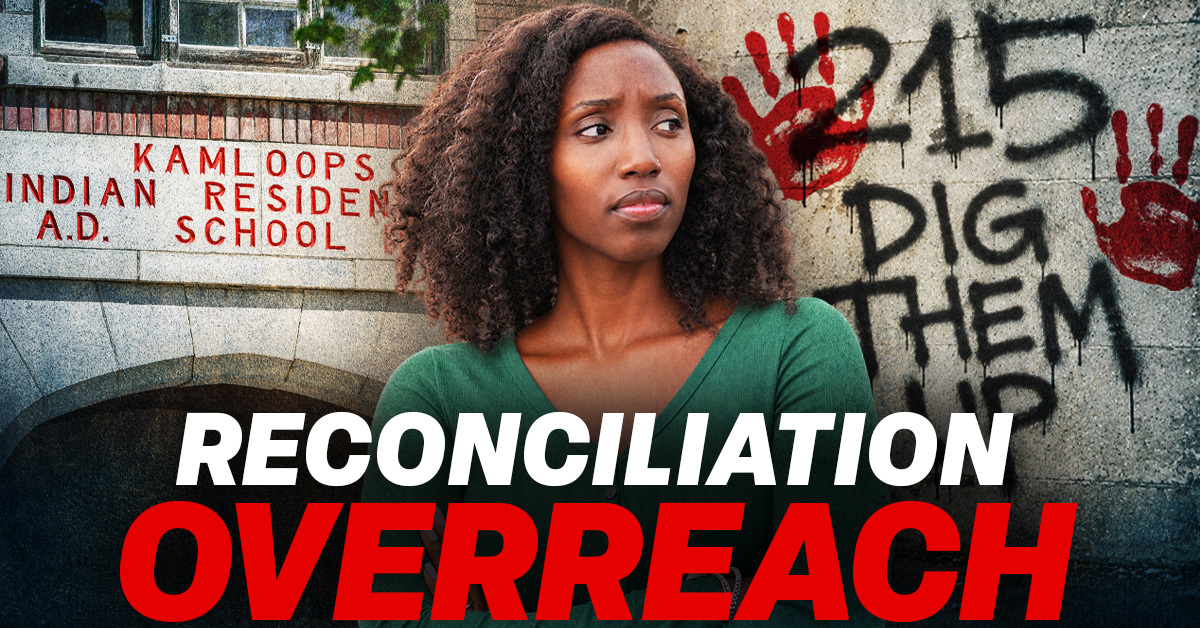
After backlash for scrutinizing the Kamloops band’s still-unproven 215 unmarked-grave claim, Drea Humphrey doubles down on band-government transparency, launching an investigation into the reconciliation industry to spotlight the modern suffering Indigenous Canadians face today and seek change.

Truth matters. So does accountability. So lets demand it.
For five years, I've investigated the claims surrounding potential unmarked graves at Canada's former residential schools.
I've never denied the child harms tied to that system. But acknowledging yesterday's wrongs should never require Canadians to stop asking questions or weighing the evidence about claims being made today.
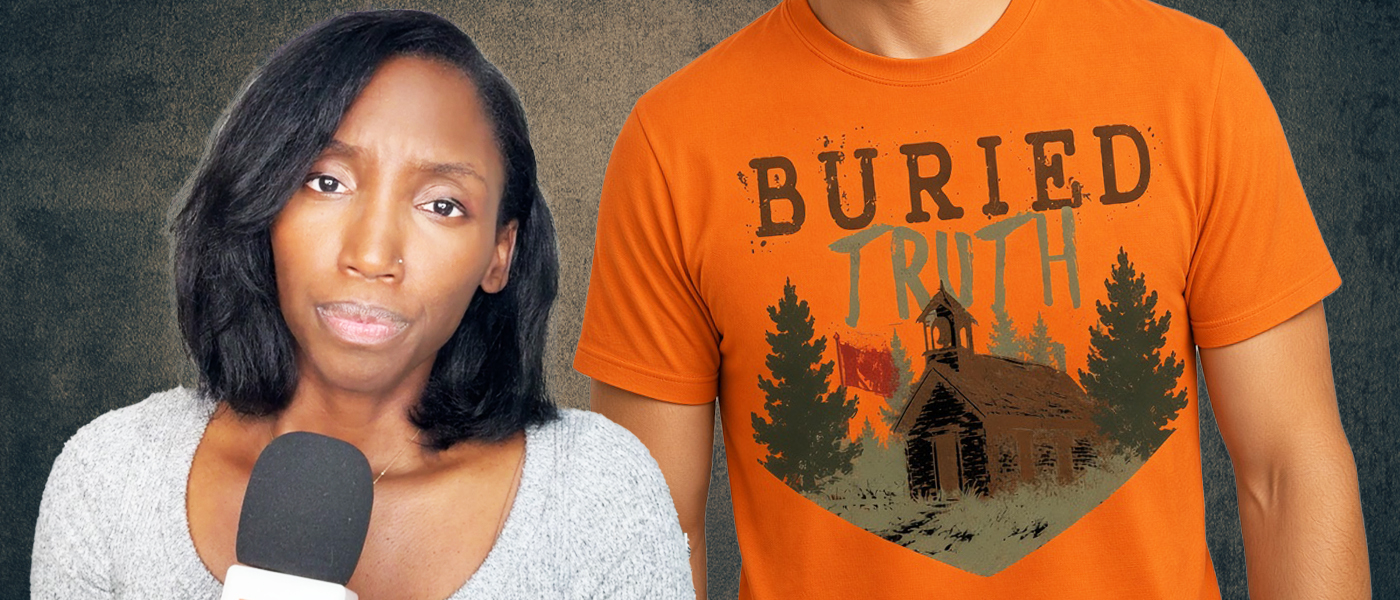
I learned that lesson again after Rebel News released our alternative Orange Shirts ahead of Truth and Reconciliation Day.
One shirt challenged the still-unproven Kamloops 2021 claim that many believe to be fact: that ground-penetrating radar had located the remains of 215 children, which the band itself later admits was "200 anomalies."
My reporting has repeatedly called for the Tk'emlúps te Secwépemc band government to follow through on its previously announced plans for further investigation including excavation. Plans that Canadian taxpayers paid the band at least $12.1 million to help do, considering to "dig deeper" as one of the shirts calls for is the only way to provide Canadians, including those families who went to the school, with answers.
The response was extraordinary.
I was branded a "residential-school denier," falsely accused of mocking dead children and bombarded with hateful messages, including death threats — but I won't be intimidated into silence.
We need more accountability, not less.
I scrutinize Ottawa and British Columbian politicians who aren't transparent or fail to put Canadians first — why should any band government be exempt? And why aren't journalists spending more time investigating and exposing potential causes behind the very real and disproportionate suffering of Indigenous Canadians today?
Did you know that despite taxpayers paying the “Indigenous Priorities and Reconciliation” industry billions of dollars per year — a whopping $33.1 billion in 2024–25 alone — Indigenous Canadians are six times more likely to be murdered than non-Indigenous Canadians.
And according to data from 2014 to 2021, 86% of people accused of killing Indigenous women and girls and 85% of those accused of killing men and boys were, themselves, Indigenous.
Are the Gladue Principles — which require courts to consider an Indigenous offender's unique circumstances, often contributing to lesser sentences for Indigenous offenders including violent ones — reducing the modern-day harms suffered by Indigenous victims and their loved ones today?
Indigenous children are in foster care at more than 14 times the rate of non-Indigenous children. And the disparities don't stop there; 53.7% of children in foster care are Indigenous, despite Indigenous children making up just 7.6% of Canadian children.
Another 8.7% of Indigenous children and youth are diagnosed with Fetal Alcohol Spectrum Disorder compared to just 0.5% in the general population.
Indigenous Canadians report childhood sexual violence at more than 2.5 times the non-Indigenous rate — 16% versus 6.1%.
And Indigenous Canadians are nearly twice as likely to live in low-income households and nearly three times as likely to live in homes in need of major repair as non-Indigenous Canadians.
But there are allegations that for many on reserve, their chiefs and councils — managing so much of the reconciliation funding — are not living the same way. Why is that?
These harms are not relics of the past; they are happening now. So help me speak up about it.
Do you have information the public should know about band government, federal funding, housing, child welfare, leadership spending or an unmarked-grave claim?
Have your property or business rights, freedom of movement or access to Crown land been affected by government decisions made in the name of reconciliation?
Have you lost a loved one to violence and believe Indigenous-specific sentencing principles or other laws prevented justice from being properly served?
Or maybe your community is a success story. Has it overcome serious challenges, built opportunity and found solutions that other Indigenous communities could learn from?
I want to hear those stories too.
Good or bad, if you have information Canadians deserve to know, send me your tip at ReconciliationOverreach.com.
Because accountability isn't anti-reconciliation. And journalistic scrutiny of how billions of dollars and decades of policy are impacting Indigenous Canadians today isn't anti-truth.
It's the pursuit of it.
Drea Humphrey
B.C. Bureau Chief
Based in British Columbia, Drea Humphrey reports on Western Canada for Rebel News. Drea’s reporting is not afraid to challenge political correctness, or ask the tough questions that mainstream media tends to avoid.
Featured Stories
12:29