

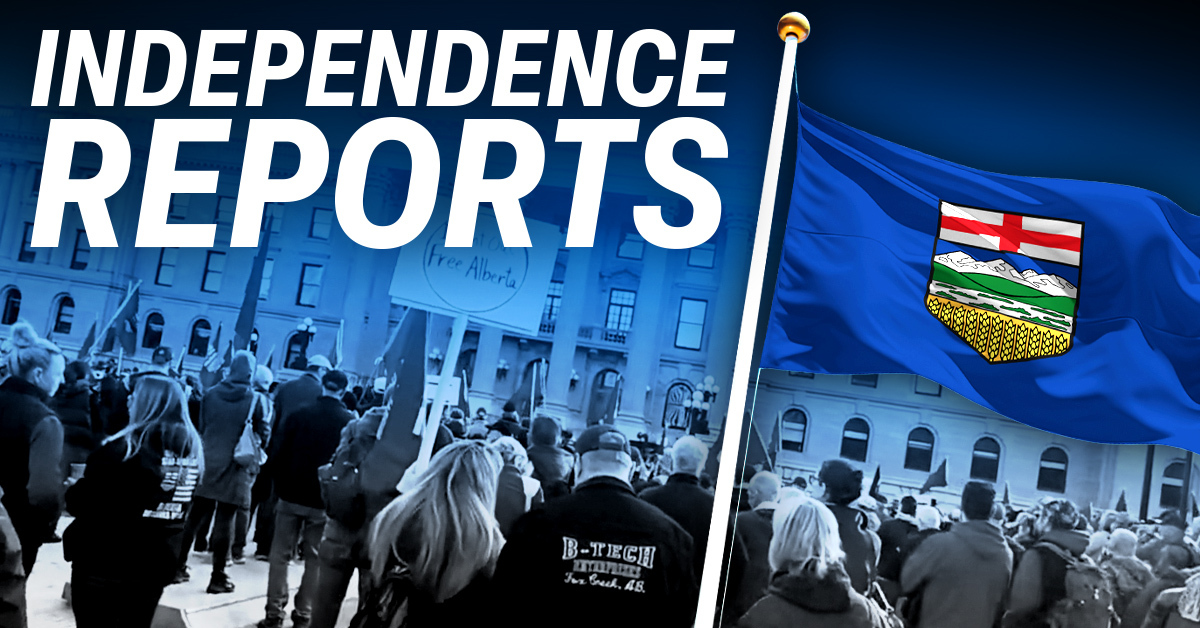

Alberta Fact Check: Is Alberta's referendum just a 'bluff'?
Mark Carney is facing backlash from some Albertans after labelling the province's independence movement as a 'dangerous bluff.'


Prime Minister Mark Carney's reported description of Alberta's referendum movement as a "dangerous bluff" has struck a nerve with many Albertans because it appears to dismiss, rather than address, the grievances driving the independence movement.
Calling Alberta's democratic aspirations a bluff suggests that the concerns behind them are not serious, despite years of polling showing growing alienation in the province. Support for Alberta independence has consistently hovered well above the fringe level, with some recent polls putting it in the mid-30s overall and much higher among conservative voters.
More importantly, the referendum itself is not a bluff. It is a lawful process established under Alberta legislation. Hundreds of thousands of Albertans signed petitions to force the issue onto the political agenda. Elections Alberta approved the process, and voters will ultimately decide the question at the ballot box
Canada has been down this road before. Quebec held two sovereignty referendums, in 1980 and 1995, and neither was dismissed by Ottawa as mere political theatre. Following the 1995 vote, the Supreme Court of Canada ruled that a clear vote in favour of secession would create a constitutional obligation to negotiate. The Court recognized that secessionist movements can arise from genuine political grievances and that those grievances must be addressed democratically.
Opponents of Alberta independence are perfectly entitled to argue that leaving Canada would be a mistake. But characterizing Alberta's aspirations as a "bluff" risks sending a different message entirely: that Ottawa doesn't believe Alberta's concerns are legitimate enough even to warrant a serious conversation.
A Prime Minister who responds to Alberta’s lawful democratic aspirations with warnings and scare tactics is not defending democracy.
— Keith Wilson (@ikwilson) June 28, 2026
He is revealing Ottawa’s attitude toward Alberta: pay, obey, and do not ask difficult questions.
That is precisely why Albertans need a vote and… https://t.co/hfaukNFwNK
For many Albertans, that attitude is precisely the problem. They argue that when the federal government responds to a lawful democratic movement with warnings and dismissive rhetoric instead of engagement, it reinforces the perception that Alberta is expected to pay, comply, and stop asking difficult questions.
Whether Albertans ultimately vote to stay in Canada or pursue independence is for voters to decide. But dismissing the movement as a bluff may only deepen the sense of alienation that gave rise to it in the first place.
Sheila Gunn Reid
Chief Reporter
Sheila Gunn Reid is the Editor-in-Chief, Alberta Bureau Chief, member of the board of directors, and host of The Gunn Show at Rebel News. Sheila also serves as President of the Independent Press Gallery of Canada. A mother of three and longtime conservative activist, Sheila is the author of bestselling books, including her most recent release, Independence Blueprint: What Alberta Can Learn From Quebec.
https://mybook.to/sheilaFeatured Stories

18:07


COMMENTS
-
Bruce Atchison commented 2026-07-01 21:23:55 -0400Ottawa has always disparaged Alberta and the west. They’re stuck in 1867 so they think of the west as a colony to be exploited. Separation is Alberta’s only hope.
-
 Matthew Beatty commented 2026-07-01 15:53:12 -0400Without a “yes” vote in this coming November referendum questions, Alberta would and will loose critical political leverage in its negotiations with Mark Carney.
Notice, that I just mention Mark Carney, because the current oil carbon taxes only benefit his companies.
It benefits no one in Canada, making it crystal clear, Carney 100% , Canada 0.
Like I’ve previously stated, any Union or any political affiliation doesn’t matter, a yes vote will make everyone in Alberta a winner.
Let’s not loose this advantage, a win , win for All Albertans.
I can’t make this more simple. -
Bernhard Jatzeck commented 2026-06-30 13:04:34 -0400Bluffing is a common tactic in poker. Carney, however, doesn’t appear willing to call Alberta’s bluff, making one think that he doesn’t have a good hand.

