
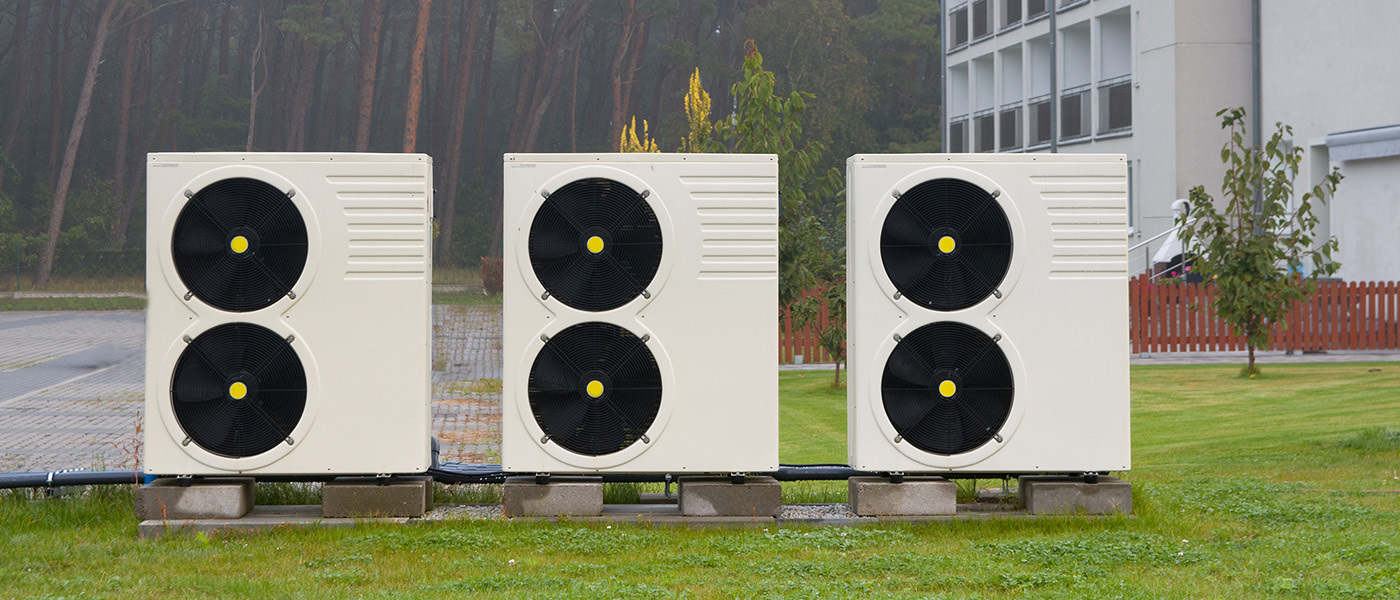
Government-controlled thermostats are on their way to Britain
Britain's electricity supply is under growing strain in winter cold snaps precisely because net zero policy has pushed demand from gas onto electricity, while supply becomes more dependent on wind and solar.

BECOME A MEMBER

Article by Rebel News staff
Tonight, on The Ezra Levant Show: Imagine a government with the power to turn off your air conditioning in July, or your heat in January. Well, that future is already here.
According to a report in the Daily Telegraph, by the end of next year Britain's electricity suppliers will be able to remotely turn down heat pump central heating whenever the grid comes under strain. The instructions will come from a quango — a quasi-autonomous non-governmental organization — overseen by the Department for Energy Security and Net Zero (DESNZ), the department Ed Miliband has run since Labour took power.
We've looked at what a heat pump actually is, and the honest answer is: not much. It isn't a proper furnace, and it isn't a proper air conditioner. It's a subsidized, government-favoured appliance that performs poorly in real winter cold — utility company videos themselves note it starts losing effectiveness below minus twenty degrees — and that very few people would buy without a taxpayer-funded rebate worth thousands of dollars. It exists because governments have decided it should exist, not because consumers are asking for it.
Now Britain wants to make sure that even the heat pumps that are installed can be dialled down on command. Under the proposed Smart Secure Electricity Systems scheme, licensed providers such as Octopus Energy and British Gas would be able to restrict heat pump output over the internet. There are more than 223,000 heat pumps already installed in existing British buildings, and Mr. Miliband has set a target of 450,000 installations a year by 2030. Since April of last year, every new heat pump installed in the U.K. must be capable of being connected to the internet.
It doesn't stop at heating. The government's own impact assessment of the plan states that energy suppliers "will be able to remotely control significant amounts of electrical load through EV charge points, heat pumps etc." Translation: if your car is electric and connected, that too could be switched off when the grid decides it needs the power more than you do.
Officially, the system — called load control — will only apply to households that opt in, in exchange for discounted rates. But the direction of travel is unmistakable. Britain's electricity supply is under growing strain in winter cold snaps precisely because net zero policy has pushed demand from gas onto electricity, while supply becomes more dependent on wind and solar. The shortage is a predictable result of the policy.
We'd ask whether Mr. Miliband expects British Gas to ever throttle the heat in his own house, or whether the incoming senior minister, Andy Burnham, will face the same discount tariff and the same remote dial. We suspect not.
Europe offers a preview of where this leads. During a recent heat wave, the European Commission's own Berlaymont headquarters in Brussels was forced to shut down air conditioning from the first to the seventh floors — while President Ursula von der Leyen and her commissioners, housed on the eighth floor and above, kept their air conditioning running. Meanwhile, in Germany, the newly built cardiac unit at Düsseldorf University Hospital reportedly hit 38 degrees Celsius, with staff asking relatives to bring ice packs from home for patients undergoing heart surgery, according to a widely circulated report.
This is what energy poverty looks like when it's applied unevenly: rationing for the public, comfort for the people who wrote the policy.
None of this will meaningfully reduce global emissions, since China, India and the major oil-producing states face no comparable restriction. What it will do is give utilities and governments a permanent, internet-connected switch over how warm or cool your home is allowed to be. Donald Trump has repeatedly told European leaders to get control of their energy policy and their borders. So far, they've refused — largely out of spite toward him.
The question worth asking in Canada is simple: what's our excuse?
GUEST: Noah Jarvis, Ontario director of the Taxpayers Federation.

COMMENTS
-
 Tony Salotti commented 2026-07-21 08:28:41 -0400My Oh My . What happened to you England .Rest In Peace .
 -
Barry Gilbertson commented 2026-07-20 23:12:09 -0400Must be time to pay politicians min wage till budgets are balanced and the policy’s they vote for are beneficial to voters then they get a double up of wage payments. The term Honourable can only be used by or in reference to them if 15-20 years service and no moral or ethical breaches
-
 Michael Guillery commented 2026-07-20 22:43:45 -0400So, one has to wonder, why are people allowing their lives to be controlled by those who are paid to serve the population?
 -
Ruth Bard commented 2026-07-20 21:21:18 -0400Memo to DESNZ: “Energy security” and “net zero” are mutually incompatible.
-
Bruce Atchison commented 2026-07-20 20:36:49 -0400I feared this would happen a few years ago. And knowing Carney, he’ll put more control over us into his own hands. I was against “smart” meters and I still am. And how many Britains must die of the cold before government misleaders are held to account?
-
Bernhard Jatzeck commented 2026-07-20 20:31:03 -0400People might be able to scuttle this.
About 20 years ago, the company running the apartment complex I live in decided to start charging people for heat in lieu of a rent increase. A third-party firm came to each unit and installed equipment that measured the change in temperature along the radiator.
The firm in question installed this stuff in a number of apartments across the country. Many people, rather than adjusting the thermostats simply dressed warmer.
As it turned out, someone checked the electronic box and found that it hadn’t been certified by the federal government, which made it illegal. He filed a class action lawsuit against that company and won. After that, we no longer had to pay and the stuff that was installed was simply abandoned in place. -
Céline King commented 2026-07-20 20:21:47 -0400I rent my home from the National Capital Commission (NCC) (one of the many branches of government) and right now I have an oil furnace. I received a letter about 2 years ago telling me that they were going to install a heat pump within 5 years and that I would have no choice. Along with this news, they were going to increase my rent by $150.00/mth. I guess I will have to wait and see if this process actually takes place. They wer suppopsed to decommission all fire places some time ago and mine never got done. So here’s hoping they forget about my house and I continue paying for oil.
-
Paul Scofield commented 2026-07-20 20:07:37 -0400One more reason to stay analog and the hell away from “smart” appliances as much as possible, including such little things as demand-side controlled thermostats. For a measly $15 or $20 one time bill credit, people sign up to give their electricity or gas suppliers the approval to remotely adjust their thermostat (during peak load) as the supplier sees fit and then piss and moan when the utility does exactly what you gave them permission to do.
