


ATIP records show Edmonton mayor deferred to NCCM during campaign against police chief's Israel trip
Behind-the-scenes correspondence reveals who had city hall's ear as activists mounted pressure on Edmonton's police chief over his visit to Israel.

BECOME A MEMBER

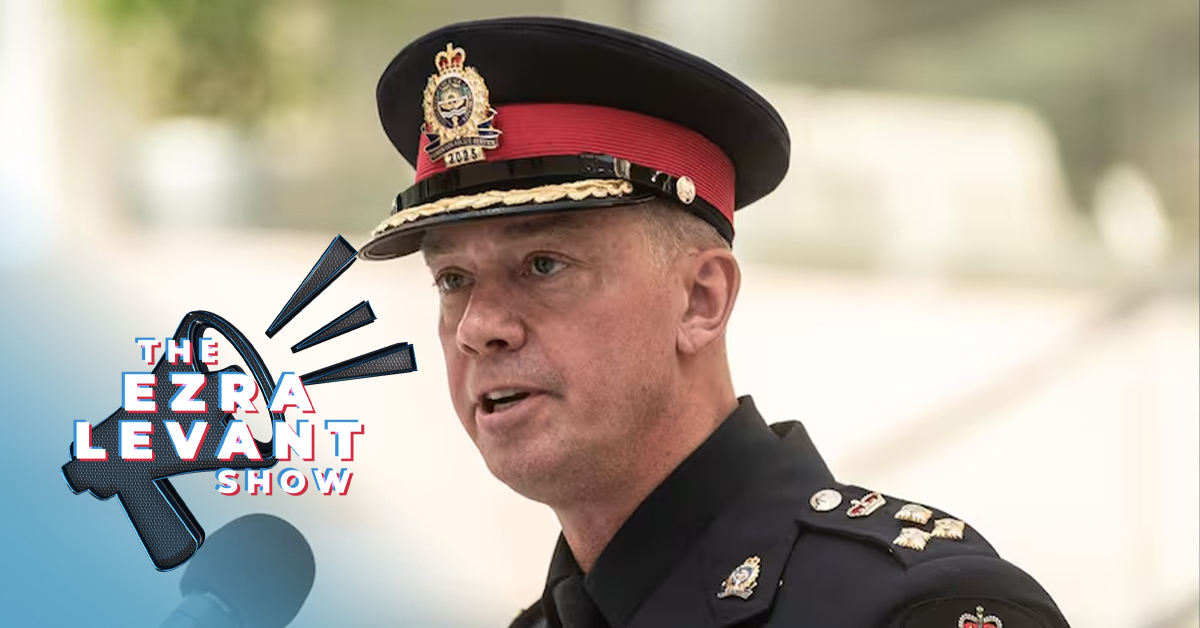
As antisemitic hate crimes continue to surge across Canada, newly released access-to-information records reveal Edmonton Mayor Andrew Knack was actively coordinating with and relaying the concerns of the National Council of Canadian Muslims (NCCM) and affiliated activist groups during the controversy surrounding Edmonton Police Chief Warren Driechel's trip to Israel.
The records raise an uncomfortable question: Why was city hall treating the NCCM coalition as its primary stakeholder while appearing to give far less weight to Edmonton's Jewish community?
The controversy began after Driechel participated in a professional development trip to Israel alongside other North American police leaders. The trip focused on public safety, emergency management, cybersecurity and counter-terrorism.
Almost immediately, the NCCM, the Edmonton Council of Muslim Communities and more than two dozen affiliated organizations launched a campaign against the chief, demanding answers and ultimately suggesting that, absent satisfactory responses, Driechel should resign.
Behind the scenes, the newly released records show Mayor Knack repeatedly directing police leadership toward NCCM.
"The best starting point for organizations to engage with is the letter sent by NCCM which lists out many organizations," Knack wrote to the police chief and police commission chair.
Knack did not merely pass along the coalition's concerns. He endorsed them.
"I think the three questions that community have raised are reasonable questions to be answers," he wrote, referring directly to the demands contained in the NCCM-led coalition letter.
The mayor also offered city hall's assistance in arranging a meeting between the activists, the chief and police leadership.
"Finally, NCCM would like to meet with Council and both of you all together. Our office is more than willing to help coordinate," Knack wrote, adding that "this would be hosted by NCCM" and that "they would be leading the meeting."
Knack went even further, recommending NCCM-connected figures as advisors to police leadership.
"Both were formally involved with the Edmonton and/or National parts of NCCM and have been taking calls and meetings non-stop since Tuesday and would have some excellent insight if there is interest," he wrote.
The contrast with the treatment of Edmonton's Jewish community is striking.
The ATIP package contains extensive correspondence from the NCCM coalition, including letters signed by more than two dozen organizations and repeated communications pressing for accountability from the chief.
By comparison, the records contain a message from the Jewish Federation of Edmonton supporting Driechel and warning that "a small group of extremists" was targeting him simply for participating in a professional development mission to Israel. The federation also warned that antisemitic extremism frequently exploits anti-Israel activism as a vehicle for radicalization and the justification of violence.
Yet nowhere in the disclosed records does Knack direct police leadership to use the Jewish Federation as a "starting point." Nowhere does he describe the federation's concerns as "reasonable questions." Nowhere does he offer to coordinate meetings led by Jewish organizations or recommend Jewish community leaders as advisors to police leadership.
That omission is particularly notable given the broader context.
Since the Hamas attacks of October 7, 2023, Jewish schools, synagogues and community centres across Canada have faced an unprecedented wave of threats, vandalism and violence. Police services across the country have repeatedly acknowledged rising levels of antisemitic hate crime.
Despite that reality, the documents show city hall's attention focused overwhelmingly on the concerns of organizations objecting to a police chief visiting Israel, rather than on the concerns of Jewish organizations defending him.
Driechel ultimately refused to apologize. Speaking publicly, he defended the trip as a legitimate professional development opportunity and rejected the notion that activist groups should dictate where police leaders can seek training and operational knowledge.
The newly released records suggest that while the chief was standing his ground, Edmonton's mayor was treating the NCCM coalition as the primary voice guiding city hall's response to the controversy.
Guest: Daniel Pipes on the US House vote on the Iran war

COMMENTS
-
 Fran g commented 2026-06-05 23:29:31 -0400It should have been, I forget his name,the next most popular, maybe Campbell. I dont care for knack as he seems to support pride, but I wasnt aware he was catering to Islam. Good grief.
 -
Lizabeth Sawyer commented 2026-06-05 16:07:25 -0400What a mistake Edmontonians made in electing Andrew Knack as mayor.