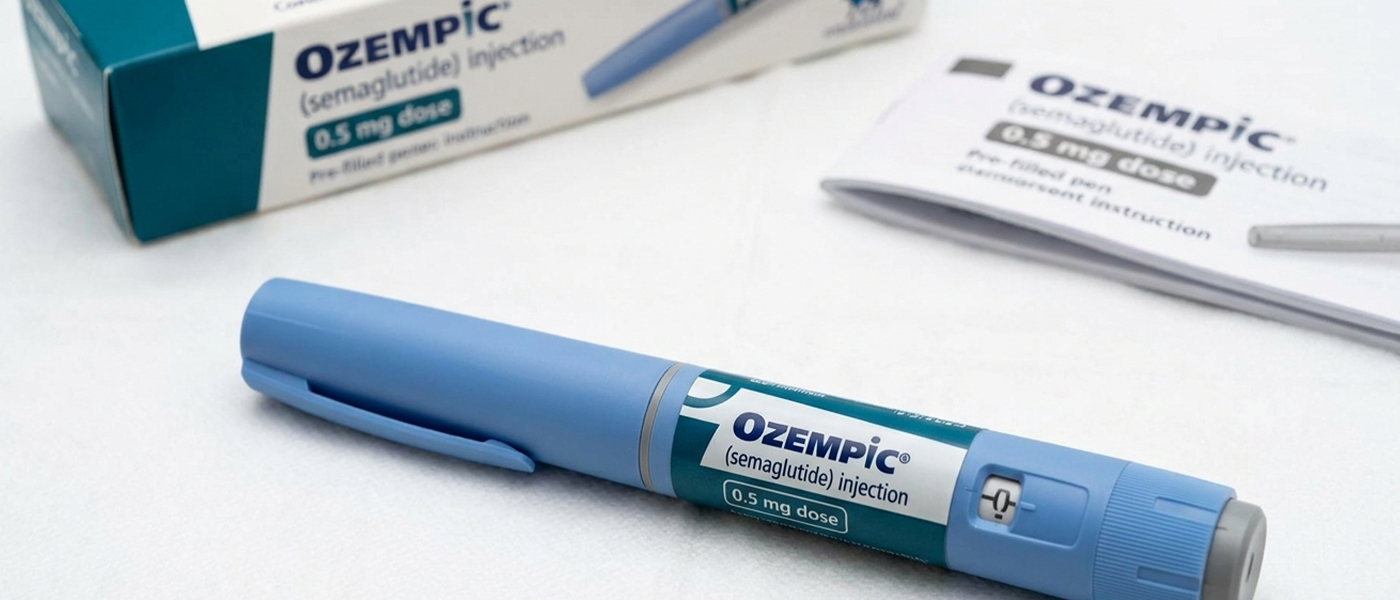


My brief, bad, brutal experience with Ozempic
What’s the real price of Ozempic’s weight-loss miracle? For some, it’s agony, sickness, and a stark warning that fast-track fixes may carry hidden harms regulators aren’t ready to face.


BECOME A MEMBER

Article by Rebel News staff
Tonight on The Ezra Levant Show, guest host David Menzies recounts his brief ordeal with Ozempic, explores its concealed risks, and highlights the importance of regulatory oversight. In addition, Ezra Levant speaks with Billboard Chris about his activism and recent arrest in Spain while raising awareness of the harmful impacts of the transgenderism movement on children.
Imagine being told you have diabetes. Suddenly, life becomes a constant audit of food labels. Sugar is everywhere, so pervasive that ketchup might as well be liquefied doughnuts. Over time, discipline begins to pay off: blood sugar stabilises, some weight is lost, and it is achieved without pharmaceutical shortcuts. But for some in medicine, that is not enough. The push for faster, easier, more dramatic results leads man these days to the latest so-called miracle drug: Ozempic.
Ozempic, officially prescribed for diabetes management, has become a mainstream tool for weight loss. For many, it has little to do with diabetes at all. It is about shrinking the number on the scale, whatever the cost. And yes, it can work at first. Appetite is heavily suppressed, meals shrink dramatically, and even alcohol cravings can fade. For a moment, it feels like a win: fewer calories, less drinking, more money saved.
But that sense of control does not always last.
In my own experience, the side effects arrived quickly and with force, and what initially felt like progress soon became something far more difficult to manage.
Severe gastrointestinal pain left me curled up in discomfort, with little relief from standard remedies. Persistent nausea turned eating into a gamble. Rapid weight loss also came with muscle loss, fatigue, and weakness. There were neurological symptoms too, including a constant ringing in the ears. The result was not just weight loss, but a broader physical toll that outweighed any benefit.
All of this came from a relatively new drug now widely used beyond its original purpose. That raises an unavoidable question: how much is truly known about its long-term risks, and how much is still being uncovered in real time?
History offers a warning. Thalidomide, once marketed in the late 1950s and early 1960s as a safe treatment for morning sickness, caused devastating birth defects worldwide. It remains a stark example of how medical optimism can outpace caution.
Ozempic is not thalidomide. And for some, it is an effective and manageable tool. But the experience for me was different: what was sold as a solution ended up feeling like a trade-off where the cure was far worse than the condition it was meant to address.
The pattern is familiar: new drugs are rolled out quickly, early results are highlighted, and the full risk profile often emerges only after widespread use.
The lesson is not to reject medical progress, but to approach it with scrutiny. Transparency, long-term evidence, and caution matter before turning promising treatments into mass solutions. Because when unintended consequences appear, they are borne not by institutions, but by patients.
GUEST: Ezra Levant interviews Billboard Chris about his recent arrest in Spain

COMMENTS
-
Bruce Atchison commented 2026-06-19 21:27:15 -0400“Safe and effective” must always be associated with dangerous drugs.
-
Lee Symborski commented 2026-06-19 18:39:50 -0400loved your frankness David.
its good to be reminded of past drug horrors. -
 Lori Griffin commented 2026-06-19 15:36:25 -0400I started on Ozempic in February of this year, on the advice of my doctor, to help me lose weight. I am 67 years old and not diabetic.
After 4 months of chronic diarrhea, severe intestinal cramping, constant stomach pain, nausea, dry heaving and all over weakness, I decided that was enough.
The pain and destruction of my quality of life was definitely not worth it.
My doctor prescribed additional medications to counter the side effects, but they didn’t help. Not to mention, I only lost a total of 6 lbs.
I quit taking it 2 weeks ago and I am finally starting to feel like my old self again.
I also never got the Covid jab because I had no desire to be a human guinea pig. -
 Shannon Brault commented 2026-06-19 11:25:05 -0400I quit Ozempic as well. I have IBS and it made the condition 4 times worse than it normally was. I also heard it paralyzes the stomach, preventing you from absorbing nutrients.
 -
chris macdonald commented 2026-06-19 02:30:04 -0400The Spanish police don’t like you because your not handing out free needles and other safe injection materials. Regarding sickening medications, the early birth control pills were bad too but that didn’t stop U.K. Anglican and Catholic Bishops from greenlighting them back in the 1960’s. Canada too.
-
Paul Scofield commented 2026-06-18 23:42:10 -0400Excellent and very moving story, David. Glad you are going to trust your gut (so to speak) on quitting Ozempic. I did the same several months ago on another GLP-1 product.
-
 Michael Guillery commented 2026-06-18 22:51:35 -0400Interesting. Wonder what his ‘take’ is now, considering the worldwide data regarding the Covid vac’s ‘shortcomings’?
 -
Victor Farrell commented 2026-06-18 22:38:14 -0400Your not Ezra!!!
-
Brian Smith commented 2026-06-18 21:47:21 -0400I started off with 4 half doses to see how it affected me before moving on to full doses.
I quit it after those 4 shots as I had persistent nausea and occasional vomiting.🤮
I wish I had declined it from the get go. 😖 -
Donald MacLeod commented 2026-06-18 21:12:15 -0400Initially I experienced nausea, but nothing like what you described. Ive been on Ozempic now for over 3 years for type 2 diabetes. I dont experience any of those side effects. I think everyone’s experiences can be different.