
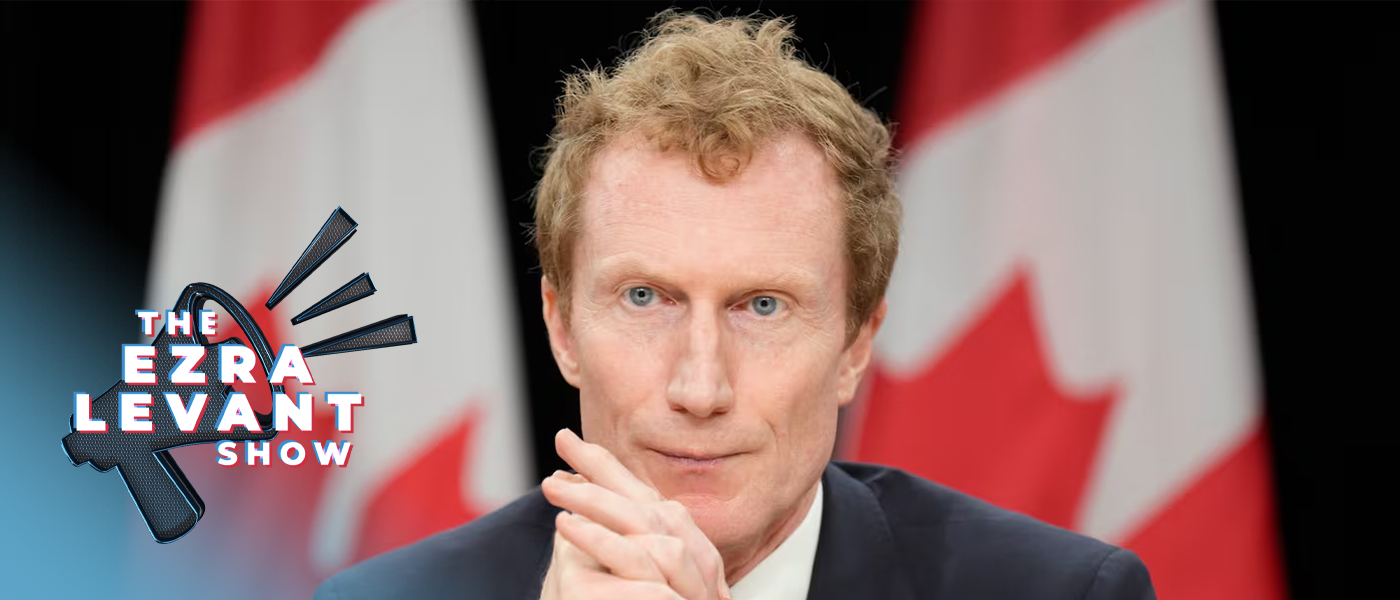


Ezra Levant: Trudeau's online censorship panel is back under Mark Carney
Marc Miller, now Minister of Canadian Identity and Culture, invited all twelve members of the 2022 C-63 panel, along with their facilitator. Eleven accepted.

On Tuesday's episode of The Ezra Levant Show, Ezra revealed that Trudeau’s old censorship panel is back under Mark Carney, and that they are telling the government it should police the internet, including memes, private messages, and speech they admit is lawful.
Remember Bill C-63? It was Trudeau’s great censorship bill, which included the possibility of life in prison for certain speech offences and gave a proposed Digital Safety Commission the power to fine American social media companies six per cent of their global revenue. That bill died on the order paper in January 2025 when Trudeau resigned, and Parliament shut down. A lot of people thought that was the end of it. Maybe Mark Carney would be different. Maybe his government would leave Trudeau’s censorship agenda behind.
It didn’t.
In March, Carney’s government brought back the same expert advisory group that helped write the blueprint for C-63. Marc Miller, now Minister of Canadian Identity and Culture, invited all twelve members of the 2022 panel, along with their facilitator. Eleven accepted. One, Université de Montréal law professor Pierre Trudel, declined “due to prior engagements.” The others returned, including Bernie Farber, Lianna McDonald, Amarnath Amarasingam, Emily Laidlaw and Heidi Tworek. Farber said he was “honoured to be once again considered for a reemergence of our team on online hate.”
What happened in their first meeting was not announced in a press release. It took an Access to Information request to uncover the minutes, and what they reveal is remarkably clear.
Farber told Miller that social media platforms “should not be allowed to police themselves. The government should do it.” He also wanted to impose “costs to platforms for allowing this level of hatred.” This is Bernie Farber, the same activist who tried to smear Canadian truckers with an antisemitic flyer that was later traced back to Miami.
Then there was Amarnath Amarasingam, who said C-63’s focus on incitement to violence was “too narrow.” He wanted the government to consider memes, coded language and what he called “lawful but awful” content. The minutes record the panel calling for “further reflection on how this content should be addressed.”
Laidlaw identified another limitation in C-63: it did not cover private messaging. That means direct messages, WhatsApp, Signal and email. And then there was Heidi Tworek, whose advice was less about the substance of the legislation and more about how to sell it.
“Framing is critical,” she said. “This is not about limiting freedom of expression, but about enabling it.”
The department’s own summary listed this as a point of “high consensus”: frame the legislation as enabling freedom of expression.
The panel also agreed to operate under the Chatham House Rule, meaning comments could not be publicly attributed to individual participants. The department would handle the media. They made clear that the group itself was “not secret.” Apparently, the secret was what they were saying.
Now, there is a legitimate child-protection issue buried in these discussions. Lianna McDonald, from the Canadian Centre for Child Protection, raised sextortion, deepfake child pornography and grooming on gaming platforms. These are serious crimes, and they should be prosecuted. But that is also how this agenda gets packaged. Lead with the children, and then expand the definition of harmful content behind them.
Three months after that meeting, Bill C-34, the Safe Social Media Act, appeared. C-63 with a new coat of paint. The Digital Safety Commission is back, along with seven categories of “harmful content,” including “content that foments hatred.” The proposed penalties are enormous: five per cent of a company’s gross global revenue or $20 million, whichever is greater.
The bill is now at second reading. Parliament returns this month, and this fall you will hear a lot about protecting children online. And we should protect children. But every time you hear that argument, remember what the government’s own meeting minutes recorded: “The government should do it.” That is the real question. Do you want the government to do it?
RebelNews+ Clips
RebelNews+ is our premium subscription service, which gives you access to our exclusive long form, TV-style shows, documentaries, members-only comments section, and the ability to read RebelNews.com without ads.
Subscribe now to get the full experience!
https://rebelnewsplus.com/Featured Stories


COMMENTS
-
Bruce Atchison commented 2026-09-02 19:50:10 -0400This is just one more reason why Alberta absolutely MUST leave. Canada isn’t the same as it was even 11 years ago. It’s been WEFized!
-
 Bernhard Jatzeck commented 2026-09-02 16:58:33 -0400Waydaminnit—weren’t we told by a certain prime minister that Canada no longer has an identity and that we’re now a post-national state? So I guess we have a minister who’s in charge of nothing…..
