

Karl Stefanovic CANCELLED: Nine Folds After Tommy Robinson Podcast Goes Viral
Channel Nine moves to sack Karl Stefanovic after briefly releasing his latest interview.

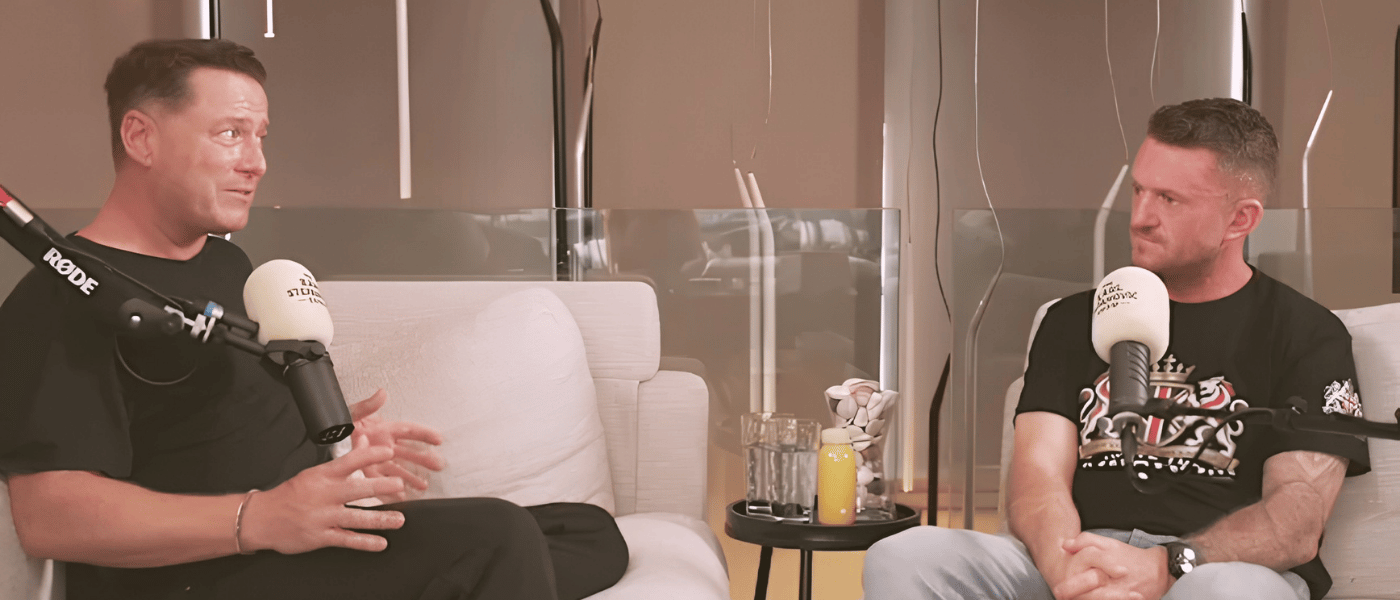
The reaction to Karl Stefanovic interviewing UK activist and independent journalist Tommy Robinson on his podcast says far more about Australia's media culture than it does about either man.
Within hours of the episode being published, outrage erupted. The interview was deleted, media commentators demanded answers, and Nine reportedly moved quickly to distance itself from one of its most recognisable faces.
What began as a podcast conversation quickly became a story about who is allowed to speak, who is allowed to listen, and which opinions are deemed beyond the pale.
🚨 Karl Stefanovic has removed his Tommy Robinson interview from all platforms amid reports Ch 9 is furious
— Avi Yemini (@OzraeliAvi) June 24, 2026
Funny how nobody had a problem when Karl platformed some of Australia's biggest Jew-haters.
Apparently opposing Islamic extremism is where they draw the line. pic.twitter.com/Zs02RwDZvO
The remarkable part wasn't that left-wing activists and mainstream media journalists disagreed with Tommy Robinson. People have been disagreeing with Tommy for years.
The remarkable part was the apparent belief that the interview should never have happened in the first place.
For years, I've been told that Jews secretly control the media and dictate what can and can't be said. Yet I've watched Karl spend months interviewing anti-Israel activists, anti-Jewish influencers, and all sorts of controversial figures without attracting anything close to this level of hysteria. There were no emergency meetings, no public pile-ons, and no calls for his professional exile.
Then he sits down with Tommy Robinson, a man who is critical of radical Islam and openly supportive of Israel and the Jewish community, and suddenly the sky is falling. Apparently, some controversial guests are more controversial than others.
The old saying, often directed at Jews, goes: "If you want to know who rules over you, look at who you're not allowed to criticise." The Karl Stefanovic saga suggests the reality may be more complicated than that.
What it certainly demonstrates is that the boundaries of acceptable opinion are becoming increasingly narrow, and they're not applied equally.
The strangest part of this entire controversy is that Karl barely did anything.
He interviewed someone. That's it.
He didn't endorse Tommy Robinson's views, launch a political movement, or spend two hours promoting a particular ideology. He sat behind a microphone and asked questions.
Yet many of the same people demanding consequences for Karl have spent years defending the platforming of activists, extremists, and ideologues whose views they happen to support. Whether it's radical political activists, divisive commentators, or foreign propagandists, we're constantly told that exposure does not equal endorsement and that difficult conversations are necessary in a democracy.
Yes, witches, it’s almost confirmed now Karl Stefanovic has been dumped from Channel 9’s “Today” breakfast show yesterday evening, as reported here and elsewhere:https://t.co/5hd50ZuVdM
— MFWitches (@MFWitches) June 24, 2026
If true, this is huge.
We won’t stand for the racism and hate espoused by Tommy Robinson… pic.twitter.com/VdYZD7hwCs
That principle suddenly seems to disappear when the wrong person is sitting in the guest chair. The standard increasingly appears to be that controversial people deserve a platform when they're useful to your side, but become untouchable when they're not.
That's not a principle. It's tribalism.
I've always had a soft spot for Karl, which probably surprises some people. During the height of Covid, while I was working for Tommy Robinson's news site (ironic, I know), I published a report criticising Karl's reporting.
Given the climate at the time, I wasn't expecting a friendly response. Instead, Karl reached out almost immediately in private. He told me he liked what I was doing and even gave me his phone number.
At the time, I assumed it was a clever piece of self-preservation. Karl has always understood how the media game works. Looking back, I'm not so sure that was the reason.
I suspect he was already seeing what many journalists are only now beginning to acknowledge: the traditional media model was losing its grip on public trust and public attention. Long before many of his colleagues recognised it, Karl seemed to understand that audiences were moving elsewhere. His recent move into podcasting and independent media doesn't feel accidental; it looks more like someone positioning himself for the next phase of the industry.
Absolutely shattered. I honestly cried. We won’t let the communist scum destroy Karl Stefanovic
— Drew Pavlou 🇦🇺🇺🇸🇺🇦🇹🇼 (@DrewPavlou) June 24, 2026
That said, let's not get carried away.
Some commentators are already trying to turn Karl into a free-speech folk hero, and I'm not completely convinced. Karl spent decades as one of the biggest names in Australian television. He wasn't standing outside the establishment throwing rocks at it. He was one of its most successful products.
More importantly, when the pressure arrived, the interview disappeared from his own platform.
Let's not kid ourselves Karl Stefanovic has cancelled himself by deleting the videos of his podcast with Tommy Robinson probably to avoid contractual dramas with the mainstream network that pays him.
— Rukshan Fernando (@therealrukshan) June 24, 2026
There’s no shadowy group censoring him, plenty of far more controversial Tommy…
Now, there may well be factors the public doesn't know about. There could have been legal concerns, contractual obligations, or commercial pressures operating behind the scenes. None of us are privy to those conversations.
But the irony remains difficult to ignore. An interview in which Tommy Robinson was praised for sacrificing his freedom, safety, reputation, and income for his beliefs was removed the moment serious consequences appeared on the horizon. Fair or unfair, that doesn't exactly strengthen the image of fearless resistance that some are trying to build around Karl.
The funny thing is that cancelling a figure like Karl is futile today.
If the goal was to stop people watching the interview, the strategy was a complete failure. The controversy became the promotion. People who had never heard of the podcast suddenly wanted to know what all the fuss was about, and others who had no interest in Tommy Robinson found themselves curious about the conversation that generated such an extreme reaction.
As always, the Streisand effect delivered.
Tommy Robinson has been a friend of mine for many years, and the version of him that appeared in the interview was the version I've always known. He's rough around the edges but he's as authentic as they come.
Karl's greatest contribution wasn't asking groundbreaking questions. It was stepping aside and allowing people to hear Tommy speak for themselves.
In an age where so much public opinion is shaped through headlines, clips, and second-hand characterisations, there is genuine value in that.
For almost 24 hours, Tommy Robinson has been trending on X globally. Yet if I dared post this photo with him on Meta, they'd nuke my accounts.
— Avi Yemini (@OzraeliAvi) January 3, 2025
Thank goodness for @elonmusk pic.twitter.com/iz7SS2eZJ1
The bigger story here isn't Tommy Robinson, and it's not even Karl Stefanovic. It's the growing collision between legacy media and independent media.
For decades, broadcasters, newspaper editors, and television executives largely controlled who received a platform and who didn't. They acted as gatekeepers of public discourse.
That world is disappearing.
Today, audiences increasingly choose for themselves what conversations they want to hear, and attempts to suppress discussion no longer end debates, they often amplify them.
Karl will be fine. He's well known, well connected, and smart enough to adapt.
The real question is whether Australia's media establishment can adapt as well. Because if interviewing controversial people is now treated as a punishable offence, journalists won't stop having those conversations. They'll simply have them somewhere else.
Avi Yemini
Chief Australian Correspondent
Avi Yemini is the Australia Bureau Chief for Rebel News. He's a former Israeli Defence Force marksman turned citizen journalist. Avi's most known for getting amongst the action and asking the tough questions in a way that brings a smile to your face.
https://followavi.com/


COMMENTS
-
Bruce Atchison commented 2026-06-25 22:39:50 -0400Leftists and some conservatives are hypocrites. They lack the self-awareness to understand that they’re biased. Worse yet, they get all emotional when somebody they hate gets platformed. How childish is that?