Carney, Trump discuss potential Keystone XL revival in Washington
If completed, Keystone XL would run 800,000 barrels of crude oil daily from Alberta to oil refineries in the U.S., where existing infrastructure would transport it to the Gulf Coast for international shipping.

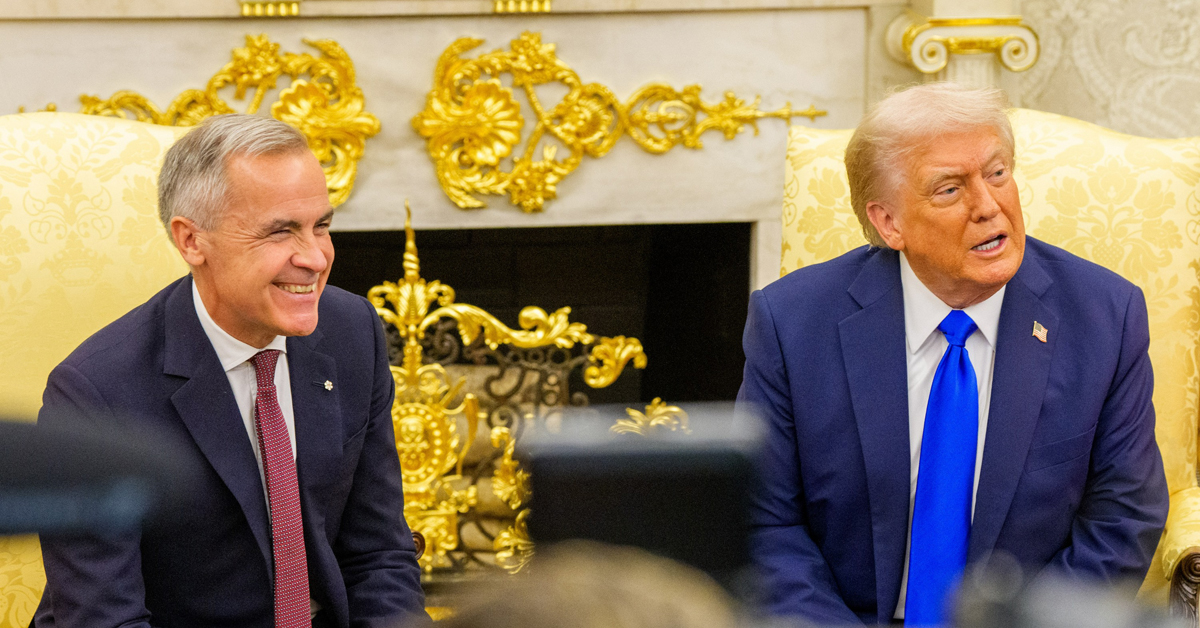
Prime Minister Mark Carney and President Donald Trump discussed the revival of the Keystone XL oil pipeline during their White House meeting on Tuesday. A government official, speaking anonymously, confirmed Trump was receptive to the pipeline as the leaders talked about potential Canada-U.S. energy sector cooperation.
The official confirmed the CBC-reported pipeline discussion was linked to the federal government's goal of using Canadian materials, like steel and aluminum, in major infrastructure projects. These sectors have been affected by Trump administration trade tariffs.
Canadian exports declined in August, driving the country's merchandise trade deficit to a near-record $6.3 billion, up from $3.8 billion in July. Goods exports fell 3%, while imports rose 0.9%, largely due to ongoing U.S. tariffs, Statistics Canada reported.
Poilievre could put Carney on defence by supporting revived Keystone XL pipeline
— Rebel News (@RebelNewsOnline) April 4, 2025
Ezra Levant looks back on what he would have asked Pierre Poilievre if he had the opportunity at a recent campaign rally, and how the Conservative leader could put Prime Minister Mark Carney on the… pic.twitter.com/35SH2zQqHf
Since returning to the White House, Trump and the premiers of Alberta and Saskatchewan have made it known their intention to revive the Keystone XL pipeline.
Alberta Premier Danielle Smith expressed satisfaction at a Toronto conference on Wednesday, hearing Carney and Trump had discussed Keystone XL, particularly regarding Canadian materials for the bi-national pipeline project.
Smith advocated for increasing oil sales to the U.S., stating, "We shouldn’t be threatening to sell the Americans less. We should be promising to sell them more," noting Alberta's lobbying efforts in Washington for Keystone.
However, the company behind the original proposal, TC Energy Corp., who spun off its oil operations into South Bow Corp., has since "moved on" from the project.
Premier @ABDanielleSmith on Fox Business discussing the restart of KXL, the mutually beneficial relationship between Alberta and the USA, and her trip to Trump's inauguration. pic.twitter.com/Gkpwqrbmkp
— Sheila Gunn Reid (@SheilaGunnReid) December 4, 2024
Proposed in 2008, the 1,900-km pipeline was supported by Trudeau's Liberal government, but was cancelled in 2021 after U.S. President Biden revoked approval. This led to condemnation from Alberta, which had invested $1.5 billion and provided $6 billion in loan guarantees for the project.
Alberta-based TC Energy inevitably suspended construction on the pipeline and unsuccessfully sought compensation for the losses incurred from its cancellation, including tens of thousands of jobs.
If completed, Keystone XL would run 800,000 barrels of crude oil daily from Alberta to oil refineries in Illinois and Texas, where existing infrastructure would transport it to the Gulf Coast for international shipping.
Any serious bids to restart construction would start in U.S. courts, Smith told Fox News in a December 4 interview. “There is a willing partner in Canada — not only Alberta but also our federal government,” she said at the time.
In usual "Drill baby, Drill" fashion, insiders are saying that President-elect Donald Trump wants to bring back the Keystone XL Pipeline on day one of his administration.
— Rebel News Canada (@RebelNews_CA) November 22, 2024
MORE: https://t.co/jzfEBjWGJD pic.twitter.com/oVM7ZtBvok
On Tuesday, Carney and Trump reportedly made progress on steel and aluminum duties, which currently sit at 50% — the highest tariffed sector so far.
Dominic LeBlanc, the minister responsible for Canada-U.S. trade, stated that the Canadian and U.S. leaders have directed their teams to prioritize deals on steel, aluminum, and energy. He provided no further details regarding the "energy" aspect of the agreement.
A November Politico report said bringing back the pipeline is among the “list of things” Trump’s transition team wants to do on the first day back in office. That was confirmed in a February 25 post on Truth Social.
Liberal MP Corey Hogan proposed on Wednesday that the Keystone XL project's revival be discussed as part of Carney's "grand bargain" on fossil fuels.
The Carney government also faces questions regarding Premier Smith's push for a new west coast oil pipeline, framed as a "test" for Canadian unity.
B.C. Premier David Eby criticized the "fictional" pipeline, citing billions in taxpayer costs. The project also faced U.S. opposition from environmental and Indigenous groups.
Alex Dhaliwal
Journalist and Writer
Alex Dhaliwal is a Political Science graduate from the University of Calgary. He has actively written on relevant Canadian issues with several prominent interviews under his belt.
Featured Stories