



Canada dropped most counter-tariffs to 'nearly zero' before the election
The Liberals quietly implemented a six-month tariff exemption for select U.S. goods used in Canadian manufacturing and other sectors in April.

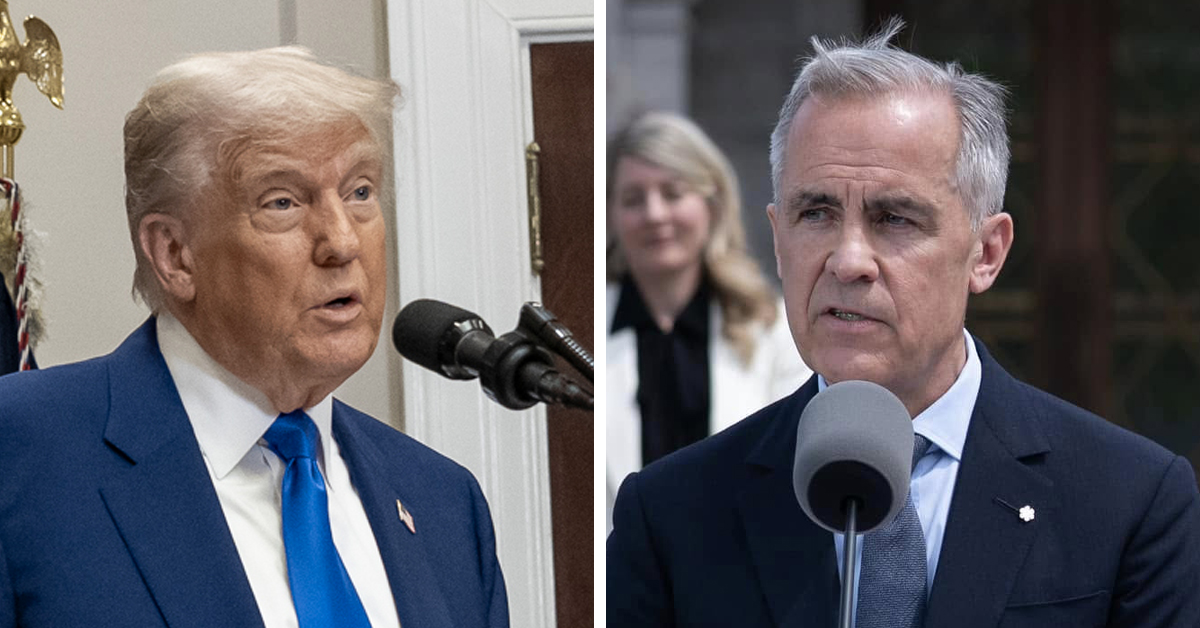
Oxford Economics reports that Canada has suspended almost all retaliatory tariffs on U.S. goods, which is expected to reduce inflation risks and improve Canada's growth outlook.
The federal government quietly implemented a six-month tariff exemption for select U.S. goods used in Canadian manufacturing and other sectors. Canada's tariff rate increase on the U.S. is "nearly zero."
"It's a very strategic approach from a new prime minister to really say, 'We're not going to have a retaliation,'" Tony Stillo, Oxford's director of Canada economics, told BNN Bloomberg. "It's a strategic play on the government's part to not damage the Canadian economy."
Oxford now predicts a milder Canadian recession in 2025, forecasting 0.9% growth this year and 0.3% next, citing government spending as a buffer against trade war impacts. Inflation is expected to briefly peak at 3% in 2026 before declining.
Retaliatory tariffs remain on select U.S. goods, including food (orange juice, alcohol, coffee), clothing, and cosmetics.
Ottawa implemented 25% import taxes on roughly $60 billion worth of U.S. goods in response to the initial tariffs imposed by the Trump administration. This action followed Canada's earlier retaliation against U.S. auto tariffs in early April with its own levies on American vehicles.
National unemployment rose to 6.9% in April, with manufacturing and retail seeing significant job losses. Economists attribute this to the impact of U.S. tariffs.
"Trump's tariffs are going to erode the manufacturing sector over time in Canada. We're just at the start of it, in my view," Jack Mintz, President's Fellow at the University of Calgary's School of Public Policy, told the Epoch Times.
Manufacturing saw 30,600 job losses (a 1.6% decrease from March), while wholesale and retail trade experienced 26,800 fewer jobs (a 0.9% drop), according to Statistics Canada.
Ontario lost the most jobs (35,000) of any province last month, a 0.4% decrease in employment.
Mintz anticipates that ongoing U.S. tariffs will likely cause continued job losses in Canadian manufacturing and retail, particularly in Ontario. He suggests the province create a backup plan less dependent on the auto sector, which employs roughly 144,400 people in Ontario, as the tariffs are expected to persist.
U.S. tariffs are projected to cause a loss of 68,100 jobs in Ontario this year, primarily impacting manufacturing and related supply chains, reported CBC News.
Metal industries will experience the most significant job losses (17,700), followed by motor vehicle parts, machinery, and electronics.
The Liberals won the federal election by convincing Canadian voters that Prime Minister Carney was the best choice to manage a trade war with the U.S., which purchases about 75% of Canada's exports.
Alex Dhaliwal
Journalist and Writer
Alex Dhaliwal is a Political Science graduate from the University of Calgary. He has actively written on relevant Canadian issues with several prominent interviews under his belt.


COMMENTS
-
Robert Pariseau commented 2025-05-18 09:29:13 -0400Bet I know where and on whom the tariffs weren’t dropped.
-
 Bernhard Jatzeck commented 2025-05-16 23:25:05 -0400Carney is the type of politician who would promise to voters whatever they want to hear.
 -
Bruce Atchison commented 2025-05-16 19:36:08 -0400What a serial liar Carney is! He also says one thing to one group and another thing to another group. We can only trust him to lie and obfuscate while profiting off our tax dollars.
-
J.G. Smith commented 2025-05-16 16:07:37 -0400Elbows up was all show and now mail in ballots and captured judges are being used to flip the government from minority to majority. Wake up Canada!!!

