
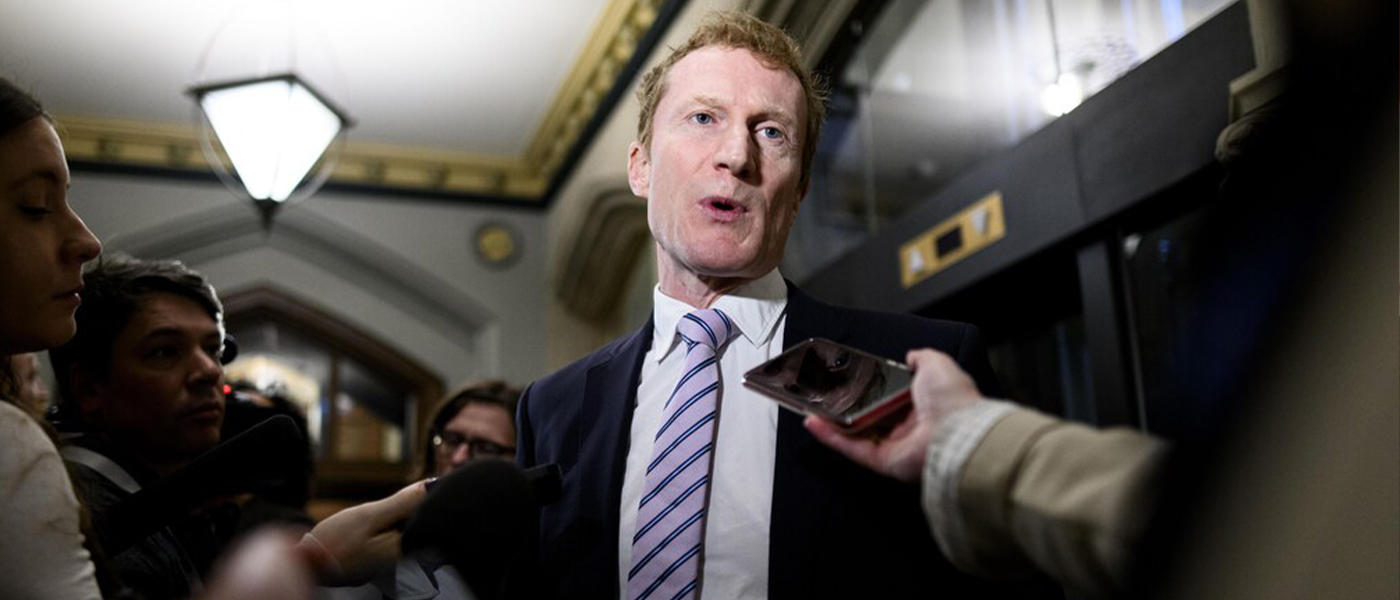

Carney minister Marc Miller denies UK censorship talks despite ATIP paper trail
Marc Miller denied discussing Britain’s 'social cohesion' plan during his recent trip to the UK. The ATIP memo shows otherwise. The plan targets digital grifters and politicians of grievance. That same 'social cohesion' language is already being used in Canada.


BECOME A MEMBER

Article by Rebel News staff
Tonight on The Ezra Levant Show: A Carney cabinet minister is caught in the paper trail on Britain’s social cohesion crackdown, then denies it.
It’s not a conspiracy theory if it’s in an Access to Information file.
Heritage Minister Marc Miller was scheduled for confidential meetings with UK officials to discuss Labour’s “social cohesion” action plan, according to an ATIP memo reported by Blacklock’s Reporter.
Miller says that never happened.
Maybe if it were true, but it isn’t. I met with a Scottish Cabinet Secretary and the First Minister. We discussed nothing of the sort, although I did cheer on our amazing athletes at the Commonwealth Games. The most controversial thing I did was drink an Irn-Bru. https://t.co/qjo62xqe6k
— Marc Miller ᐅᑭᒫᐃᐧᐅᓃᐸᐄᐧᐤᐃᔨᐣ Mikotsikaa (@MarcMillerVM) August 13, 2026
“Maybe if it were true, but it isn’t,” he wrote, saying he met with a Scottish cabinet secretary and the First Minister but discussed nothing of the sort. The most controversial thing he did, he joked, was drink an Irn-Bru.
The problem is that the memo says additional meetings were scheduled during Miller’s July trip to Britain, including discussions about Labour’s action plan, “Protecting What Matters”. It also describes Britain as “an important partner in online safety.”
The plan is about more than vague concerns over social harmony. Labour wants new powers to disrupt organisations it says spread extremism, hate or threats to public safety. It also warns about “digital grifters” and “politicians of grievance”.
That raises an obvious question: who decides who qualifies?
A politician of grievance could simply be a politician who believes something is wrong and wants to change it. A digital grifter could mean almost anyone making money from online media.
The concern is not that governments should ignore genuine extremism or foreign interference. It is what happens when those legitimate concerns are bundled together with political dissent and independent media.
And that language is already familiar in Canada.
Miller has repeatedly used the concept of “social cohesion”. During a committee hearing, Conservative MP Rachael Thomas pressed him to explain what he meant. Miller responded that in an age of disinformation, people encounter both “legitimate and illegitimate” sources of information.
That distinction matters. Who gets to decide which media is legitimate?
Another government memo described the CBC as “a pillar of our cultural identity” and connected the public broadcaster to social cohesion. A separate note warned about foreign efforts to drive social division, the spread of disinformation and the amplification of “divisive content” online, which it said could threaten Canada’s information sovereignty.
There is a legitimate debate to have about foreign interference. But governments have increasingly blurred the line between foreign influence, misinformation and political disagreement.
Once dissent is labelled foreign interference, and once certain media outlets are declared illegitimate, censorship can be sold as a matter of public safety.
That is why the British plan matters to Canadians.
The Edmonton police campaign over “non-crime hate incidents” is one example of how far this thinking can extend. Police encouraged people to report conduct including offensive jokes. In Britain, The Times has reported around 30 arrests a day over speech.
dystopian https://t.co/XdYfYAPwsw
— tobi lutke (@tobi) August 13, 2026
The Blacklock’s story quickly gained attention. Shopify CEO Tobi Lütke responded to the report with one word: “dystopian.”
Miller responded by repeating his denial.
But the central issue remains the paperwork. The ATIP memo says the meetings were scheduled to discuss Britain’s social cohesion action plan. The plan itself calls for new powers to disrupt organisations deemed to spread extremism or hate, while grouping “digital grifters” and “politicians of grievance” alongside hostile states.
So who exactly are they talking about?
Britain’s own history offers a warning about where the language of social cohesion can lead.
After the Rotherham child sexual exploitation scandal, a tweet circulated suggesting that abused girls should keep quiet for the sake of diversity and social cohesion. Labour MP Naz Shah liked and retweeted it before being forced to answer for the endorsement.
That is the danger when governments claim the authority to define social cohesion, decide which media is legitimate and determine which voices threaten social stability.
Social peace should not mean silencing people with grievances.
It should not mean allowing the state to decide which arguments citizens are permitted to hear.
Guest: Canadian independent researcher, Andy Lee, on her work uncovering Liberal MP's Shaun Chen's suspicious travel to China.

COMMENTS
-
 Lib Ferguson commented 2026-09-02 19:03:06 -0400Doesn’t Marc Miller look like Curly of Three Stooges? Carly has a higher IQ
 -
 Michael Guillery commented 2026-08-13 22:23:30 -0400The question some have is this. What controls will there be over how the data centers will be used?
 -
Bruce Atchison commented 2026-08-13 21:15:41 -0400“Social cohesion” is always the communist code for compliance. The Berlin wall went up 65 years ago today, August 13th. It was meant to keep citizens in rather than to keep foreigners out. Free countries don’t need to build walls to keep people inside. Just look at China’s Internet wall.

