
Fact Check: Are voters the problem, or just their right to disagree?
Elections Alberta confirms that the independence initiative required 177,732 signatures, equivalent to 10% of votes cast in the 2023 provincial election. That threshold opens a democratic process. It does not give petition signers authority to dictate everyone else’s answer.


The claim is that Alberta’s experiment with direct democracy has failed because organized minorities can hijack the political agenda. But the argument confuses the ability to trigger a public debate with the power to decide its outcome. Its proposed solution would give politicians more control while giving citizens fewer ways to challenge them.
In a column published by The Hub, Jared Wesley and Ken Boessenkool argue Alberta should repeal or restrict citizen initiatives and recall legislation. They describe campaigns as distractions driven by narrow factions.
But getting a question onto a ballot does not mean winning the vote.
Elections Alberta confirms that the independence initiative required 177,732 signatures, equivalent to 10% of votes cast in the 2023 provincial election. That threshold opens a democratic process. It does not give petition signers authority to dictate everyone else’s answer.
Albertans who disagree can campaign against the proposal and vote against it. Calling that opportunity a minority takeover skips the part where the rest of the electorate gets a say.
The authors also concede that referendums may be appropriate for foundational constitutional questions. Alberta’s future within Confederation plainly belongs in that category.
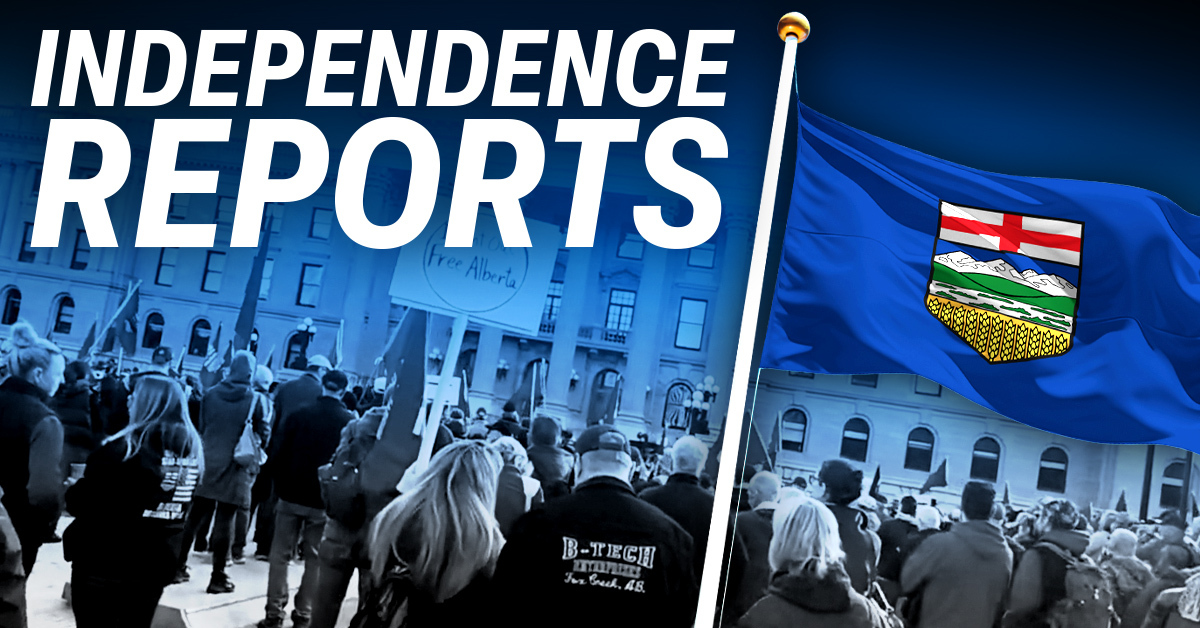
The October 19 question asks whether Alberta should remain a province or begin the constitutional process required to hold a later binding referendum on separation. It does not declare independence on election night.
There are legitimate debates about petition thresholds, verification, campaign financing and question wording. They do not establish that voters are incapable of deciding their own futures.
The column’s recommendations also reveal a preferred political destination: require UCP members to support a statement committing the party to a united Canada. Alongside restricting citizen initiatives, the authors propose doubling the legislature and MLA office budgets.
That is a political prescription, but it is not proof that direct democracy has failed.
Albertans are trusted to elect governments with sweeping powers over their lives. They can also be trusted to answer a referendum question.
If a proposal is bad, make the case and defeat it at the ballot box. Voters do not become unqualified because they insist on having a choice.
Sheila Gunn Reid
Chief Reporter
Sheila Gunn Reid is the Editor-in-Chief, Alberta Bureau Chief, member of the board of directors, and host of The Gunn Show at Rebel News. Sheila also serves as President of the Independent Press Gallery of Canada. A mother of three and longtime conservative activist, Sheila is the author of bestselling books, including her most recent release, Independence Blueprint: What Alberta Can Learn From Quebec.
https://mybook.to/sheilaFeatured Stories


09:49