

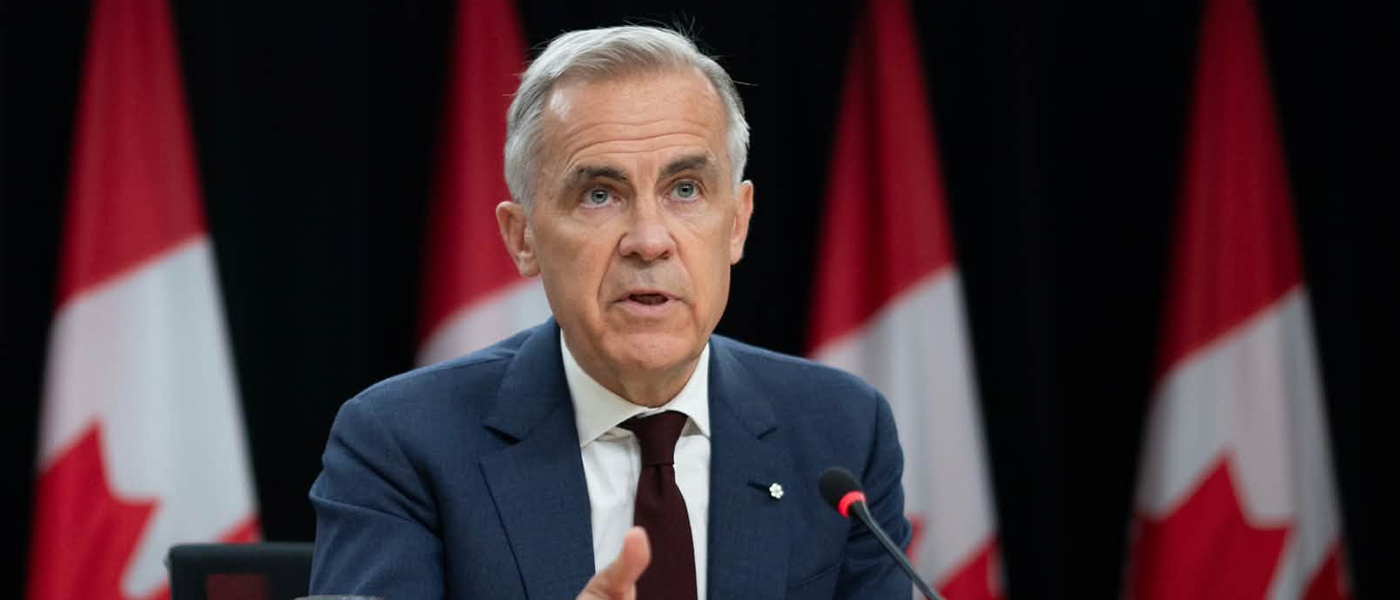
Jack Mintz on Alberta's boom, Canada's energy future and the cost of Ottawa's economic plans
The economist who chaired Alberta's pandemic recovery council credits an eight per cent corporate tax and an entrepreneurial culture for the province's rebound, and warns that federal industrial policy, carbon capture costs and pipeline politics still stand in the way.

BECOME A MEMBER

Article by Rebel News staff.
Tonight on The Ezra Levant Show: economist Jack Mintz on Alberta's economy, pipelines, carbon capture and where Canada is headed.
Mintz chaired the Premier's Economic Recovery Council under Jason Kenney in 2020, a year he calls catastrophic. The pandemic gutted oil demand. A Russian-Saudi price war finished the job. Crude fell below $20 a barrel.
The Kenney government moved fast. Within months it had a recovery plan, ahead of every other province, and treated it as a bible. The corporate income tax rate fell from the NDP's 12 per cent to eight per cent, the most competitive in Canada and in line with the United States. Irrigation, roads and infrastructure followed. Other industries grew alongside oil and gas.
What struck Mintz most was what Albertans asked for. Meeting every industry group during the crisis, he heard no pleas for handouts. They wanted government out of the way. In a similar exercise in Ontario, he heard the opposite: subsidies, again and again.
The results show it. Manufacturing in Ontario and Quebec has been in decline for more than 50 years. Tax breaks, the Chrysler bailout of the early 1990s, the 2008 auto rescue, loans, grants and credits have not stopped the slide. Australia took another path in the 1990s. It refused to prop up its auto sector, let resources move to more productive uses and thrived as an entrepreneurial, resource-driven economy. Canada, Mintz argues, has the worst of both worlds: decline, plus tens of billions spent fighting it.
The prairies are proving the alternative. The biggest data centres planned in Canada are headed for Alberta and Saskatchewan. Meta's Alberta project pairs a $13-billion AI data centre with a $4-billion power plant, without a dollar of public money. Saskatchewan has tens of billions more on the way. Mintz credits abundant energy and governments whose rules protect communities without delaying projects. He waves off the scare stories. Many centres run on recycled water, and those generating their own natural-gas power can feed the grid and push prices down. Meta and Amazon, each worth more than a trillion dollars, do not need subsidies. What alarms him is Ottawa's industrial policy, which assumes government knows which sectors deserve investment and revives the mixed public-private ventures that failed in the 1970s.
Oil and gas remain Canada's top export, and Mintz expects demand to hold. Oil still powers transport, plastics and shipping. Natural gas is well placed for electricity, petrochemicals and the AI boom. Risk in the Strait of Hormuz makes stable, well-governed suppliers more valuable.
The problem is reaching new markets. Canada sells more than 90 per cent of its oil and gas to the United States. South Bow's revival of the Keystone XL route, with Canadian pipe already in the ground, faces fewer permitting hurdles. A Democrat president in 2028 could still kill it. The west coast line backed by Prime Minister Mark Carney and Premier Danielle Smith carries heavier baggage. It comes with more than $20 billion in carbon capture spending to remove about eight million tonnes a year, a rising industrial carbon price and a British Columbia demand for a transit payment. Mintz calls that payment a terrible precedent, since interprovincial pipelines are a federal responsibility. Canada, he says, should be talking about two or three pipelines, not one.
On carbon capture, Mintz questions whether net zero is even feasible. Energy security has trumped climate politics. Beyond enhanced oil recovery, CCS is mostly a cost regulators will force on industry, which will then ask for subsidies. Guess who pays.
Mintz recently chaired a post-secondary funding panel for Alberta and refereed the School of Public Policy's study on the cost of separation, ahead of this month's referendum.
He is optimistic about Alberta. He is far less sure about Ottawa, where a lost decade has left industrial-policy favouritism more deeply embedded than ever and Trudeau-era policies still on the books.

COMMENTS
-
Susan Ashbrook commented 2026-10-02 21:43:27 -0400What they are afraid of are the Cylons from Battlestar Galactica. My preference, over letting China build those Cylons, is to develop AI here that benefits Western civilizations while protecting us from China’s AI Cylons. Shunning AI because of fear will not protect us against those who would use it against us in the future. Hiding your head in the sand is not a defense.
