



Senate rejects attempt to criminalize 'residential school denialism' after Indigenous backlash
After the Senate Human Rights Committee voted 7-1 in favour of the controversial amendment, the full Senate rejected it by a vote of 41-32 amid concerns over free speech, historical inquiry, and truth-seeking.

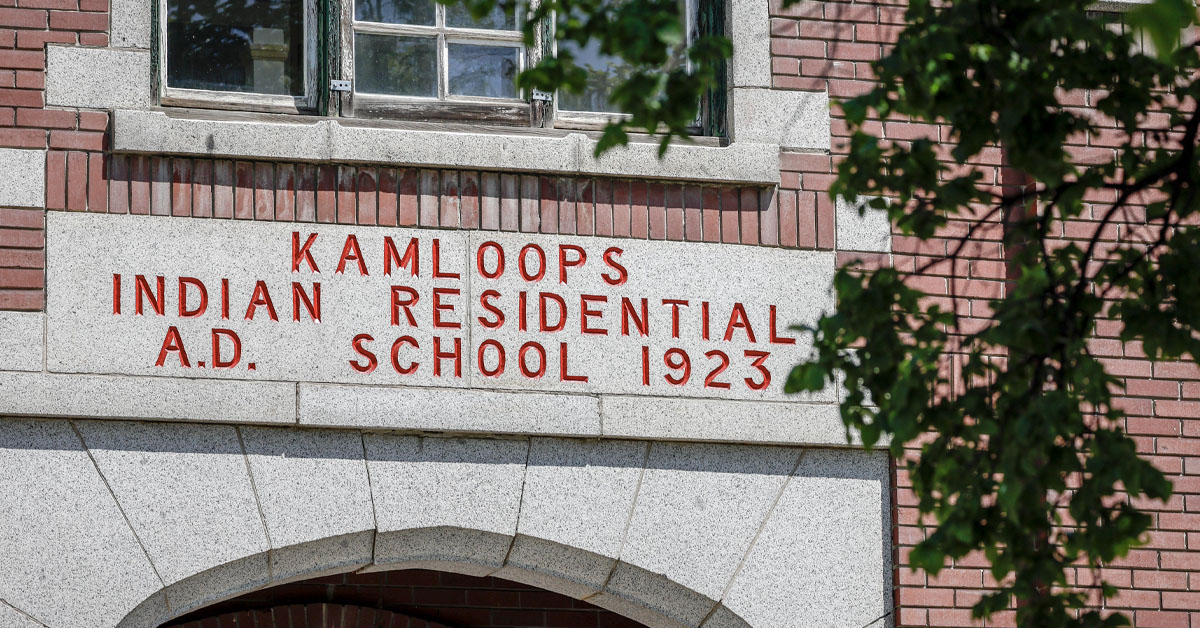
A controversial attempt to criminalize so-called "residential school denialism" has been defeated in the Senate after drawing backlash from both Indigenous and non-Indigenous Canadians concerned about free speech and the pursuit of truth.
The Senate of Canada voted down (41-32) amendments to the Combatting Hate Act, Bill C-9, that would have made it a criminal offence to promote hatred against Indigenous peoples by, among other things, "condoning, denying or downplaying the Indian residential school system."
Good call! 🇨🇦 https://t.co/pTMgl1FZy4
— Drea Humphrey (@DreaHumphrey) June 4, 2026
The vote comes just days after the Senate Human Rights Committee voted 7-1 to recommend the amendments, prompting widespread concern that legitimate discussion, debate, and historical inquiry could become subject to criminal sanction.
Among those sounding the alarm was Chawathil First Nation Hereditary Chief Aaron Pete, host of The Nuanced Show, who made it clear he was prepared to go to jail rather than stop having conversations about residential schools.
"The path forward is not to criminalize speech, questions, or debate," Pete wrote on X, arguing instead for empathy toward residential school attendees and "truth based on facts."
"If the government criminalizes this, then I will be a criminal for having these conversations," he wrote. "If I am a criminal by the laws definition, then I am committed to going to jail over this."
Pete, whose grandmother attended St. Mary's Indian Residential School, acknowledged both the harms experienced by former students and the complexity of Canada's residential school history.
I'm prepared to go to jail over this.
— Aaron Pete (@Aaronpete_) June 2, 2026
My grandmother Rita Pete went to St. Mary's Indian Residential School. She experienced terrible abuse. As a consequence, she struggled with alcohol use most of her life.
My mother was born with FASD as a consequence of her using alcohol to… https://t.co/3ifeEYb7Ur
Terry Glavin, who co-authored Amongst God's Own featuring stories of residential school attendees, including Pete's grandmother, shared Pete’s response and also stated “I’d be prepared to go to jail over this too.”
Meanwhile, Indigenous policy commentator Melissa Mbarki questioned whether the proposal could end up targeting the very people it claimed to protect.
"What I find even crazier is that Indigenous people may be the ones going to jail for questioning the governments narrative!" she wrote.
The failed amendment arrives at a time when public discussion surrounding residential school claims is already under intense scrutiny, particularly following the recent five-year anniversary of the Kamloops band's 2021 claim that it had discovered the remains of 215 former students buried in unmarked graves.
That claim helped fuel international headlines, church burnings and vandalism across Canada, and broader narratives surrounding residential schools and genocide. Yet five years later, no human remains have been publicly confirmed through excavation at the former Kamloops Indian Residential School site.
As a journalist who raised questions about that sensational claim from the beginning, including through my 2022 investigative documentary Kamloops: The Buried Truth, which proved that no bodies had been found, I believe the push to criminalize such discussion also raises serious concerns about freedom of the press and the ability of journalists to bring the public politically incorrect truths.
Drea Humphrey
B.C. Bureau Chief
Based in British Columbia, Drea Humphrey reports on Western Canada for Rebel News. Drea’s reporting is not afraid to challenge political correctness, or ask the tough questions that mainstream media tends to avoid.
Featured Stories


COMMENTS
-
Bruce Atchison commented 2026-06-04 21:25:27 -0400The senate actually did something right. What a stupid bill C-9 is!
