

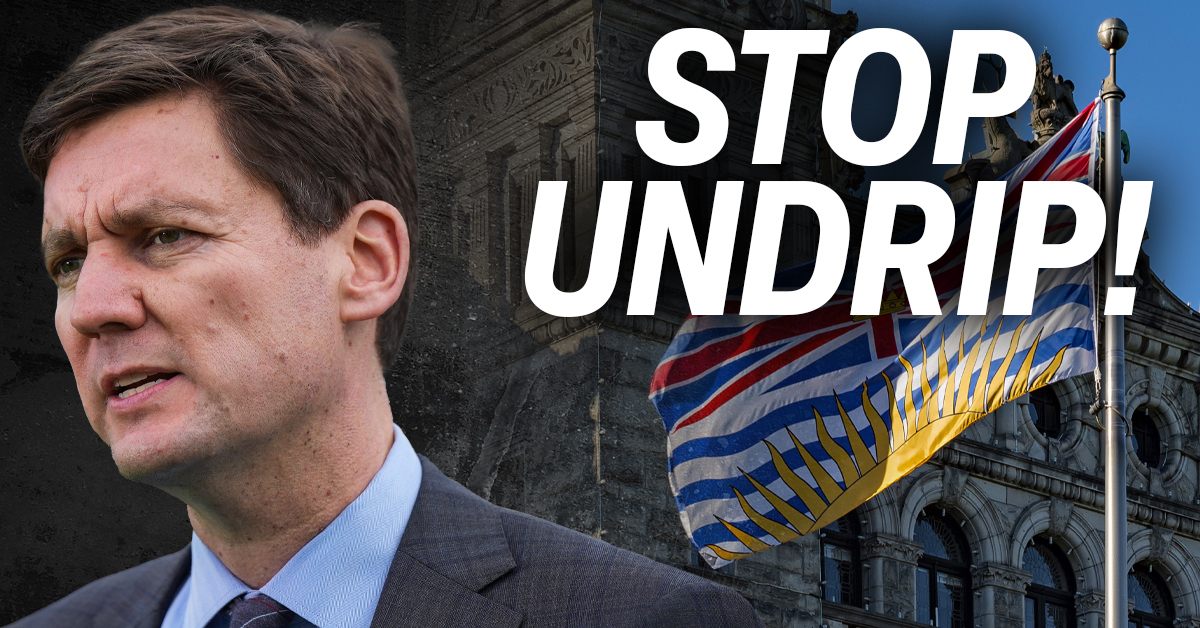

More reconciliation overreach? Gulf Islands users blindsided by proposed Indigenous power shift
Sweeping governance changes proposed by the Islands Trust in partnership with First Nations could significantly reshape property rights, boating activity, marina operations, and public access across British Columbia’s Gulf Islands.


Many non-Indigenous landowners and Gulf Islands users say they were left in the dark about a local government’s proposed changes to land and marine policy, with some only learning about its public consultation survey just before it closed on Monday.
The sweeping changes proposed by the provincially and municipally governed Islands Trust emphasize plans to grant First Nations a greater governance role with shared decision-making on public and potentially private-use lands. This follows growing concerns of reconciliation overreach in British Columbia in wake of the Cowichan decision — including impacts to private property and fishing rights.
MORE RECONCILIATION OVEREACH🚨⁰
— Drea Humphrey (@DreaHumphrey) February 2, 2026
*Time-sensitive. Please share.
It appears once again that UNDRIP / DRIPA aligned policy changes are being discussed behind the backs of non-Indigenous landowners in B.C.
This time, Islands Trust, which is provincially funded and municipally run,… pic.twitter.com/sGtHF6gbYU
The changes would also align local policy with UNDRIP, the United Nations’ aspirational framework for 'Indigenous rights,' adopted into B.C. law in 2019 and later amended to require alignment across all provincial legislation.
A policy draft begins with a lengthy acknowledgement recognizing 14 First Nations and states, followed by a breakdown of three different policies to be revamped.
Under its guiding principles, the policy states it will “Acknowledge and Respect Indigenous Rights,” including working with Indigenous governing bodies and knowledge holders, and “Prioritize Environmental and Indigenous Cultural Heritage Protection” in all decision-making.
It also commits to “reconciliation principles” which include being guided by UNDRIP, “the 10 principles established by the Truth and Reconciliation Commission of Canada,” and by “Indigenous Governing Bodies and Indigenous Knowledge Holders.”
One of the most controversial elements for critics is the policy’s embrace of shared governance and “Land Back” initiatives. Under its cooperation principles, Islands Trust states that an “advance reconciliation” goal would be to “support opportunities to direct land to Indigenous Governing Bodies, including, but not limited to, as amenity contributions in applications seeking additional development potential.”
“Of particular concern is that the Islands Trust and First Nations have been cooperating on this plan for some time now, but public input is only being invited now, after the draft has already been developed,” a concerned British Columbian who prefers not to be named told Rebel News.
“We could be personally impacted because we are recreational boaters who spend a lot of time in the Gulf Islands and Howe Sound, especially in the marine parks,” she stated, before questioning what the implications of these changes could mean for parks, docks, property owners, marina operators, and foreshore users in the areas.
The woman said that she only learned of the far-reaching proposal from her yacht club, which was also taken aback, on the day of the feedback survey deadline.
She then called Island Trust’s senior policy advisor, Jason Youmans, who reportedly claimed that the public had access to the survey since August, and it was advertised by mail and local newspaper.
The concerned citizen also pointed out that the drafted policy doesn’t use “public-friendly" language or concepts. She questions how Island Trust expects even those who may have found out sooner to comment on something they do not understand.
A statement on Island Trust’s website says that “feedback received during phase 4 of public engagement,” which concluded February 2, “will be summarized in a report at a future Islands Trust Council meeting to help inform Islands Trust Council’s next steps on the project.”
The statement continued: “While the formal public engagement phase is now closed, you can still share your thoughts and ask questions about the draft Policy Statement by e-mail at [email protected] or by calling 250-405-5151.”
Drea Humphrey
B.C. Bureau Chief
Based in British Columbia, Drea Humphrey reports on Western Canada for Rebel News. Drea’s reporting is not afraid to challenge political correctness, or ask the tough questions that mainstream media tends to avoid.
Featured Stories


10:16


COMMENTS
-
 Fran g commented 2026-02-05 15:08:32 -0500Looks to me like Canada is on fire! So many Canadians are finally directly experiencing carnage destruction and staring to fight back. This is a corrupt UN idea backed by socialist NDP and Liberals. What can we do about it? Vote Conservative hopefully this spring. Last chance to save Canada.
 -
Bernhard Jatzeck commented 2026-02-04 21:07:01 -0500Lotuslanders voted for this. It’s a case of “beware of what you wish for—you might just get it”.
-
Bruce Atchison commented 2026-02-04 19:38:52 -0500Those wicked planners knew there would be push back from residents so they kept things secret. Such people don’t want public input. Only input from their allies and friends is welcomed. Let’s hope this is the straw that breaks the backs of BC voters. NDPism just leads to poverty and restrictions of liberty.

