


Poilievre says Cowichan Tribes ruling threatens property rights
Poilievre claims the ruling is scaring away jobs and investment.

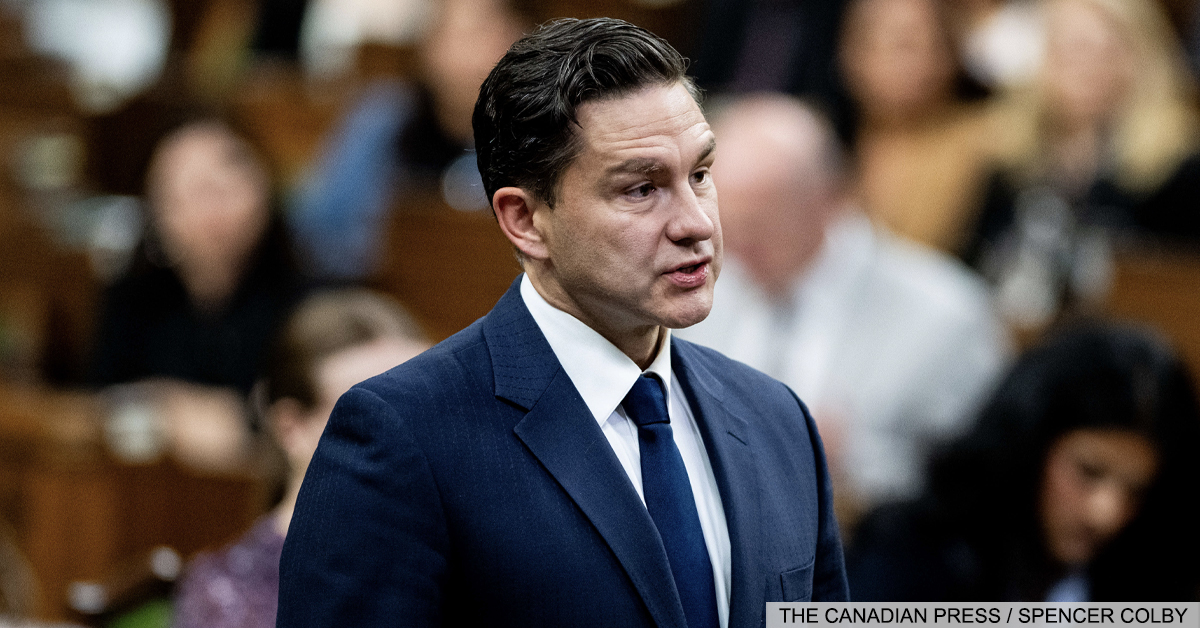
On Sunday, Conservative Leader Pierre Poilievre wrote to Justice Minister Sean Fraser regarding a B.C. Supreme Court ruling that invalidated certain property rights in the province. The B.C. Supreme Court upended property rights following its ruling in the Cowichan Tribes v Canada case, which awarded land rights to Indigenous tribes, causing uncertainty for title holders.
Cowichan Tribes celebrated a "historic victory" on August 7 for alleged settlement land, despite widespread opposition from other B.C. First Nations.
"Even the BC NDP understands how alarming this is,” reads the letter. The Province, Richmond, Vancouver Port Authority, Tsawwassen First Nation, and Musqueam Indian Band have appealed the decision.
“Reconciliation cannot occur at the cost of private property rights,” said B.C. Conservative Leader John Rustad. He urged federal intervention without delay.
The federal government must argue in court against the Cowichan ruling which threatens the property rights of Canadians and is already scaring away jobs and investments.
— Pierre Poilievre (@PierrePoilievre) September 28, 2025
We must restore property rights in Canada. pic.twitter.com/PQUgoDZ0Dr
Poilievre claims the ruling "is already scaring away jobs and investment," citing the Cowichan Tribes' lead lawyer, who stated private land sales would require their consent. He warns of "profound harm" to the B.C. and Canadian economies.
“It is already causing investment to flee, with businesses and homeowners facing difficulties as funders have major concerns about the uncertainty this situation has created.
“You [Sean Fraser] must argue to overturn the ruling and uphold the rights of all Canadians.”
Housing Minister Gregor Robertson previously downplayed the decision, saying that “private property rights are not affected by this decision.” This contradicts Premier David Eby's statement that "owning private property with clear title is key to borrowing for a mortgage, economic certainty, and the real estate market."
The B.C. NDP worries that the ruling threatens private property rights and economic stability. "We disagree strongly with the decision," stated Attorney General Niki Sharma.
Rustad notes that a lack of clarity leaves homeowners, farmers, small businesses, and investors "in limbo," eroding confidence and stalling projects.
Though only briefly mentioned in the 863-page decision, some legal scholars believe the court’s ruling could impact the interpretation of a sweeping UN indigenous pact in Canada.
Justice Barbara Young cited the non-binding UNDRIP, which champions indigenous self-determination and legal systems, to argue that denying indigenous title hinders reconciliation.
Ottawa sees UNDRIP as a reconciliation roadmap, addressing systemic issues and outlining Indigenous rights and land claims, though transfers need separate rulings.
Both federal (2021) and B.C. provincial (2019) law enacted the 2007 declaration. B.C. is the only province to do so, with its law (Section 3) requiring provincial laws to align with the declaration.
Alex Dhaliwal
Journalist and Writer
Alex Dhaliwal is a Political Science graduate from the University of Calgary. He has actively written on relevant Canadian issues with several prominent interviews under his belt.
Featured Stories


09:14


COMMENTS
-
 Bernhard Jatzeck commented 2025-09-29 21:29:56 -0400We have UNDRIP to thank for this legal mess. The B. C. Dippers decided to, effectively, hand over its authority to the U. N.
 -
Bruce Atchison commented 2025-09-29 20:04:37 -0400Eby’s NDP are encouraging racism. Property owners could be thrown off their land by some band chief who doesn’t like them. And we Canadians need to be Canadians first. Indigenous apartheid is racist and exclusionary. The notion of ancestral territory is stupid too as tribes fought over their land for millennia.
