

Secret RCMP memo warned of Alberta independence in 1981
An RCMP memo reported by Blacklock’s shows Ottawa once feared Alberta’s premier could trigger Western separation.

In 1981, the RCMP wrote a secret memo warning that Alberta premier Peter Lougheed could potentially lead Western Canada out of Confederation.
The memo came from the RCMP’s counter-terrorism unit and was later released through Access to Information, partly censored, and first reported by Blacklock’s Reporter.
The RCMP said Western separatism did not yet have a “dynamic leader,” but argued it could succeed if one emerged. They identified Lougheed as that possible leader.
“An individual who is considered a potential leader is the premier of Alberta, Peter Lougheed,” the memo said.
The Mounties noted that Lougheed had publicly rejected separatism and described himself as “a Canadian first.” But they added that his actions in oil pricing negotiations suggested he “harbours latent thoughts of independence.”
The memo said Western separatism lacked a René Lévesque-type figure, but warned that if Lougheed or someone of similar stature began advocating independence, it “could become a reality.”
The RCMP linked rising Western alienation to long-standing grievances: discriminatory freight rates between East and West, feelings of political alienation from Ottawa, exploitation of Western natural resources for Eastern industry, and the belief that the West received less from Ottawa than it contributed.
The memo also pointed to the Parti Québécois victory in 1976 as proof that a well-organized and well-funded party could potentially lead a province out of Confederation.
Groups named in the document included the Alberta Farmers Union, Canada West Federation, Saskatchewan Taxpayers Association and Western Canada Concept, an independence party that elected one MLA in Alberta in 1982.
The RCMP wrote that separatist activity increased after the 1979 federal election, driven by feelings of political alienation from Ottawa and exploitation by Eastern Canada.
The memo concluded that Alberta was the most likely province to agitate for separation.
“Indications are that Western alienation could grow stronger especially in Alberta,” it said.
Footnotes attached to the memo showed RCMP monitoring of Western independence movements dated back to 1946, with the founding of the Western Canada Federation in Saskatoon by a local tax protester.
The RCMP’s assessment was that Western discontent was long-standing, organized, and centred most strongly in Alberta — and that without a leader like Lougheed, it had stalled, but not disappeared.
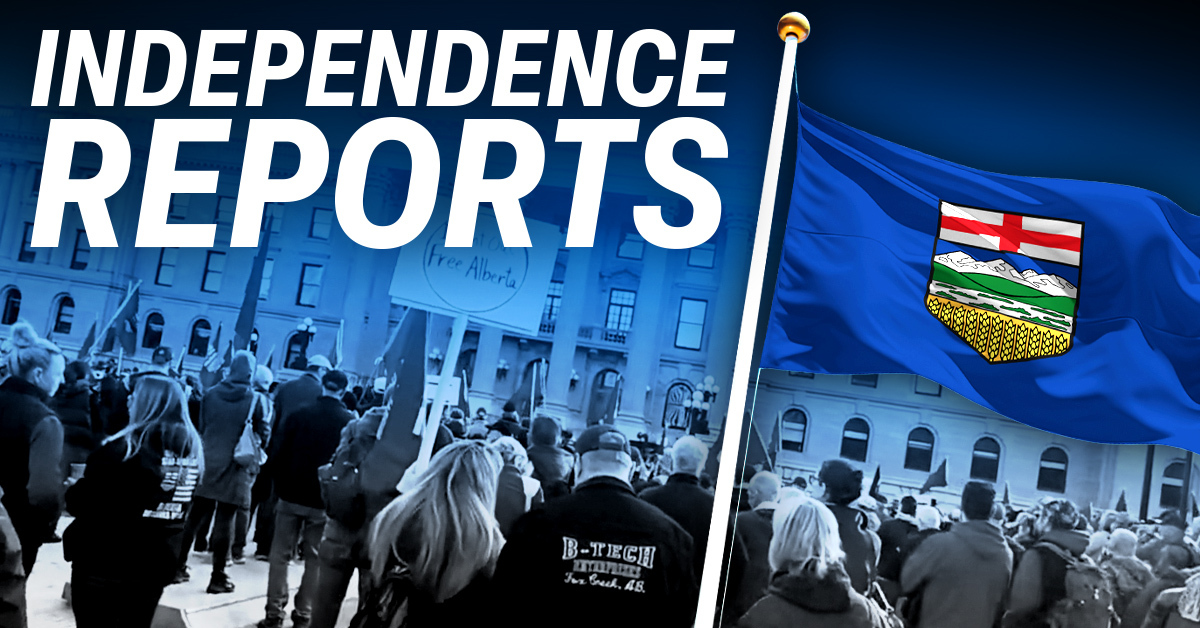
But now the movement is grassroots, no party, no official spokespeople, and closer to leading Alberta out of Confederation than ever before.
So maybe the RCMP were wrong. They should not have feared one man, but rather the people of Alberta.
RebelNews+ Clips
RebelNews+ is our premium subscription service, which gives you access to our exclusive long form, TV-style shows, documentaries, members-only comments section, and the ability to read RebelNews.com without ads.
Subscribe now to get the full experience!
https://rebelnewsplus.com/


COMMENTS
-
Bruce Atchison commented 2026-01-27 23:14:09 -0500This proves that Alberta separation is no new thing. The bias has been there in our relationship since 1905 but it ramped up with the first Trudeau.
-
 Bernhard Jatzeck commented 2026-01-27 21:54:42 -0500Should we be surprised? We had a federal election the year before and PET was pleased that Canada voted “correctly”, giving him the majority he felt he was deprived of in 1979.
But the 1980 election proved to many that this country was defunct. I was a grad student at UBC at the time and I remember when CBC’s TV coverage started that evening. The host had a smug look on his face and his first comment was something like “Good evening, British Columbia. The election’s over and the Liberals have won.” That’s when I realized that my vote didn’t matter.
Add to that all the horsing around with the price of Alberta oil, not to mention the NEP being inflicted upon us by PET, would it have been any surprise that independence was being considered?