



Carney Liberals lack deportation strategy for 500k illegals
The Liberal government earlier denied losing track of illegal immigrants in June but withheld data when an MP requested a detailed deportation strategy.

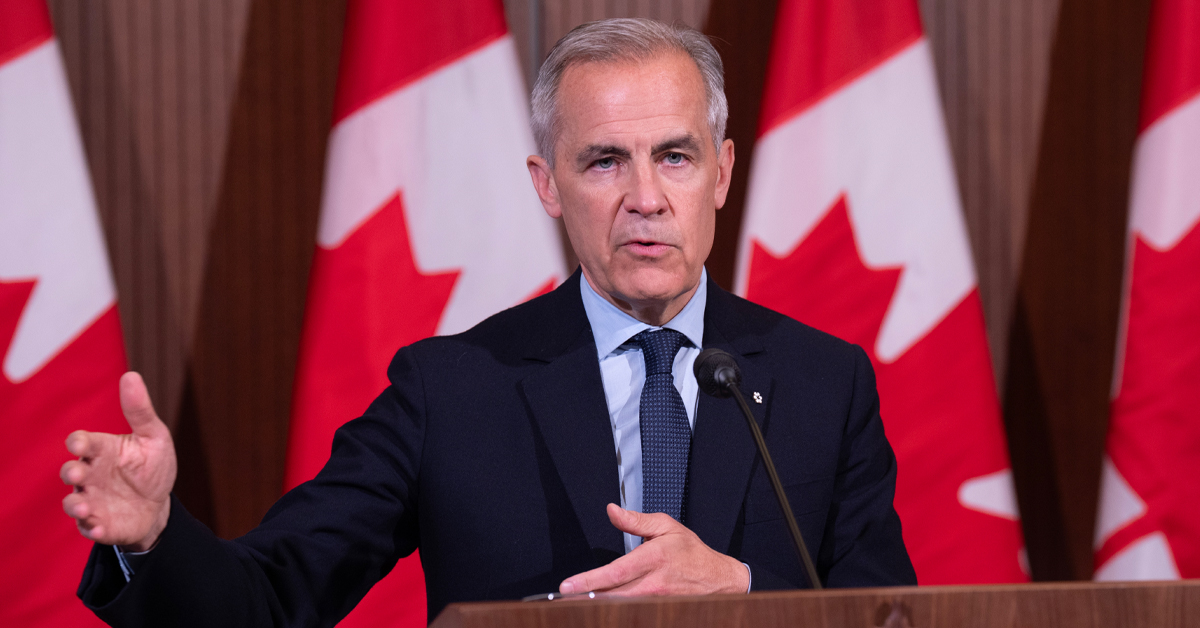
The government plans to halt immigration applications for public health or national security but lacks a deportation strategy for illegals.
Previously negligible, the number is now significant, according to the Globe and Mail, impacting the macro picture and requiring proper accounting.
A 2024 Department of Finance briefing estimated up to 500,000 people live in Canada without proper immigration papers, potentially including those with overstayed visas or rejected asylum claims, though evidence is limited.
The Liberal government earlier denied losing track of illegal immigrants in June but withheld data when an MP requested a detailed deportation strategy.
"The Liberals invited millions of migrants into Canada knowing full well they did not have the economic and social infrastructure to support them," Conservative MP Michelle Rempel Garner told the Commons. "Canada now has a massive housing crisis, endless health care wait times and countless Canadian youth without jobs."
A 2025 survey revealed 54% of Canadians feel immigration levels are excessive. Major worries are housing (40%), joblessness (25%), and prioritizing Canadians (22%).
"Newcomers themselves are not to blame," Rempel Garner clarified. "It is the Liberals who misled everybody about Canada's capacity." Minister Diab did not respond to questions on a federal deportation strategy.
Cabinet, last January 15, said illegal immigrants were not welcome here. "Those folks are not welcome to Canada if they are doing so in an irregular fashion," then-Immigration Minister Marc Miller told reporters at the time.
Bill C-2, if passed, would retroactively deem many asylum claimants inadmissible, including international students, if they applied over 365 days after arriving in Canada (post-June 24, 2020), impacting tens of thousands.
The bill closes a Safe Third Country Agreement loophole, barring asylum claims made over two weeks after illegal land entry from the United States.
Meanwhile, economists advise the government to include Canada's estimated 500,000 illegal migrants in its upcoming immigration levels plan, which may be as high as 600,000, according to Miller.
One said including illegal migrants in population planning, noting that many with expired visas are still employed and form a "sizable" part of some Canadian communities.
There are 3,049,277 foreign students, visitors, and migrant workers, representing 18.5% of the private sector workforce, with millions facing visa expirations by 2025.
Last year's immigration plan aimed to grant permanent residence to essential service workers lacking documentation: 250 in 2025, 500 in 2026, and 1,000 in 2027.
A broader 2021 Liberal government commitment to regularize illegal immigrants, including those with expired work permits, was shelved before this year's federal election due to declining public support for increased immigration.
Prime Minister Mark Carney stated on April 16 that a cap would be maintained for "certainly a couple of years" to increase the capacity to welcome newcomers.
“Our population has gone up at about three percent per year because of immigration,” Carney said. “That’s why we need to have a cap for a certain period of time.”
Immigration levels are presented annually in the fall to aid planning for housing, schools, healthcare, and infrastructure.
Cabinet is now consulting on new targets for temporary and permanent residents, according to Blacklock’s. This comes as Canada projects 396,480 new landed immigrants by year-end, nearly reaching its 2025 quota of 400,000, excluding temporary residents.
Alex Dhaliwal
Journalist and Writer
Alex Dhaliwal is a Political Science graduate from the University of Calgary. He has actively written on relevant Canadian issues with several prominent interviews under his belt.
Featured Stories


