
Ceuta's border has a surprising second route — we went to see it
In addition to a formal crossing where identification is checked and photos are taken, a separate route through a ditch serves people without documents, who are simply walked back into Morocco, no questions asked.

Article by Rebel News staff
Two days into reporting on the ground in Ceuta, an autonomous Spanish territory on the North African coast, Rebel News reporter Alexa Lavoie shared what she learned about the crisis: two borders fell at once.
Many already know that late into the night on July 30, 2026, both Ceuta and another Spanish enclave, Melilla, were overwhelmed by a massive wave of illegal crossings. In Ceuta, more than 60,000 mostly military-age young men crossed by sea, climbed border fences and poured into the city of only 83,000 residents.
But few realize that before the now-infamous, massive crossing at the El Tarajal border even began, Ceuta was already facing another wave of illegal migration from a different direction, near the Benzú border.
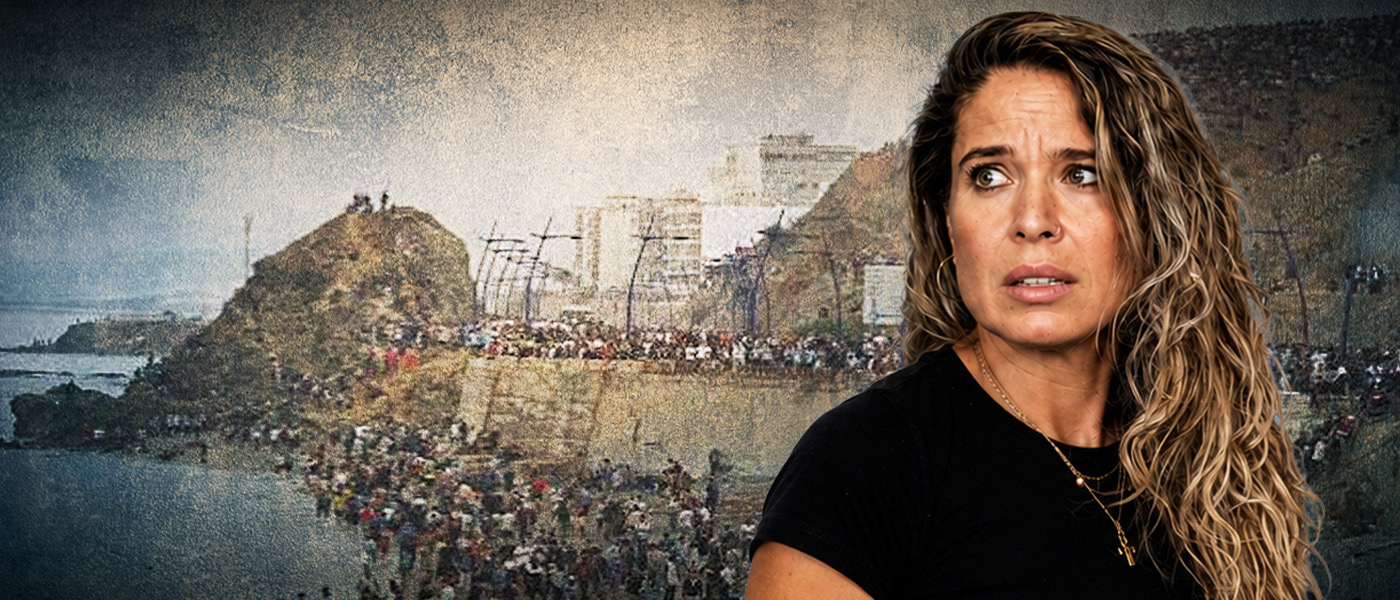
At Benzú, the Rebel News team saw thousands of migrants from countries besides Morocco, including Yemen, Nigeria and Senegal, gathered outside processing centres and spread across nearby beaches. Several told them that military and police had not taken their information — no identification, no background check, no record of who had entered.
The overwhelming majority were young men. The small number of women had to be separated over concerns for their safety, including the risk of sexual violence.
These illegal migrants are now spread across Ceuta. The Rebel News team saw some in the city centre, but noticed many more living in the mountains, bushes and isolated areas surrounding the city. Near the border, largely hidden from public view, there's a packed migrant facility mainly housing women and minors.
Members of the Guardia Civil said that people were not being arrested across the city for entering illegally, and they couldn't say when, or if, everyone would be deported.
For now, at the border, there are two routes: a formal crossing where identification is checked, and photos are taken, and a separate route through a ditch, where people without documents are simply walked back into Morocco, without questions, photographs, or consequences.
What Spanish Prime Minister Pedro Sánchez and his government have done amounts to political surrender. He has sent a message that Spain's borders can be tested and overwhelmed with minimal consequences — a message that won't stop at Ceuta.
A country that does not control its borders is not fully in control of its future. And right now, under Pedro Sánchez, Spain is losing control.
There is more coverage from Ceuta to come. Follow Alexa's reporting at MigrantReports.com, and if you appreciate the work she does on the ground, please consider donating to help us keep bringing you the stories the mainstream media refuses to tell.
Alexandra Lavoie
Quebec based Journalist
Alexa graduated with a degree in biology from Laval University. Throughout her many travels, she has seen political instability as well as corruption. While she witnessed social disorder on a daily basis, she has always been a defender of society’s most vulnerable. She’s been around the world several times, and now joins Rebel News to shed light on today’s biggest stories.


COMMENTS
-
 Colette Stirs followed this page 2026-08-10 08:01:44 -0400
 -
Bruce Atchison commented 2026-08-09 18:57:45 -0400Leftists are in league with Islamists. When Europe does wake up, it will be too late. Same applies to Canada.