


Conservatives expect Emergencies Act 2.0 if Liberals block internet access
Currently, the only restrictions on internet access include bail conditions for accused criminals.

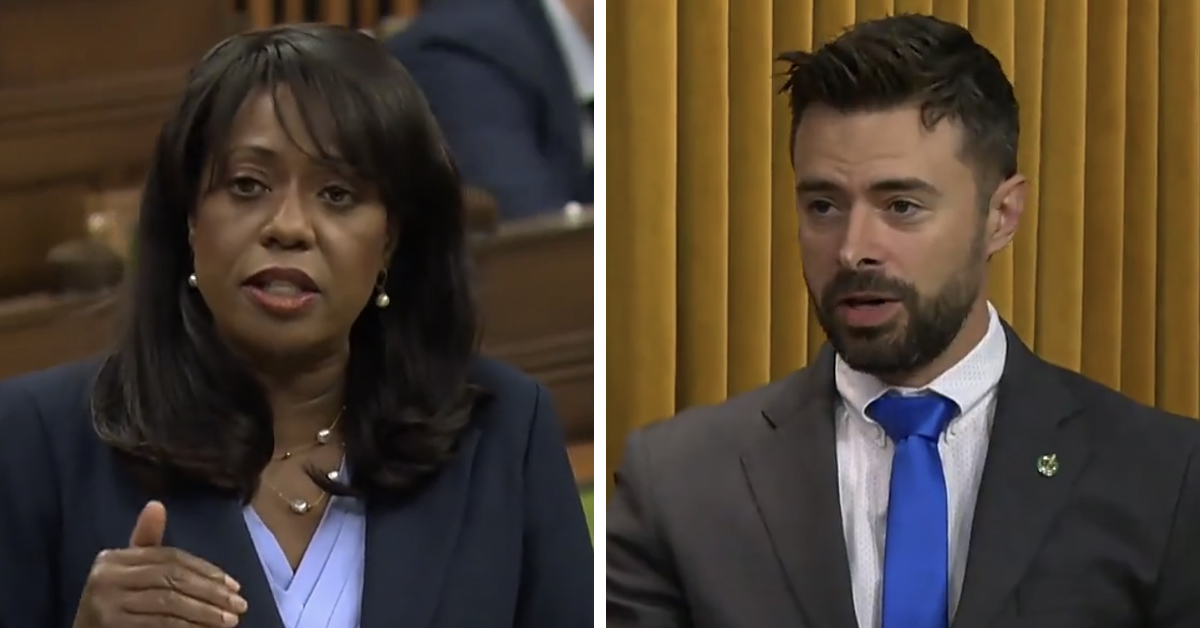
Opposition MPs will block Bill C-8, an Act Respecting Cybersecurity, which Conservative MP Leslyn Lewis stated would allow the government to deprive individuals of essential services without evidence.
MP Lewis argued in the Commons that Bill C-8 grants the federal government "sweeping powers," forcing Canadians to "surrender their rights to remain secure."
Section 15.1.1 allows cabinet to secretly prohibit people from using products and services from telecom service providers if deemed necessary to secure the Canadian telecommunications system against threats, with disclosure of such orders also being prohibited under section 15.1.3.
The Canadian Constitution Foundation (CCF), along with Bloc Quebecois and New Democrat MPs, also raised concerns about Bill C-8's lack of safeguards, given that orders do not require a judicial pre-authorization or automatic judicial review for disconnections.
Imagine being cut off from every facet of your online life, your social media, online banking, email, and work portal, without a court order and without being able to determine the cause.
— Dr. Leslyn Lewis (@LeslynLewis) October 5, 2025
This is what Liberal Bill C-8 could do to Canadians in the name of cybersecurity.
Without… pic.twitter.com/Ix8Ht7raST
MP Lewis warned on October 3 that Bill C-8, as written, is too broad and could suppress political dissent under the guise of cybersecurity. She offered a concrete example of its potential impact on ordinary Canadians, as reported by Blacklock’s.
Lewis illustrated a situation involving online posts that threaten to expose government corruption with secret information. "Imagine Sarah, a citizen frustrated with a government program she believed was mismanaged and corrupt,” she detailed.
Lewis continued, "The government views her post as a threat to the telecommunications system, so quietly passes an order under Bill C-8.” Before Sarah knows it, her internet provider receives direction to shut down her internet and phone services, all without a court order or warrant, and without explanation.
Section 15.1.1 states cabinet may “prohibit a telecom service provider from using all products and services provided to a specified person” if it “believes on reasonable grounds it is necessary to do so to secure the Canadian telecommunications system against any threat.” The… https://t.co/gawxkKM5d0
— Blacklock's Reporter (@mindingottawa) October 6, 2025
Bill C-8, similar to the defunct Bill C-26, An Act Respecting Cybersecurity, raises privacy concerns despite Public Safety Minister Gary Anandasangaree's claims that it targets only hackers and ransomware fraudsters who breach IT systems, access sensitive information, endanger lives, and steal information critical to national security.
On Friday, Conservative MP Matt Strauss criticized the bill’s current wording, stating it could unilaterally label citizens a "threat" and force companies like Rogers or Telus to release personal data.
MP Kevin Lamoureux, parliamentary secretary to the Government House Leader, dismissed the idea of the Liberal Party taking away internet, cellphones, or banking access as improbable.
Strauss countered the "conspiracy" claim about Liberals freezing bank accounts, citing the 2022 Emergencies Act invocation against peaceful Freedom Convoy protestors. This led to $7.8 million in bank and credit union accounts and 170 bitcoin wallets being frozen, an action later ruled unlawful by a federal judge.
“They imposed the Emergencies Act,” said MP Strauss. “I do not want to hear any more about defending Charter rights from any such member.”
Carney vows to censor the internet
— Rebel News (@RebelNewsOnline) April 11, 2025
Prime Minister Mark Carney blamed American “web pollution” for spreading misinformation against him, including suspected ties to disgraced banker Jeffrey Epstein, a convicted sex offender.
More by @WestCdnFirst: https://t.co/66QmkglIpv
Bill C-8 contradicts the Liberal government's prior condemnation of internet control as a human rights threat, made as a founding member of the Freedom Online Coalition.
Three years ago, the Liberal government affirmed that offline rights extend online, committing to protect internet freedom with international partners.
Currently, there is no mechanism by which a private citizen could have their internet services pulled by government order, excluding bail conditions for accused criminals.
Alex Dhaliwal
Journalist and Writer
Alex Dhaliwal is a Political Science graduate from the University of Calgary. He has actively written on relevant Canadian issues with several prominent interviews under his belt.
Featured Stories


09:14


COMMENTS
-
 Peter Bradley commented 2025-10-08 01:04:14 -0400In communist East Germany, where the socialist government supposedly cared about the people, the STASI secret police opened and read about 10,000 letters per day to check for unauthorized thoughts. You can guess that it called for a bigger civil service on the taxpayer dime. After 45 years of communism, the people had had enough of it.
 -
Bernhard Jatzeck commented 2025-10-07 20:48:05 -0400Remember the words of what’s-her-name, the former PM of New Zealand: if it doesn’t come from the government, it’s not true.
-
Paul McConnell commented 2025-10-07 20:34:00 -0400I wonder if Elon will comply. https://www.starlink.com/ Would the cops come and take a satellite dish off my roof?
-
Bruce Atchison commented 2025-10-07 19:21:24 -0400How totalitarian! You folks who voted for Marx Carnage could someday suffer if you say something the government doesn’t like. You’ll only have yourselves to blame. Socialism isn’t sociable when you offend it.
