


High-speed rail or high-stakes gamble?
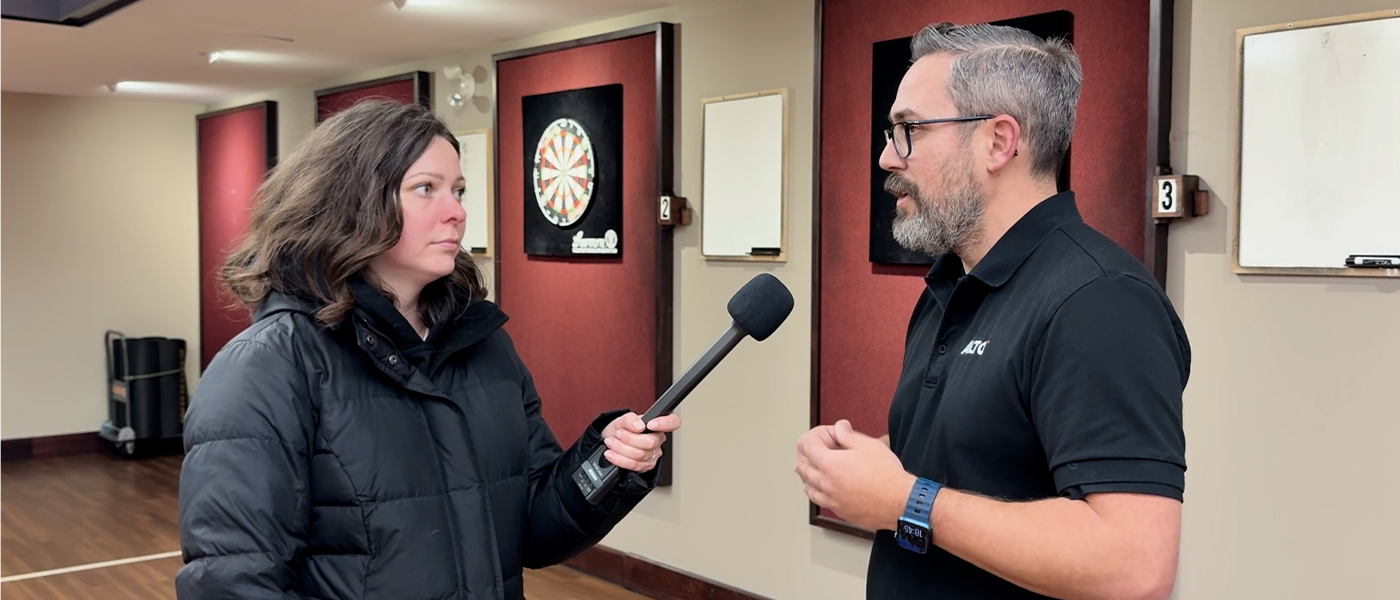
Alto spokesman Peter Paz defends the ambitious rail vision as homeowners and small businesses question the human and environmental price.

There was both optimism and outrage on February 26 as hundreds packed an open house in Peterborough, Ont. to learn more about Alto’s proposed $90-billion high-speed electric rail line. Trains could reach speeds of 300 kilometres per hour and carry an estimated 18 million passengers annually.
Alto, a federally backed Crown corporation, is in the earliest stages of planning a 1,000-kilometre electric rail corridor linking Toronto and Quebec City with seven mandated stops along the way. Peterborough has been lobbying hard to secure one of them.
City council has already earmarked funds to support a stop, signalling support for what proponents describe as a generational infrastructure investment. But beyond the promise of speed and economic stimulus, residents voiced serious concerns.
“Almost immediately”
— Tamara Ugolini 🇨🇦 (@TamaraUgo) February 26, 2026
That’s how fast Transport Minister Steve McKinnon says private property could be seized after approval of the ALTO high-speed rail
Expropriation of pristine farmland and private hunting land, for a $90B megaproject that won’t be on time or on budget pic.twitter.com/mSWNVzr9nv
The proposed corridor would cut through farmland, forests and wetlands across central and eastern Ontario. Some property owners fear displacement through expropriation. Others worry about tourism impacts along their well-established small businesses, many held for generations.
“It’s generational. It’s livelihoods,” one resident said. Another described feeling “kicked in the gut” when he heard about the plan.
$90B high-speed rail nightmare leaves farmers feeling ‘kicked in the gut’
— Rebel News (@RebelNewsOnline) February 28, 2026
Emotions ran high inside the McDonnel Street Community Centre this week as residents gathered to learn more about “Alto,” the proposed 1,000-kilometre high-speed electric rail line that would connect… pic.twitter.com/vJxM5YA1Z2
Inside the tightly managed sessions — nearly 500 attendees in Peterborough alone — Alto’s Senior Director of Public and Government Relations, Peter Paz, defended the consultation process, calling it unprecedented in Canadian high-speed rail planning.
“We’re in stage zero, stage one,” Paz said, emphasizing that no final alignment has been chosen. Paz relayed that the corporation has completed more than 10,000 surveys, received over 6,000 online comments, and hosted 26 open houses and 10 virtual sessions since January.
Paz acknowledged valid concerns around land acquisition and environmental impacts, particularly in rural communities. While expropriation will undoubtedly occur, he said Alto aims for negotiated agreements at fair market value or better, taking what he described as a “human-centred” approach.
However, similar projects have failed elsewhere, including California’s over-budget high-speed rail and Toronto’s delayed Eglinton Crosstown LRT. Given Via Rail's existing reliability and ridership issues, there’s clear evidence that these large-scale rail expansions carry significant risk with little potential reward.
Paz argued this project differs. By incorporating a public-private partnership model from the outset and bringing in international firms with European high-speed rail experience, he says the consortium leading the way has learned from past mistakes.
On why running alongside existing rail lines isn’t being considered, Paz says that the dedicated tracks — requiring up to 60 metres of right-of-way — would ensure reliability and avoid congestion with freight lines.
The current price estimate ranges between $60 and $90 billion, with roughly $4 billion already committed to early development. Maintenance costs are anyone’s guess, as design and impact assessments remain underway in a four-year-long pre-construction phase.
Consultations are set to close March 30 for this round, though Paz confirms that engagement will continue. “Social acceptability” is a big part of the process.
Featured Stories

03:31

10:27


COMMENTS
-
 Bernhard Jatzeck commented 2026-03-02 21:29:33 -0500High-speed train service along that corridor has been a scheme going back nearly 60 years. Remember the Turbotrain? It was an interesting idea, but it never worked properly.
I recall seeing news reports back then about it either being on fire or out of service for repairs. It became a financial sinkhole and was eventually discontinued after dozen or so years.
Alto will be yet another FLIP (Friends of the LIberal Party) project. Two will definitely benefit from it: Brookfield and AtkinsRealis (formerly known as SNC Lavalin). It seems that everything that they take on lately becomes a bloated white elephant. (Why finish something in 5 years when, with the right cost-plus contracts, 10 will do?)
And since two new lines would have to be built, land will need to be cleared, including forest. Just wait until the native land claims start. That’ll delay things for a few more years for those to be settled, if at all.
Then there’s the issue of whether it’ll be worth the time and expense. Since it’s going to cost the proverbial arm and a leg, will there be enough passengers for it to pay for itself? And how much will it cost to ride on it?
It has “hog trough” written all over it. -
Bruce Atchison commented 2026-03-02 19:34:23 -0500In Spanish, Alto means stop. That must happen in this scheme’s case. If it was a raised monorail, it would be less harmful but it’s still a bad idea.
