



New report blames inflation on federal pandemic spending
Trudeau relied on Mark Carney for policy advice during the COVID-19 pandemic.

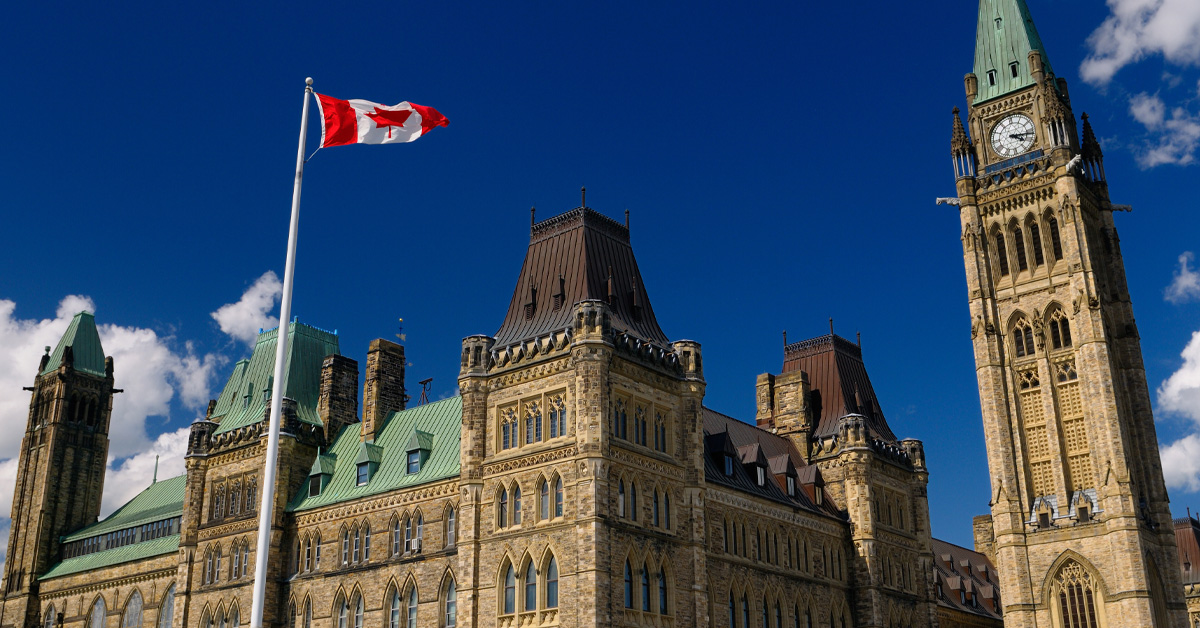
Trudeau government "unfunded spending spree" caused pandemic inflation, not Bank of Canada policies, finds a recent report by the C.D. Howe Institute.
By 2020, 20.7 million Canadians—out of an adult population of 30.3 million—had received income from federal pandemic relief programs. These programs cost $270 billion in 2020 and a cumulative $360 billion since their inception, according to the National Post.
Economic aid during the pandemic, while helpful, created "nominal wealth" amid low unemployment, leading to inflation and higher prices.
"Canada is facing the worst crisis of our lifetime," Mark Carney, Trudeau's former economic advisor, makes his pitch to become Liberal Party Leader — do you trust him? pic.twitter.com/t8uROS3Rdx
— Rebel News (@RebelNewsOnline) February 25, 2025
From January 2020 to December 2022, Canada’s Consumer Price Index (CPI) increased 11.4%. Despite the pandemic's onset in China (December 2019) and Canada (January 2020), inflation spiked from May 2021, hitting a nearly forty-year high of 8.1% in June 2022.
“Of course prices went up,” C.D. Howe economist David Andolfatto told the National Post. “There’s no such thing as a free lunch. Somebody will have to pay.”
A prior think tank report estimated wasteful pandemic spending at minimum $111 billion, including $21.1 billion in debt interest.
Trudeau relied on former Bank of Canada governor Mark Carney, now his successor, for policy advice at the time. The PMO did not elaborate on Carney’s advisory role or the advice given.
Justin Trudeau ahead of his federal budget: “We are making sure we continue to be fiscally responsible, we will continue to present that track.”
— Rebel News (@RebelNewsOnline) April 6, 2022
Canada has an unprecedented $1 trillion+ federal debt from his government's spending. pic.twitter.com/IEONpofRr6
Prices jumped largely because of supply-chain bottlenecks, government spending on income supports and other pandemic-related procurements.
Consumers then faced higher interest rates, as the Bank of Canada raised rates from 0.25% in 2020 to 5% by 2023 to combat inflation.
Andolfatto and his colleague Fernando Martin criticize pandemic spending but offer a nuanced view of the Bank of Canada's policies. They agree the bank was slow to raise interest rates and could have communicated its inflation targets better, yet conclude it had limited power to curb price spikes.
The report recognizes the pandemic as an unprecedented period marked by both inflationary and deflationary forces.
Finance Minister Chrystia Freeland’s spending bonanza continues to spiral out of control, with the current deficit surpassing the forecast by 16%.
— Rebel News (@RebelNewsOnline) March 7, 2024
READ MORE: https://t.co/a96M24oCjB pic.twitter.com/QLwu4P6QrX
Statistics Canada earlier reported a 32.7% decrease in government spending on economic affairs in 2022 across all levels. However, True North's exclusive raised accuracy concerns.
"These numbers are significantly skewed by the winding down of pandemic support programs and payments across the federal and provincial governments," said Carleton University Sprott School of Business associate professor Ian Lee. "If you examine total government spending in 2019 and compare it to 2021/22, government spending is much higher than pre-pandemic."
Federal spending in 2022 was 27% higher than in 2019/20, an average annual increase of 9%, reported the Fraser Institute, a fiscal think tank. Spending rose 73% to $644.2 billion in 2020/21 due to COVID-19, then fell 21% to $508 billion in 2021/22. However, much of this increase was a permanent, long-term federal expenditure ramp-up, it found.
From 2019/20 to 2020/21, the federal deficit-to-GDP ratio—a debt-payment indicator—increased from -1.8% to -13.2%. Net debt-to-GDP rose from 33% (2018/19) to nearly 50% (2021/22).
"In summary, while spending is declining in 2022 as the pandemic ends, total government spending across the board has increased dramatically since the year before the pandemic," Lee said.
Trudeau's former finance minister Bill Morneau said the feds "probably" splurged too much during the COVID-19 pandemic. He admitted the consequence of printing hundreds of billions is a potential recession.https://t.co/uQhpYVSgLH
— Rebel News (@RebelNewsOnline) January 9, 2023
A 2021 Globe and Mail publication revealed tensions between Prime Minister Justin Trudeau and then-finance minister Bill Morneau over pandemic handouts, leading to Morneau's unceremonious exit.
Though successful in providing relief and economic cushion, the C.D. Howe Institute noted that injecting excess money into a low-unemployment economy causes inflation.
Bank of Canada Governor Tiff Macklem stated in 2022 that earlier federal government cuts to pandemic stimulus and interest rate hikes would have led to lower inflation. He advised that anti-inflation policies should be "temporary" and "target the most vulnerable."
In 2023, Morneau also told CTV News that cabinet should have weaned Canadians off sooner. Minister Chrystia Freeland later expressed concern over "costly political gimmicks" on December 16.
From 2021-2023, the CPI jumped to 3.4% in 2021, 6.8% in 2022, and nearly 4% in 2023—all attributed to COVID-19. More than five years after the virus emerged and two years post-pandemic, elevated prices remain amid continued large deficit spending.
Prices typically don’t drop, or approach under 1% inflation, unless demand falls due to recession or severe government cost-cutting.
StatsCan figures show pandemic-era price hikes survived despite tamed inflation. Canada’s June inflation rate rose to 1.9% from 1.7% in May.
Alex Dhaliwal
Journalist and Writer
Alex Dhaliwal is a Political Science graduate from the University of Calgary. He has actively written on relevant Canadian issues with several prominent interviews under his belt.
Featured Stories

08:14


COMMENTS
-
Bruce Atchison commented 2025-07-21 21:11:43 -0400This is a surprise? The panic-demic was a huge scam foisted on an unsuspecting public. And as for printing money, watch YouTube videos on the Weimar Republic. If that doesn’t frighten you, nothing will.
