



Parks Canada quietly removes 'genocide' from historical residential school site
In a notable shift, the term “genocide” has been removed from the designation of the Portage la Prairie Indian Residential School as a national historic site.

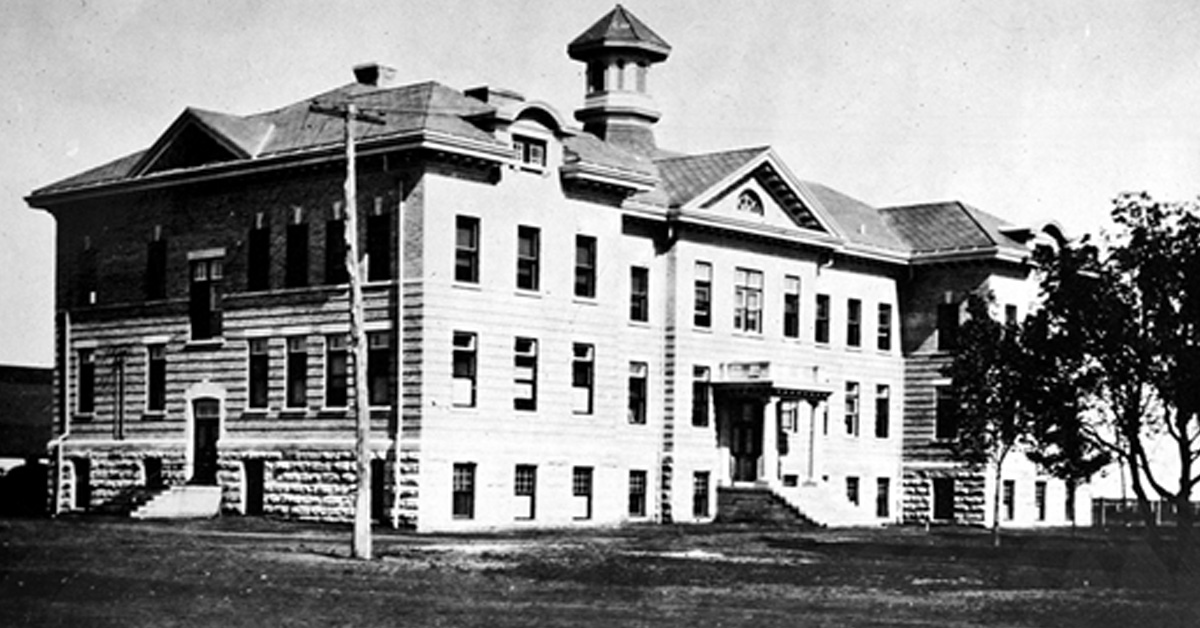
Parks Canada has removed all references to “genocide” in its latest designation of the Portage la Prairie Indian Residential School as a national historic site.
The agency, which as recently as February 12 described the schools as “cultural genocide,” offered no explanation for the change in its announcement of a plaque unveiling scheduled for tomorrow in Manitoba, as reported by Blacklock’s.
.@ParksCanada deletes reference to "genocide" in latest commemoration of Indian Residential Schools. PM's father taught in the Indian day school system in the 1960s. https://t.co/2QlgPgEXSq #cdnpoli @CdnHeritage @CEO_PC_DGA pic.twitter.com/YFdHI6W8OS
— Blacklock's Reporter (@mindingottawa) August 13, 2025
“Built in 1914-1915, the former Portage La Prairie Indian Residential School functioned within the residential school system whereby the federal government and certain churches and religious organizations worked together to assimilate Indigenous children as part of a broad set of efforts to destroy Indigenous cultures and identities and suppress Indigenous histories,” it reads.
While the notice appears to validate the school’s role in assimilationist policies, the genocide claim is absent. This marks a stark departure from the 2015 Truth and Reconciliation Commission’s language, which former prime minister Justin Trudeau endorsed, saying, “I accept the Commission’s report, including the fact they used the word ‘genocide.’”
FULL DOCUMENTARY | Kamloops: The Buried Truth
— Rebel News (@RebelNewsOnline) September 2, 2023
Rebel News reporter Drea Humphrey and Matt Brevner take you on an investigative journey to uncover the truth about a story that misled a nation, the truth about what is actually known about what lies beneath the soil at the former… pic.twitter.com/gdtyBo7FT4
Prime Minister Mark Carney, whose father was principal of an Indian day school in 1965, has not used the term since taking office on March 14. Nor has he addressed claims of hidden graves at residential schools, a narrative that gained traction in 2021 when the Tk’emlups te Secwepemc First Nation reported 215 “graves” detected by ground-penetrating radar at a former Kamloops school.
Meanwhile, internal Parks Canada memos, disclosed July 3, reveal skepticism about these claims. This is especially relevant considering the limitations and potential inaccuracies of ground-penetrating radar technology.
Federal officials doubted truth of Kamloops mass graves claim
— Rebel News (@RebelNewsOnline) July 5, 2025
What if I told you that a major federal agency quietly questioned one of the most explosive claims in recent Canadian memory — but said nothing publicly, because the prime minister had already turned it into a… pic.twitter.com/Ag6DrfPRUV
A consultant cautioned, “Ground-penetrating radar often throws up false positives, anomalies that are not indicative of anything significant.” They urged describing the findings as “possible graves” until further investigation.
In May of 2024, the band then referred to these potential findings as “anomalies” instead of graves, only after three years of public outrage, a visit from Pope Francis and dozens of churches either damaged or destroyed in the wake of the alleged burial site.
To date, no remains have been recovered, despite the First Nation receiving $12.1 million for fieldwork, including exhumation and DNA testing.
The Portage la Prairie site, now a place of “commemoration and resilience,” is intended to reflect a community effort to educate about the legacy of residential schools. Yet Parks Canada’s pivot away from “genocide” speaks to how history is framed and whether this signals a broader rethinking of the current residential school narrative.
Featured Stories


