



Poll finds 41% of Indigenous people tired of land acknowledgments
Four in 10 Indigenous people say land acknowledgments have lost their meaning, yet Canadians who object to them are still being punished.


We've been told that land acknowledgments are meant to honour Indigenous people, but a new poll suggests many Indigenous people are tired of hearing them.
In a new survey of 503 self-identified Indigenous Canadians, Leger found that 41 per cent feel land acknowledgments "have become overused to the point of losing their meaning." Another 47 per cent said they still carry important meaning and help advance reconciliation.
Meanwhile, Canadians who refuse to go along with land acknowledgments keep paying a price for it.
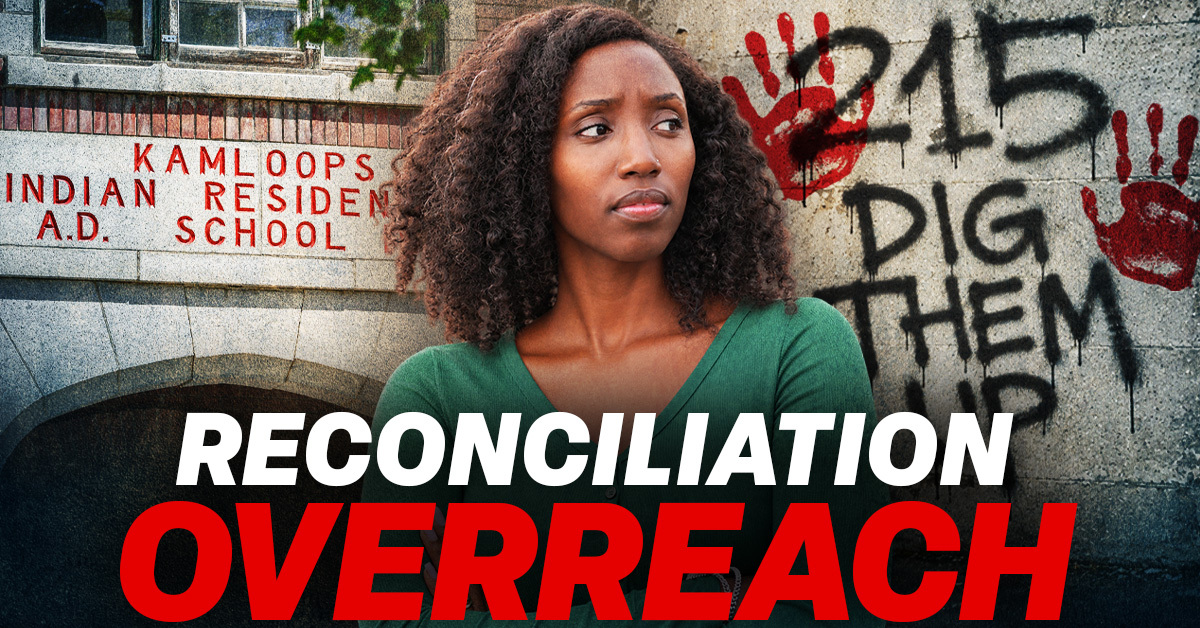
Jim McMurtry, a former Abbotsford teacher, was fired after telling students that most children who died at residential schools, including Kamloops, died of diseases such as tuberculosis, not murder. At his school, students heard a land acknowledgment every day, and he warned me about the effect that has on kids.
"They are hearing that they are not on their land. They are hearing that they've committed some sort of injustice," he said.
This fall, Isaac Simpson, a 16-year-old Grade 11 film student at a Lower Mainland school, was suspended after posting a YouTube video called "Lies and Reconciliation." It exposed what students were shown at a truth and reconciliation assembly, which opened with a land acknowledgment and featured a virtual speaker urging students to embrace discussions of "land back."
The school suspended him as of Oct. 2 and said he could return only if he took the video down.
In Ontario, Catherine Kronas, an elected member of a school parent council, was suspended by the Hamilton-Wentworth District School Board after she formally objected to a land acknowledgment read at an April 9 council meeting.
"I was just frustrated with the board imposing something that hasn't been decided by the council," Kronas said. She called the compelled speech "soft totalitarianism."
Back in B.C., Sechelt mother of four Lara Yates was banned from Chatelech Secondary's property after she publicly objected to a land acknowledgment read before her child's performance. She called it a "racially charged mantra." Her children were temporarily barred too, and School District 46 has upheld the ban, which has been in place since December 2025.
All three are fighting back. Simpson has partnered with the Justice Centre for Constitutional Freedoms to appeal the school district's Oct. 29 decision barring him from his school. The Hamilton-Wentworth District School Board reversed Kronas's suspension after the Justice Centre stepped in, though it still opens its meetings with land acknowledgments. And Yates, represented by Lisa Bildy of the Free Speech Union of Canada, is asking the B.C. Supreme Court to review and overturn her ban.
Drea Humphrey
B.C. Bureau Chief
Based in British Columbia, Drea Humphrey reports on Western Canada for Rebel News. Drea’s reporting is not afraid to challenge political correctness, or ask the tough questions that mainstream media tends to avoid.


