

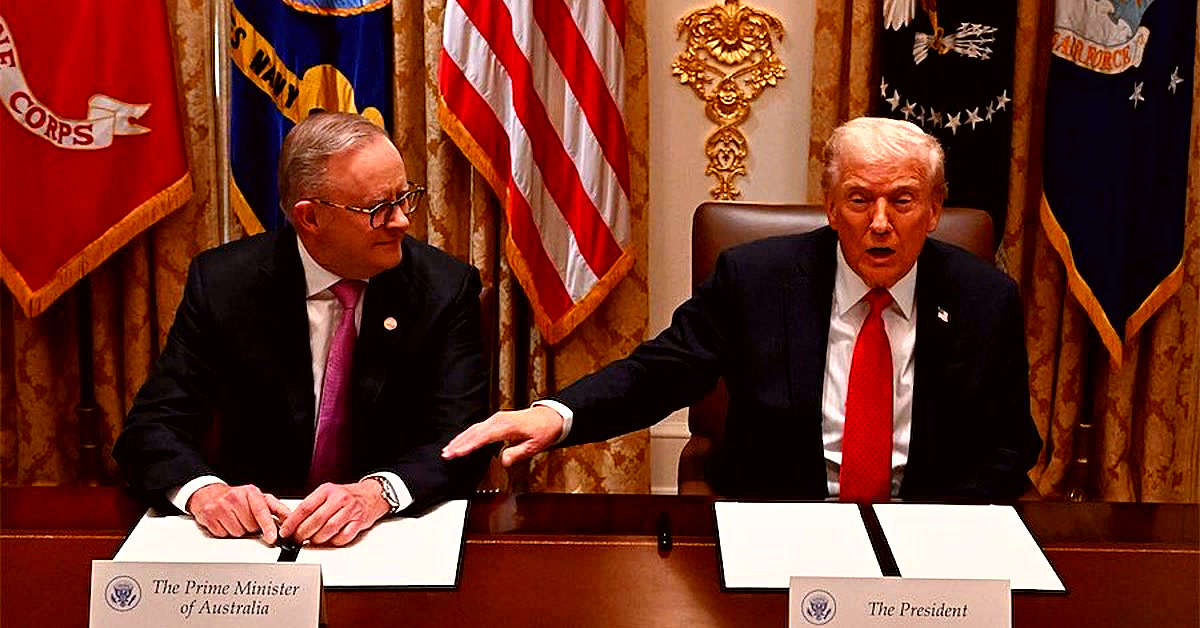

US Ambassador warns Labor that Digital Duty of Care laws will push platforms to censor speech
The US Embassy has warned Labor that its Digital Duty of Care laws will push platforms to censor protected speech, as a deal with the Greens all but guarantees the bill clears the Senate.

The United States has again warned the Albanese government over Labor's Digital Duty of Care laws, with Ambassador David Brat telling Communications Minister Anika Wells that vaguely defined harms and steep fines would push platforms to censor lawful speech. The warning comes from Australia's largest foreign investor, and it lands on the day a Labor-Greens deal made Senate passage of the bill all but certain.
In a post published by the US Embassy in Canberra on Tuesday, Brat said he had met Wells and "laid out the Trump Administration's well-known objections to the Digital Duty of Care Legislation." "Free speech is the foundation of a free society, and protecting it is a U.S. priority," the ambassador said. He wrote: "Vaguely defined 'harms,' backed by penalties of up to 5% of global revenue, will push platforms to censor lawful speech."
"Free speech is the foundation of a free society, and protecting it is a U.S. priority.
— U.S. Embassy Australia (@USEmbAustralia) November 24, 2026
Today I met Minister for Communications Anika Wells and laid out the Trump Administration’s well-known objections to the Digital Duty of Care Legislation. Vaguely defined "harms," backed by… pic.twitter.com/2RM2q9IVan
"As Australia's largest foreign investor, the U.S. is concerned with regulations that impose disproportionate compliance burdens on American companies relative to competitors," Brat said.
The intervention came as Wells struck a deal with the Greens on the Online Safety Amendment (Digital Duty of Care) Bill 2026. In return for Greens support, Labor accepted a "private right of action" so Australians and groups can take platforms to court over alleged harm, including through class actions, and raised the top fine from Labor's original $109.2 million to 5 per cent of a company's worldwide revenue, the figure Brat named. That agreement makes Senate passage all but certain, with a final House vote still required.
Two months earlier, on 22 September, the US Embassy in Canberra published a formal consultation response on the exposure draft, which Rebel News reported at the time. The United States said it had "serious concerns" about "mandating broad duty of care requirements that dictate how platforms manage content and users' feeds." "A framework that empowers governments to enforce vague definitions of 'harm' risks becoming a mechanism for viewpoint-based censorship," the submission said. If platforms were compelled to filter protected speech from algorithmic feeds, "the U.S. government would likely consider such a measure as facilitating censorship."
Washington also warned of effects beyond Australia. "The large majority of social media and video-sharing platforms that would be affected are U.S.-headquartered companies, operating substantially on U.S. soil and serving American users alongside Australian ones." "The U.S. government has made clear its opposition to foreign measures that result in extraterritorial censorship of protected speech by Americans online." The submission said regulations "that impose disproportionate compliance burdens on American companies relative to competitors, or that apply unevenly across similar services, will invariably raise concerns." Brat's language on Tuesday tracked that economic warning almost word for word.
The bill is not yet law and still has to clear the Senate and the House, but Washington has now warned Labor twice, the second time in person and as Australia's largest foreign investor. Taking the package through with the Greens, over those objections, risks doing further damage to the US-Australia relationship under Labor.
Rukshan Fernando
Rebel News Australia Content Manager and Commentator
Rukshan Fernando is an Australian political commentator, filmmaker, and journalist. He is known for his on-the-ground coverage and livestreams of protests and social issues, with a strong focus on stories often overlooked by the mainstream media. As a Content Manager and Reporter with Rebel News Australia, Rukshan works alongside Australia Bureau Chief Avi Yemini to bring the other side of the story from down under.
Featured Stories

6:32


