



AFP arrests 65-year-old Somali-born man alleged to be ISIS ‘principal’ propagandist in Melbourne
Victoria’s Joint Counter Terrorism Team raided an inner-Melbourne home on Wednesday morning and will allege the Somali-born man pushed a large cache of Islamic State material, including how-to guides for mass killing, after a years-long covert probe that began with an airport device seizure in 2020.

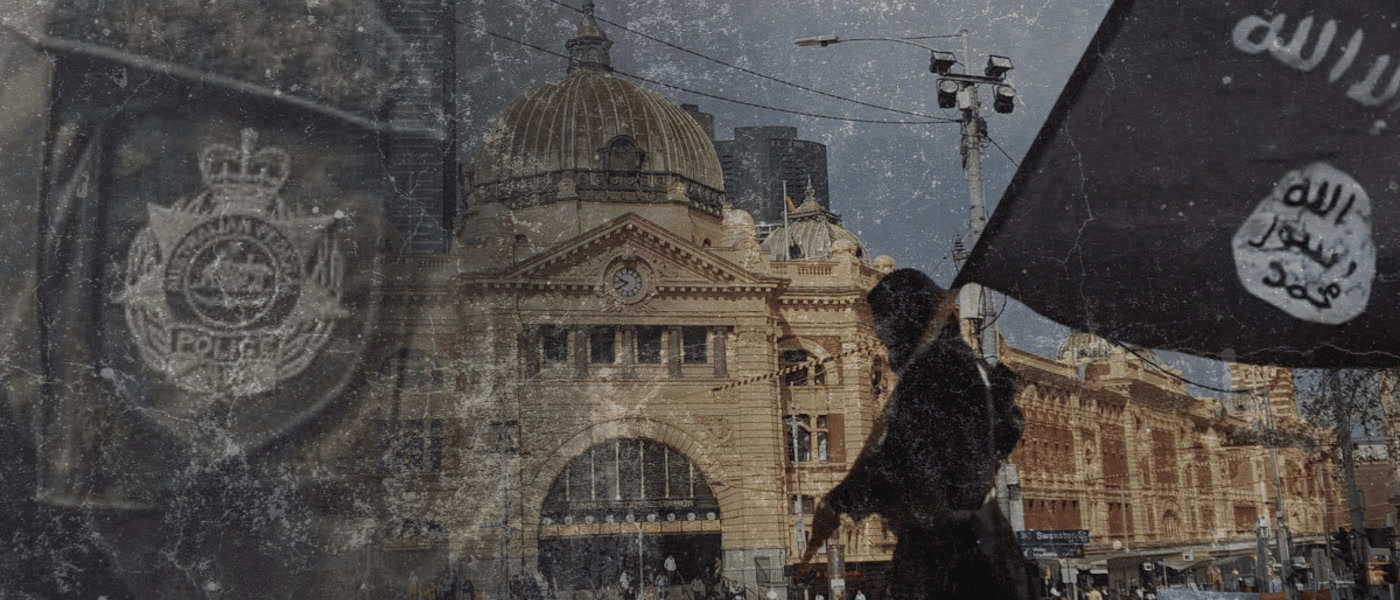
Victoria’s Joint Counter Terrorism Team has charged a 65-year-old Somali-born man with membership of Islamic State and with offences tied to circulating thousands of ISIS propaganda files online.
The Victoria JCTT, made up of the AFP, Victoria Police and ASIO, arrested the man on Wednesday morning, and searched a Carlton home where officers seized a mobile phone.
According to a joint media release from the three agencies, he faces one count of membership of a terrorist organisation, namely ISIS; three counts of using a carriage service to menace, harass or cause offence by transmitting violent extremist material; and one count of possessing or controlling violent extremist material obtained using a carriage service. The maximum penalties include ten years’ imprisonment.
Investigators allege his role was significant. The scale of the material he is accused of pushing, they say, places him as one of the principal distributors of ISIS propaganda within groups on an encrypted messaging platform.
Police will allege he sent about 10,000 files containing extremist content between November 2015 and July 2020. The case against him covers videos, images, audio, documents and messages relating to executions, torture, and ISIS propaganda purporting to come from battlefields. They will also allege he shared advice on avoiding detection by law enforcement and instructional guides on planning and carrying out mass-casualty attacks, and that he pledged allegiance to ISIS while acting as an online propagandist from Australia.
The probe did not start with Wednesday’s raid. Australian Border Force intercepted him at Melbourne International Airport on 21 November 2020 ahead of a departure to Egypt, examined his luggage, and found suspicious content on his mobile phone. The AFP then seized the phone for further examination. A forensic review allegedly showed he had viewed and shared ISIS material on an encrypted platform. A further search warrant in 2024 seized more electronic devices for analysis.
AFP Acting Assistant Commissioner for Counter Terrorism Paula Hudson said the material allegedly shared “glorified acts of extreme violence and promoted a terrorist organisation, spreading a hateful ideology that’s designed to radicalise others.”
“Terrorist organisations like ISIS rely on online platforms to distribute propaganda and recruit supporters,” she said. “Their content is specifically designed to radicalise individuals, encouraging them to adopt extremist beliefs and commit acts of violence.”
“The AFP and our JCTT partners remain committed to identifying and disrupting anyone who is alleged to be participating in or supporting violent extremism, regardless of whether that activity occurs online or in the physical world.”
Victoria Police Assistant Commissioner for Crime and Counter Terrorism Investigation Services Martin O’Brien said the outcome should remind the public that online extremist offending is actively monitored. “It is an offence to access or share violent extremist material and authorities will act when these crimes are identified and hold offenders to account,” he said.
At an earlier doorstop, Hudson said the man had been closely monitored after the airport seizure, spent around six months in Egypt, lived with his wife, and was not accused of plotting attacks or of posing a continuing danger to the public. Officers have not alleged he travelled into territory Islamic State held while the caliphate still controlled ground.
One Nation leader Pauline Hanson said the Melbourne case showed “radical Islamic terror is festering in Australia,” and accused the government of being “soft on terror.” She wrote that the man is accused of ISIS membership and of “providing instructions to others on how to plan and carry out mass casualty terrorist attacks.”
Hanson linked the arrest to what she called Labor’s failure to name radical Islamic terrorism after Bondi, the national terrorism threat level remaining at “probable,” and Home Affairs Minister Tony Burke’s handling of alleged ISIS returns. “The Prime Minister refused to call the threat what it is: radical Islamic terrorism,” she wrote. She also said Albanese was “too busy jetting overseas to receive a ‘Global Citizen’ award,” while Burke “didn’t even front the press conference today to answer questions.”
“National security starts with being upfront with the Australian people,” Hanson wrote. “The Home Affairs Minister needs to front the Australian public and start telling them the truth.”
Rukshan Fernando
Rebel News Australia Content Manager and Commentator
Rukshan Fernando is an Australian political commentator, filmmaker, and journalist. He is known for his on-the-ground coverage and livestreams of protests and social issues, with a strong focus on stories often overlooked by the mainstream media. As a Content Manager and Reporter with Rebel News Australia, Rukshan works alongside Australia Bureau Chief Avi Yemini to bring the other side of the story from down under.
Featured Stories

30:24

13:01

18:52
