Alberta court to rule on ‘constitutionality’ of separation referendum question
Alberta Prosperity Project lawyer Jeffrey Rath anticipates a ruling on the referendum's question before Christmas.

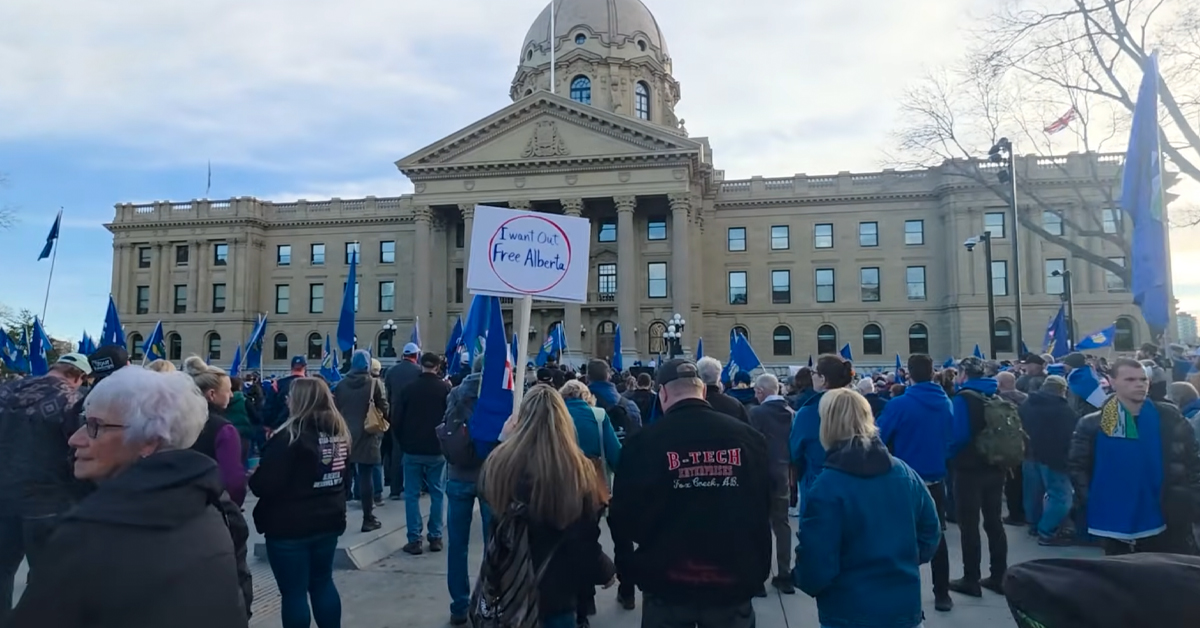
Legal proceedings regarding an Alberta separatist group's bid to hold a referendum on provincial sovereignty and separation from Canada are coming to an end after three days in court.
Justice Colin Feasby of the Court of King’s Bench in Edmonton heard arguments on the constitutionality of an Alberta independence referendum from November 19 to 21. Arguments were presented by Alberta Prosperity Project (APP) co-founder and counsel Jeffrey Rath and others.
The application for a referendum was first submitted in July by APP executive director Mitch Sylvestre, asking Albertans: “Do you agree that the Province of Alberta shall become a sovereign country and cease to be a province in Canada?” Chief Electoral Officer Gordon McClure then referred the proposed referendum question to the courts to weigh its constitutionality, since ultimately it's approval that's required for the question to be on a ballot.
Several groups have intervened in the case, including five First Nations and Elections Alberta, to share their views with the court. Two other people, called amicus curiae (Matthew Woodley and Eric Adams), are acting like neutral fact-checkers. They’ve argued that letting the APP collect signatures for the referendum would break a part of the Citizen Initiative Act, making it unconstitutional.
APP's Rath argued that the referendum's potential outcome is irrelevant to the constitutionality of collecting signatures for it. He stated that Sylvestre's proposal does not intend to unlawfully affect anyone's constitutionally protected rights, as the referendum is "merely consultative."
Rath stated his client only requests the right to collect signatures for a non-binding referendum on secession, not proposing a separation plan itself, as reported by the Epoch Times.
Justice Feasby noted that an independent Alberta could force First Nations people with treaty rights to cross a national border to access their lands. He provided an example: "These folks are going to have to cross a border to go home" after hunting, and would be "subject to border controls" while returning with a firearm and a moose.
Rath claimed borders wouldn't stop First Nations' territorial access, and an independent Alberta would uphold their treaties.
Danielle Smith says she will wait until an official citizen-led initiative on independence actually gathers signatures before making further comments on the process.
— Rebel News (@RebelNewsOnline) May 12, 2025
"I've made my position clear—I support a sovereign Alberta within a united Canada," she says. pic.twitter.com/NsEjb7MlUi
Meanwhile, Alberta's government opposes the ongoing judicial review, with the opposition NDP calling their involvement an expensive distraction.
Alberta Premier Danielle Smith and Justice Minister Mickey Amery previously called McClure's decision a "delay tactic." Despite personal opposition, Smith agreed to Amery's request for a separation referendum next year, contingent on meeting the signature threshold.
Rath anticipates a ruling on the referendum's question before Christmas. Once Feasby issues his decision, Alberta’s chief electoral officer has 30 days to ensure the referendum meets all other Citizen Initiative Act requirements.
If the court and chief electoral officer approve the referendum, APP needs about four months to gather the required 177,000 signatures to get the question on a provincial ballot.
Prior to the new rules taking effect, McClure approved a competing question on June 30 to keep Alberta in Canada. It required 294,000 signatures.
Alex Dhaliwal
Journalist and Writer
Alex Dhaliwal is a Political Science graduate from the University of Calgary. He has actively written on relevant Canadian issues with several prominent interviews under his belt.
Featured Stories

10:48


14:02