
Feds confirm hundreds of arsons after Kamloops ‘mass grave’ claims

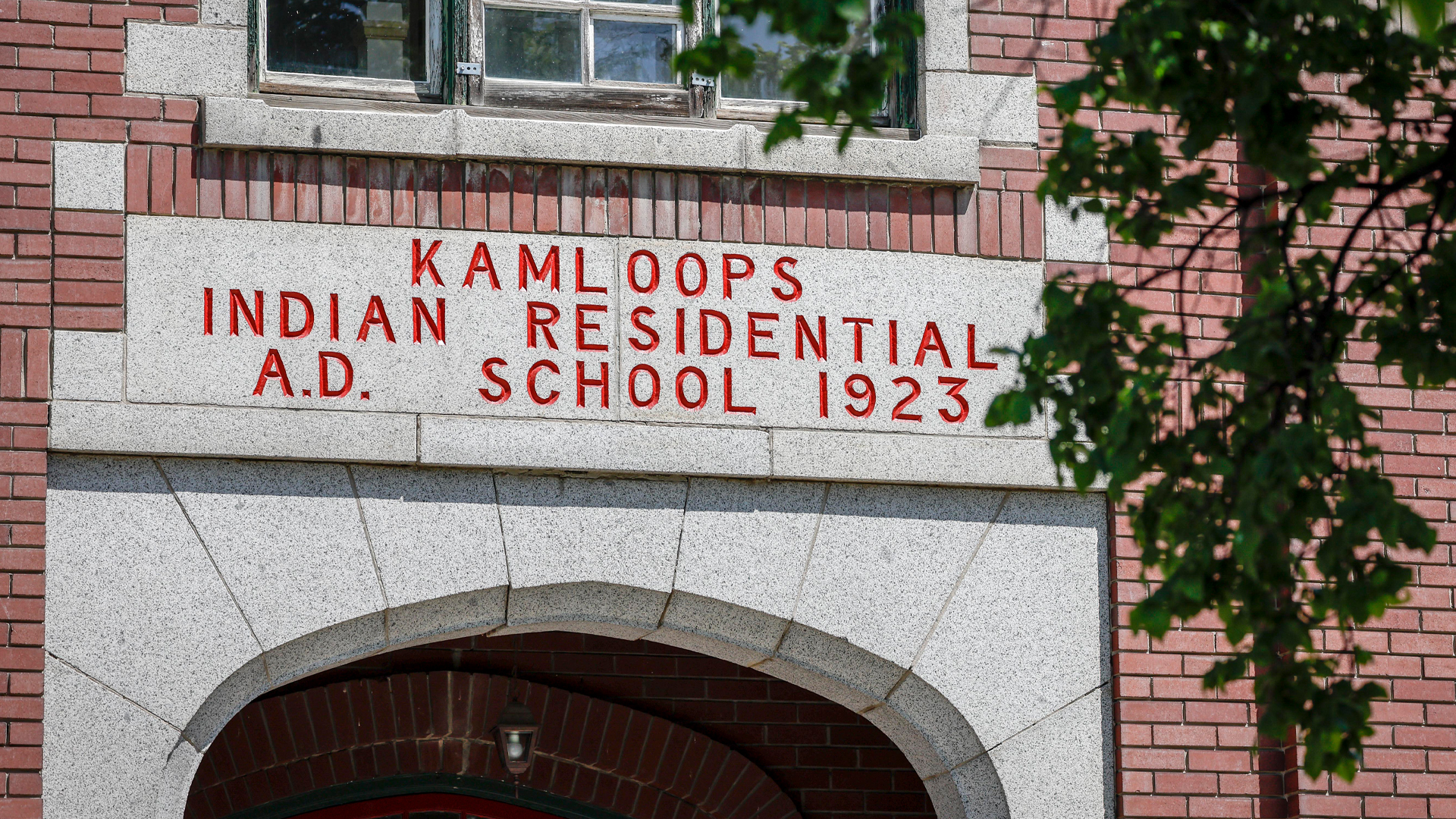
The Trudeau government confirmed hundreds of fires at places of worship nationwide were caused by arson attacks following unsubstantiated claims of “mass graves” at Kamloops Indian Residential School. Data was drawn from police reports compiled by Statistics Canada.
“This includes incidents that occurred on the surrounding property such as an attached cemetery or adjacent parking lot or inside a religious institution or building,” cabinet wrote in an Inquiry Of Ministry tabled in the Commons.
The figures were tabled at the request of Conservative MP Marc Dalton who asked, “What are the statistics related to incidents of burning places of worship?”
The Inquiry counted 423 police-reported incidents at places of worship since 2015, the year the Truth and Reconciliation Commission published a report claiming 4,100 children died at residential schools. Arson attacks averaged as few as 13 a year before the report, according to Blacklock’s Reporter.
96 Canadian churches burnt and/or vandalized since the false claim that 215 Indigenous children’s remains were discovered at the former Kamloops Indian Residential School.
— Drea Humphrey - Prepping and Politics (@DreaHumphrey) January 2, 2024
Christophobia thrives in Canada. https://t.co/RdzNJJUUw4
Police counted 90 arson attacks in 2021, the same year the Tk’emlups te Secwepemc First Nation of Kamloops discovered 215 alleged graves. No remains have been unearthed at the Kamloops site, with investigations to take upwards of two decades to complete.
The First Nation received a $7.9 million federal grant for this fieldwork, but later revised their claim of 215 skeletal remains to some 200 “potential burials.”
An incident map from True North showed at least 96 churches had been destroyed, burned, or vandalized in Canada since the spring of 2021.
On June 21, 2021, an unidentified number of people burned down St. Gregory’s Church, located on reserve land near Osoyoos, B.C. — the second church to perish that day on Indigenous land.
Hours earlier, the Sacred Heart Church on the Penticton Indian Band reserve also burned to the ground. No charges were ever laid in those respective fires.
WATCH: @SheilaGunnReid discusses the epidemic of church arsons that have occurred since the now-debunked announcement of mass graves at the site of the former Kamloops residential school in 2021. https://t.co/UiAxigbvnO
— Rebel News (@RebelNewsOnline) January 8, 2024
Osoyoos Indian Band Chief Clarence Louie, who expressed grievances with the Catholic Church, told CBC News he has suspicion about who may have been responsible.
"I was upset that some rez punks did arson," Louie said. "I don't think white people came here and burned this down."
At the outset, many Indigenous leaders quickly condemned the 'unresolved anger' that perspired into unwarranted, unmitigated destruction.
"To burn things down is not our way," said the National Chief of the Assembly of First Nations Perry Bellegarde. "Our way is to build relationships and come together."
"The destruction of places of worship is unacceptable and it must stop," added Prime Minister Justin Trudeau.
A full investigation into unmarked graves at former residential schools like in Kamloops, BC should be held, Conservative Leader Pierre Poilievre tells Rebel News' Drea Humphrey.
— Drea Humphrey - Prepping and Politics (@DreaHumphrey) January 22, 2024
"Canadians deserve to know the truth," he says.
MORE: https://t.co/pvvWf0dmdZ pic.twitter.com/NywwfbH3Dh
The Inquiry noted arson attacks on places of worship included an undisclosed number of incidents targeting non-Christian institutions. “‘Institutions’ include churches, synagogues, temples and mosques but exclude cemeteries not physically located on the religious property,” said the Inquiry.
According to a CBC News Analysis, 24 of 33 church fires since May 2021 were deliberately set. Only two have been ruled an accident while seven others remained under investigation at the time of publication.
About half the fires involved Catholic churches but included other Christian sects. Fourteen fires took place on First Nation reserves while 13 others happened in rural towns or hamlets.
Last December 15, Wood Buffalo police responded to a devastating church fire in Janvier, Alberta, a hamlet adjacent to Chipewyan Prairie First Nation. Alberta RCMP investigated the fire for foul play.
The fire follows a separate RCMP probe into two fires at Barrhead churches last December. Investigators believe those blazes were intentionally set.
WATCH: NDP MP Lindsay Mathyssen says opposing the radical LGBTQ agenda, forced vaccines or questioning Residential School hoaxes, like how Rebel News does, makes you a Russian asset.
— Rebel News (@RebelNewsOnline) September 19, 2024
She then asks an "expert" witness how this can be "defeated" in Canada.https://t.co/MiSqptmdu0 pic.twitter.com/ngbtgWFSEK
Last May, the Commons voted unanimously to consider measures “to coordinate the protection of faith communities.” It followed a justice committee task force proposing the appointment of an Anti-Hate Crime Task Force.
“Without freedom of religion, without freedom of movement, without the freedom of speech, there actually is no freedom in this country,” Conservative MP Melissa Lantsman told the justice committee.
No parliamentary committee to date has examined arson attacks on places of worship. An Ottawa think tank, the Macdonald-Laurier Institute, published a May 5 commentary identifying reluctance to discuss the crimes.
“These sacred places are more than just places of worship,” said the commentary, The Woke Silence Over Church Burnings Is Deafening. “They help to create a sense of community, places where families and friends gather to celebrate and to mourn.”
“Canadians have been extremely reluctant to condemn the crimes,” said the commentary.
Featured Stories


12:53