
How Jacinta Allan’s controversial Indigenous Treaty plan will affect Victorians
From mandatory cultural training for public servants to ‘truth-telling’ curriculum for school kids, Victoria is set to change in ways some fear will divide the state even further.

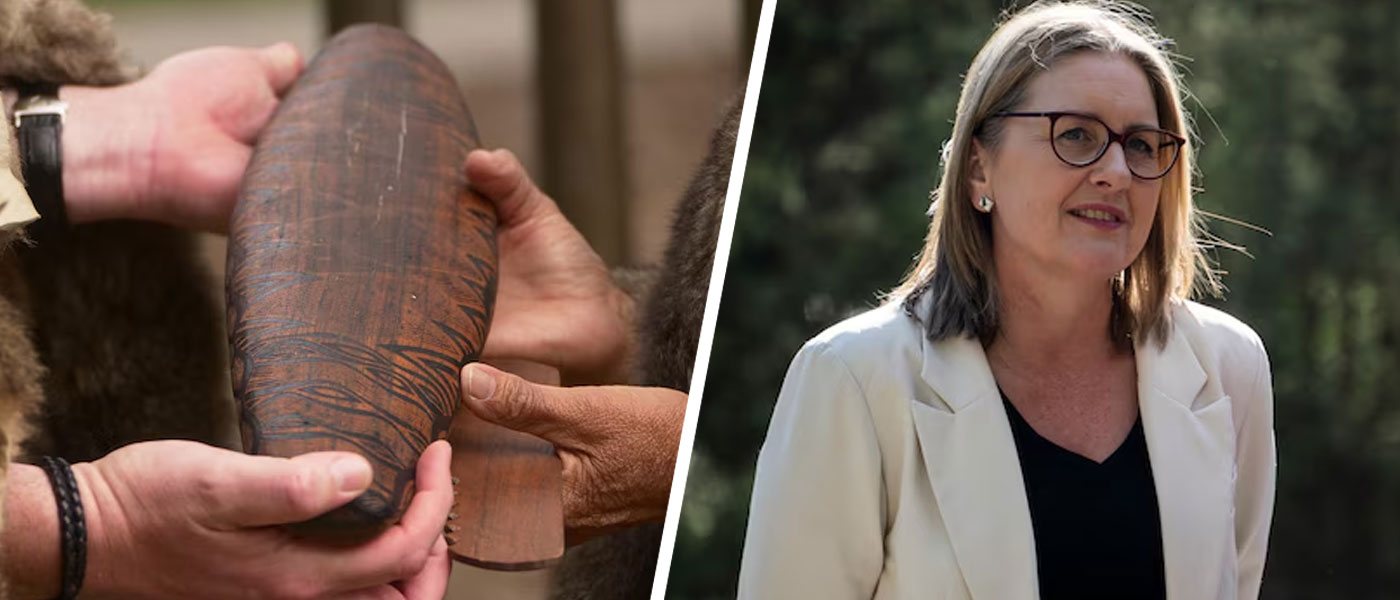
Victoria is set to overhaul Indigenous policy with a sweeping new Treaty deal that introduces a powerful representative body, major curriculum changes, and the potential renaming of state landmarks — despite the fact that a majority of Victorians voted against the Indigenous Voice to Parliament.
The “historic” Treaty agreement, announced Tuesday, details commitments made between the Allan government and the First Peoples’ Assembly of Victoria. At its centre is the creation of a new Indigenous council, Gellung Warl, funded with more than $70 million annually.
Under @JacintaAllanMP’s indigenous treaty, all school students prep to year 10 will be taught “the enduring harm” of colonisation, dispossession and injustice by our “First Peoples” - WTF??
— Paulo (@PauloHalo) September 8, 2025
Enough is enough SHE HAS TO GO! pic.twitter.com/N2dVckOA6v
Replacing and expanding the Assembly, Gellung Warl will consist of 33 elected Indigenous representatives. Its role is to advise on Indigenous policy and programs, although government will retain the final decision-making power.
The agreement also lays out wide-ranging initiatives that extend across the state. Indigenous “truth-telling” education will be sensationally embedded into the curriculum for prep to Year 10 students in all schools, drawing on findings from the Yoorrook Justice Commission.
Jacinta Allan and the Labor government should be ashamed of itself.
— Alexandra Marshall (@ellymelly) September 9, 2025
It has formalised RACIAL POWER.
It has SUBVERTED Parliament.
This treaty must be overruled by the Prime Minister immediately to protect the people of Victoria from discrimination.
Public sector executives will undergo mandatory cultural training, with performance assessed against new competency benchmarks. Gellung Warl will also act as the “naming authority” for state-controlled geographical features, opening the door to renaming parks, rivers and other landmarks.
The body will manage the First Peoples’ Infrastructure Fund, oversee the Self Determination Fund, and coordinate the annual Victorian Aboriginal Honour Roll. A new watchdog committee, Nginma Ngainga Wara, will monitor government spending on Indigenous programs.
Welcome to Jacinta Allan's Indigenous Treaty of Victoria.
— Netz Melbourne (@netz_melb) September 9, 2025
1) Parks, waterways and state-controlled areas will be renamed
2) School curriculums will teach kids the horrors of colonisation
3) Aboriginal assembly will have the power to veto all government appointments#springst pic.twitter.com/Lk2JTBZ3FB
Another provision grants Gellung Warl the authority to facilitate individual treaties with Indigenous groups, potentially involving reparations.
In a joint statement, Premier Jacinta Allan, Treaty and First Peoples Minister Natalie Hutchins, and Assembly co-chairs Ngarra Murray and Rueben Berg said: “A major milestone in Victoria’s decade-long Treaty process has been achieved with the Victorian government and First Peoples’ Assembly of Victoria reaching in-principle agreement on Australia’s first Treaty. The first negotiated Statewide Treaty Agreement brings together First Peoples, through the First Peoples’ Assembly of Victoria, and the Victorian government, to build a new relationship based on respect, trust and integrity. It acknowledges our past and is a chance for all Victorians to move forward together.”
$380 million was spent negotiating a treaty. The Victorian Premier finalised the deal. Under this treaty, non-Indigenous people identifying as Indigenous will have parliamentary representation, a "First Peoples" infrastructure fund, and control over school curricula. Children… pic.twitter.com/hku0O8Q3kN
— Rob Smith (@Ausbobsmit) September 9, 2025
The deal still requires the passage of the government’s new Treaty Bill, which will provide further details of Gellung Warl’s powers and trigger a formal apology to parliament for systemic injustices.
Taxpayer costs have become a flashpoint, with $380 million already spent and projected costs set to exceed $586 million by 2029. The Coalition has vowed to oppose the legislation, arguing the government is “rush[ing] to push Treaty through the parliament without proper scrutiny or transparency.”
Despite concerns, the agreement strengthens accountability, with IBAC and the Ombudsman to oversee Gellung Warl, which must also table annual reports and financial statements.
Featured Stories

16:25