


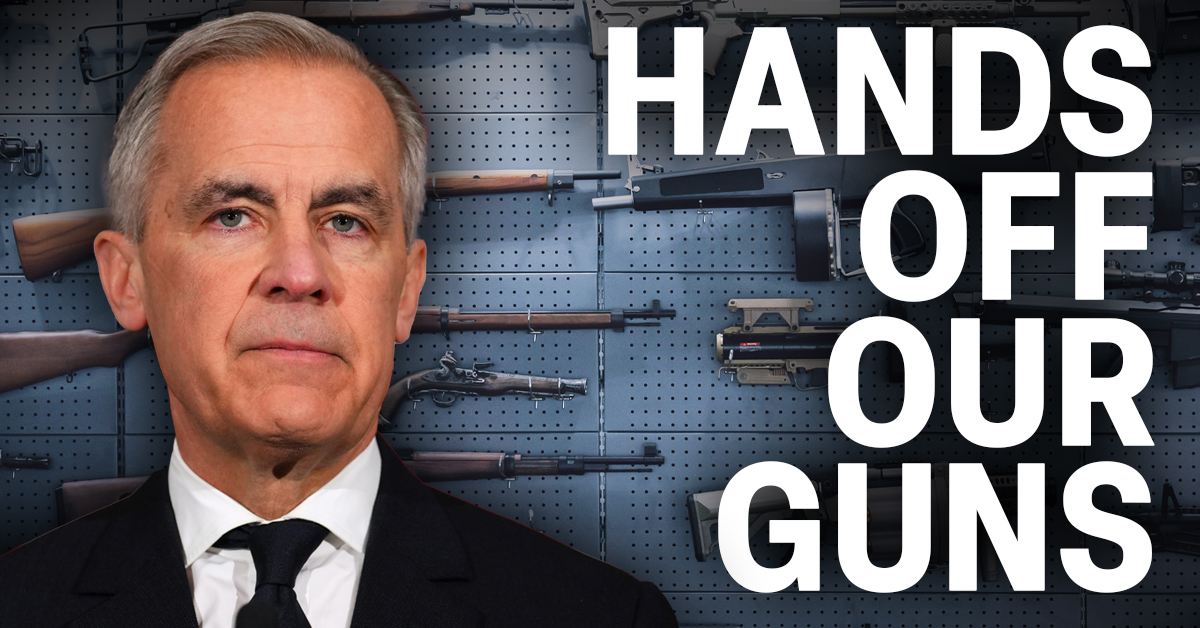

Supreme Court opens two-day hearing on Ottawa’s 2020 gun ban
Gun owners argued cabinet ignored Parliament’s own limit on banning hunting and sporting firearms, while federal lawyers defended the ban as a reasonable use of cabinet’s discretion.


The Supreme Court of Canada began hearing arguments in Ottawa on Monday in the challenge led by the Canadian Coalition for Firearm Rights (CCFR) against the federal government’s May 2020 firearms ban. It is the first of two days that will test whether cabinet had the legal authority to outlaw the guns by regulation.
Nine justices, sitting in the court’s temporary home in the West Memorial Building, are hearing four appeals together. The 2020 order-in-council prohibited roughly 1,500 models and variants, including the AR-15 and Ruger Mini-14. Later additions have pushed the list past 2,500.
At the centre of the case is a limit Parliament wrote into the Criminal Code: cabinet may not prohibit a firearm it considers reasonable for hunting or sporting use in Canada. The appellants say cabinet ignored that limit.
Christine Generoux, an Ottawa gun owner representing herself, opened for the challengers. She warned that the government’s reasoning, that the guns could cause harm, could apply to any firearm and invites future bans. She accused Ottawa of “using our community as scapegoats to cover for their own poor public policy.”
CCFR counsel Michael Loberg of Calgary argued the banned rifles have long been used for hunting and sport shooting, and that cabinet overstepped the mandate Parliament gave it. The CCFR’s written argument says neither lower court asked whether the guns were actually used for those purposes.
The bench pushed back. Justices asked whether the owners had given enough weight to public safety in the balance cabinet tried to strike, and several pressed counsel on the details of the federal measures, according to reports from the courtroom.
Federal lawyers defended the ban as a reasonable use of cabinet’s broad discretion, justified by the risk that these guns make mass shootings deadlier. They say the prohibition affects only three to five per cent of gun owners and that thousands of other firearms remain legal for hunting and sport.
The challengers have lost twice already. The Federal Court dismissed the case in October 2023, and the Federal Court of Appeal unanimously upheld that ruling in April 2025. The Supreme Court granted leave in March.
The hearing resumes Tuesday with interveners. Alberta, Saskatchewan and Ontario are lined up against the ban, along with several firearms and shooting-sport groups. The Canadian Constitution Foundation will argue for a clearer test of when tools like the RCMP’s Firearms Reference Table amount to law. The Coalition for Gun Control is the only intervener explicitly backing Ottawa.
No ruling is expected this week. A decision is anticipated in 2027. Until then, the amnesty for owners of the banned guns continues, and it now runs until 90 days after the court rules.
Tamara Lich
After becoming a central figure in the 2022 Freedom Convoy protests in Ottawa, Tamara Lich emerged as one of the most recognizable voices challenging Canada's pandemic response. As the federal government invoked the Emergencies Act, Lich found herself at the centre of a national debate over civil liberties and government power. She is also the author of the bestselling book Hold The Line: My Story From The Heart of The Freedom Convoy. Now reporting for Rebel News, she covers politics, government actions, and grassroots movements across Canada.
https://www.theconvoybook.com/Featured Stories

15:14


08:43
