

Academic Mob Justice in Manitoba: Cancelled Prof Francis Widdowson Attacked
Agree or disagree, Francis Widdowson was there to discuss peacefully.

BECOME A MEMBER

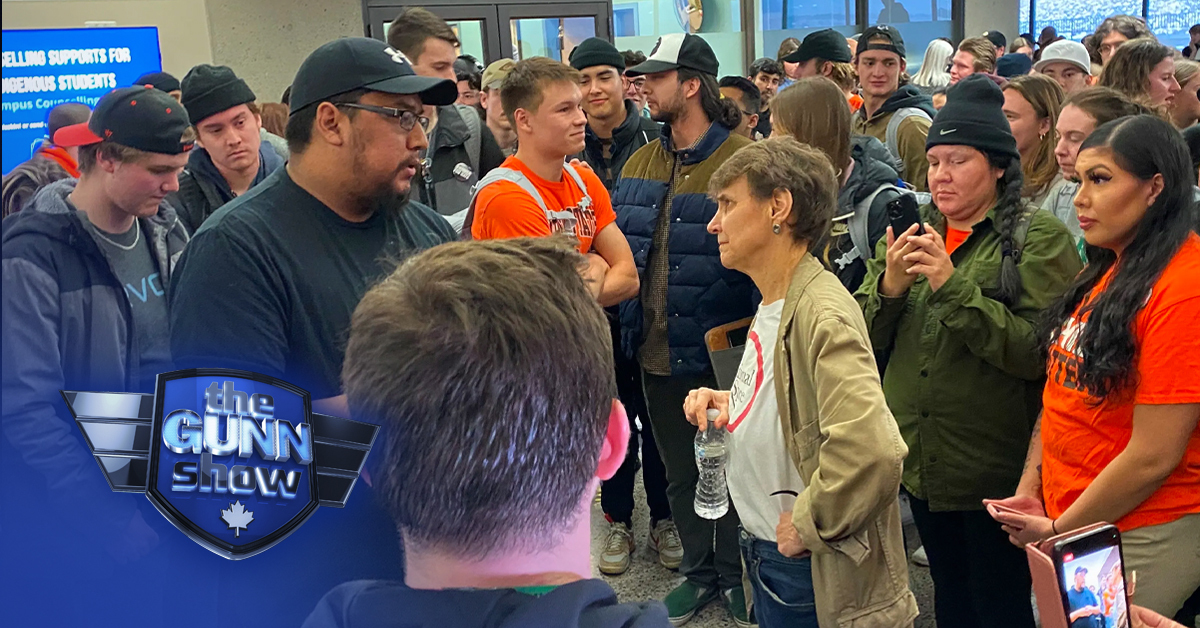
Francis Widdowson went to Manitoba this week to do what universities are supposed to be about — present ideas, ask questions, and debate. Her subject? Canada’s residential schools. But instead of pushing a single, state-approved narrative of widescale genocide, she dared to offer nuance.
Agree or disagree, she was there to discuss peacefully.
That was enough to unleash a mob. And this wasn’t spontaneous — it was encouraged and whipped up by faculty who should have been defending academic freedom, not trying to crush it.
On The Gunn Show, Sheila Gunn Reid sits down with Rebel News contributor Lise Merle, who’s been following the story closely, to expose:
-
How faculty members incited students and activists against Widdowson.
-
The violent treatment she faced when she tried to speak, including the destruction of her property and an assault on her videographer.
-
What this says about the climate of fear and conformity on Canadian campuses.
-
Why this isn’t just about one professor — it’s about the right of every Canadian to question official narratives without being attacked.
When nuance or alternative views become dangerous and mobs become the enforcers, free expression in this country is on life support.
Catch the full interview tonight on The Gunn Show.

COMMENTS
-
 Jeff Campbell commented 2025-10-01 22:46:00 -0400Hi Sheila
Were you scared by BIG BIRD when you were a child therefore the reason you don’t like birds and ostriches?
Keep up the great work at Rebel.
Regards
Jeff -
Bernhard Jatzeck commented 2025-10-01 22:23:20 -0400When I was an undergraduate about 50 years ago, I remember going through the Students Union Building and seeing a row of tables set up near the upper entrance to the bookstore, along with some booths. Those were occupied by a variety of religious and political groups and they advertised their presence with banners identifying themselves as well as putting literature on display.
I always got a chuckle from one hard-core communist bunch when I passed by their table. I didn’t talk to anyone there, nor did I hurl insults or make threats. I simply found it humorous that someone would be an adherent to that ideology. I had my moment of entertainment and left it at that.
I remember that, in general, the interactions at those booths and tables were civil. I don’t recall any hostility or verbal abuse. Then again, people believed that one had a right to one’s own opinions and beliefs and that right was to be respected with regards to what someone else thought.
