Canada’s airports petition digital ID for domestic travellers
Existing regulations require passengers over 18 to have government-issued photo ID. Pearson Airport requested new regulations to allow digital ID.

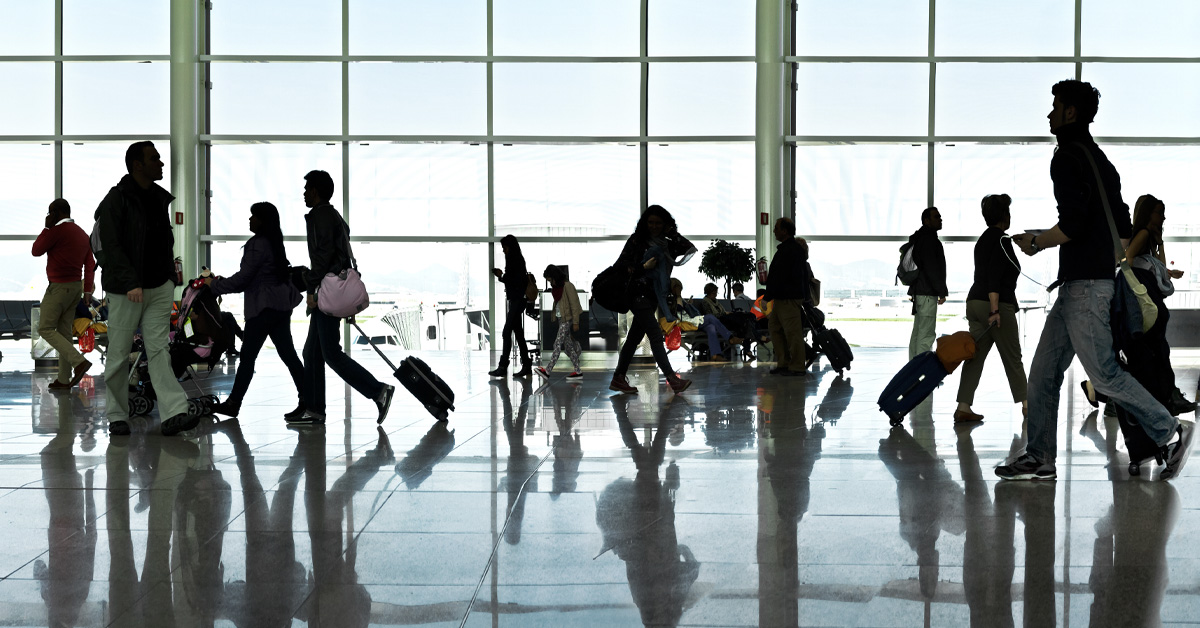
Canadian airports are urging the Commons finance committee to implement digital ID for domestic air travellers, who currently only need government-issued photo ID.
“To modernize and support enhanced passenger experience we ask that the government endorse system-wide border and screening modernization including immediate regulatory changes,” Toronto’s Pearson International Airport wrote in a committee submission.
Existing regulations require passengers over 18 to have government-issued photo ID. Pearson Airport requested new regulations to allow digital ID and biometrics, reported Blacklock’s.
.@CanadasAirports petition MPs for digital ID requirement in domestic air travel: "It will enhance security." https://t.co/ROx3lVyJCK @TorontoPearson pic.twitter.com/NQpzPtWeN3
— Blacklock's Reporter (@mindingottawa) October 16, 2025
Pearson managers advocate for Canada to adopt “emerging and proven technologies” to boost passenger experience, operational efficiency, and productivity in the sector. A key initiative is accelerating the adoption of a common digital ID for both domestic and international travel.
The Canadian Airports Council urged Parliament to implement a national digital ID and biometrics program for air travellers to improve efficiency, reduce infrastructure strain and enhance security.
“At present Canada is behind our international peers in ensuring travel process security screening, Customs and border procedures and boarding are modern, efficient, simple and biometrically based,” wrote the Airports Council.
Currently, only non-U.S. foreigners entering Canada undergo biometric screening (photos, fingerprints). Parliament funded an immigration biometrics program in 2013 to screen visa applicants, foreign students, landed immigrants and refugee claimants.
Parliamentary committees have consistently rejected a national identification system for Canada. In 2003, the Commons immigration committee, in its report A National Identity Card For Canada?, expressed concerns about police demanding proof of identity from individuals on the street.
A 2023 Privy Council study found strong Canadian opposition to a national ID, citing public distrust.
Blacklock’s outlined last October a notice from Shared Services Canada describing efforts to create a digital ID system — without any parliamentary approval.
A proposal to use digital credentials as mandatory IDs for public services, similar to Social Insurance Numbers, has been rejected by parliamentary committees multiple times due to concerns about abuse and financial risks, echoing prior warnings about national IDs.
The Government of Canada has agreed to trial digital ID in partnership with the World Economic Forum. Now you know why they need to keep restrictions in place. Andy Lee. ⬇️https://t.co/J9JpbN9v7R pic.twitter.com/epRQkFBJ5P
— Shonn (@ShonnOborowsky) March 11, 2022
In April 2023, Transport Canada ceased its involvement in the World Economic Forum's Known Traveller Digital Identity (KTDI) project, a digital credential system for international travellers. Participants included the Dutch government, Canadian and Dutch airports, Air Canada, KLM, and Accenture.
Former transport minister Pablo Rodriguez stated in June 2024 that the KTDI project was “indefinitely delayed” in March 2020 due to the COVID-19 pandemic.
Their participation ended due to “resource constraints, travel restrictions and competing priorities.” No data was ever obtained.
Budget 2021 allocated $105.3 million for the digital ID pilot. Transport Canada’s expenditures totalled $399,938 on salaries and $238,627 on other operating costs.
On today's livestream, @NatBiase, @TheVoiceAlexa and @Kay_Whoa are positively shocked that the Liberal government is spending your tax dollars on a $105 million digital ID contract - with none other than the WEF
— Rebel News (@RebelNewsOnline) October 8, 2022
Never miss when we're live! https://t.co/hXKtaqmePf pic.twitter.com/FKlxdIAbCh
After the KTDI project ended, a new Digital Travel Credentials (DTC) project ran from January to March 2024 with the Dutch government, though the World Economic Forum did not participate.
Transport Canada enabled the DTC project, which used facial recognition on passengers flying from Montreal to the Netherlands, by issuing a ministerial exemption. Participation was voluntary, as stated by Rodriguez, who did not specify the number of participants.
The Government of Canada incurred no costs and obtained no data.
Alex Dhaliwal
Journalist and Writer
Alex Dhaliwal is a Political Science graduate from the University of Calgary. He has actively written on relevant Canadian issues with several prominent interviews under his belt.


COMMENTS
-
 Bernhard Jatzeck commented 2025-10-16 22:46:05 -0400I’m not surprised at this. A few years ago, I had to fly a lot due to family business. At first, I thought that airport security was a nuisance, but, particularly starting a decade ago (I wondered what happened back then…..), it seemed that my gear got some extra attention.
I eventually started driving instead. I wasn’t sorry about that. Not only could I travel whenever it suited me, I had lots of room inside my truck, air conditioning, and classical music courtesy of satellite radio. Maybe the best part was that I didn’t have anybody rummaging through my luggage.
Having digital ID would make the airline boarding process even more excruciating. -
Bruce Atchison commented 2025-10-16 19:04:42 -0400Here we go again! Governments want to monitor every aspect of our lives. We saw what happened to trucker supporters. Do we want more control of our travel by the Liberals?