


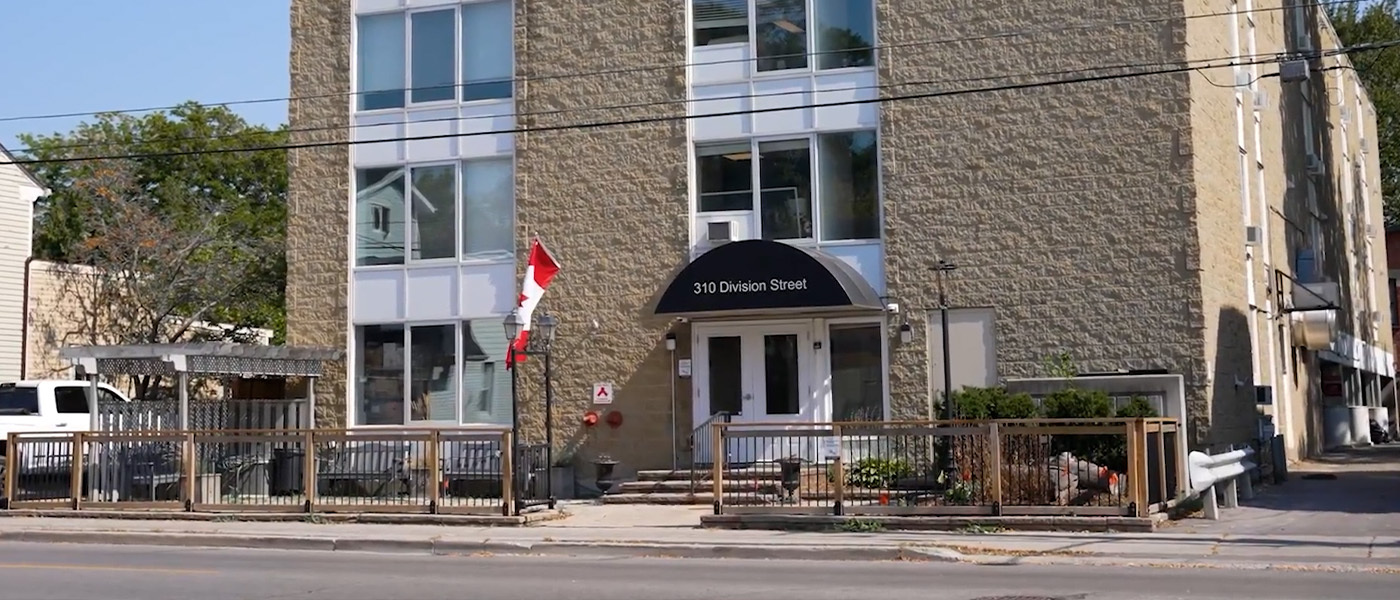


Cobourg’s controversial shelter saw more police checks last year than all of downtown combined
Local police logged 176 calls this year at Northumberland County’s only general emergency shelter, including 18 suspected overdoses. The county, Transition House and police each point to someone else as responsible for what happens inside.

One address in downtown Cobourg has drawn 176 police calls since New Year’s. Can you guess which one?
It’s 310 Division Street, home to Transition House, the county-owned emergency shelter at the centre of previous reporting. In that report, a 22-year-old former resident alleged hard drug use inside, a roommate who overdosed twice in their bathroom, and an executive director, Christian Harvey, who told her it was a human right to do hard drugs in the building.
Transition House has since stated that it doesn’t believe drug use is a human right, but that doesn’t confirm or deny what was said.
Northumberland County insists illegal substances are prohibited under its higher-barrier model implemented in January of this year, but having a policy and enforcing it are two different things.
So, we asked the Cobourg police.
They explain that from January 1 to November 6 this year, officers recorded 176 calls for service at 310 Division Street. That works out to roughly four calls a week. Eighteen of them involved suspected drug poisonings (i.e., overdoses), about one every two and a half weeks, and each triggered a full response from police, fire and paramedics.
Police say they play no role in the shelter’s day-to-day operations or its admission rules, which makes sense. Their job is to respond when called, enforce the law, investigate criminal activity, execute search warrants, and respond to emergencies.
So if the county owns the building, Transition House runs it, and police respond when called, who is ultimately responsible for what happens inside? Who provides oversight, handles complaints, and ensures the safety of those living there? And, perhaps most importantly, who holds the organization accountable?
Police didn’t say how many of the 18 poisonings happened inside, whether trafficking ran through the shelter, or what became of last November’s charges. Their January board package did reveal that 310 Division accounted for roughly 52% of downtown property checks in the last quarter of 2025, more than all other downtown properties combined.
Police did clarify the November 2025 raid in terms of what was found where. Their only search warrant at 310 Division turned up morphine, Oxycocet pills and psilocybin. The 472 grams of fentanyl, plus the cocaine and crystal meth, were found at a Margaret Street home during the joint police operation last fall. The unit searched was on the fourth floor, which is county-overseen transitional housing, technically not overseen by the shelter itself.
At the November 10 Police Services Board meeting, Chief Chris Leather touted October’s drug enforcement results as “restoring order,” but didn’t tie them to 310 Division. A resident’s email about overdoses inside the shelter was received for information only, with no discussion.
The timeline, however, tells a different story. Today’s Northumberland journalist Pete Fisher described three emergency calls on November 7 alone, including an overdose inside the shelter, with roughly 30 responders.
Fisher also wrote that Harvey told him staff don’t call police when they find illegal drugs, which leaves an interesting blind spot: a higher-barrier policy, an operator that doesn’t call police, and police who say they only respond when called.
Taxpayers own the building, fund the shelter and pay for every ambulance, fire truck and cruiser that pulls up out front. After 176 calls, the record is clear. What’s missing is anyone willing to take responsibility for it.
Featured Stories


