

Feds should have warned elected officials targeted by China, testimony reveals
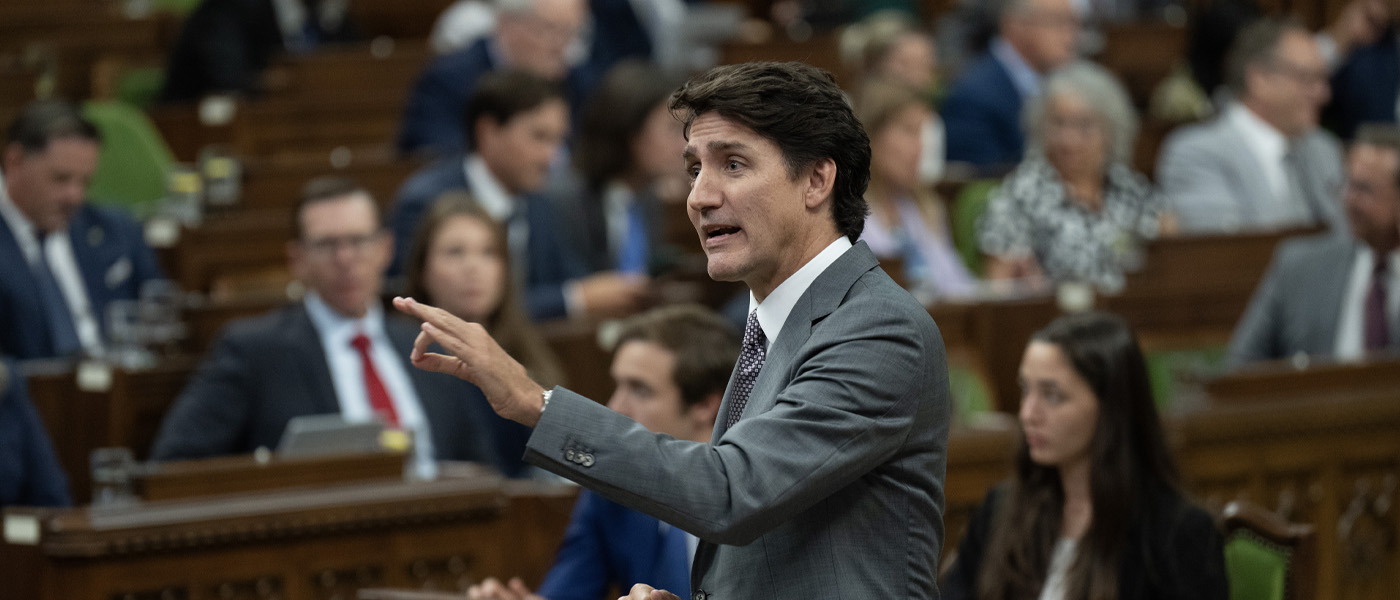
Prime Minister Justin Trudeau received repeated warnings about Chinese agents targeting Conservative MPs. As late as May 3, 2023, he denied ever being told of Chinese interference against any MPs.

Legislators targeted by Chinese agents should have been warned in person, the Department of Public Safety acknowledged Thursday during riveting parliamentary testimony. Canadian MPs were among 400 parliamentarians worldwide who were targeted by Chinese hackers in 2021.
“I think there is a need to brief parliamentarians on threats,” Shawn Tupper, deputy public safety minister, testified at the Commission on Foreign Interference. Tupper would not discuss confidential memos regarding the 2021 hack.
The Commission released an In Camera Summary document stating: “Counsel referred witnesses to a 2023 email exchange that discusses the alleged targeting of members of the Interparliamentary Alliance on China by the People’s Republic of China.” Tupper was not part of the email exchange, though one of the emails said he advocated for briefing parliamentarians on said threats.
Prime Minister Justin Trudeau received repeated warnings about Chinese agents targeting Conservative MPs, according to David Vigneault, Canada’s then spy chief. “It is indeed something I communicated,” Vigneault testified at the Foreign Interference Commission.
The CSIS director earlier disclosed memos on Chinese interference to Trudeau and his staff, which he authenticated at the inquiry.
A February 21, 2023 memo Briefing To The Prime Minister’s Office On Foreign Interference Threats stated Chinese agents “were almost certainly motivated by a perception the Conservative Party of Canada was promoting a platform that was perceived to be anti-China.”
Intelligence officials could not prove the presence of a clandestine campaign during the 2021 general election and neither security officials nor Liberal-appointed election monitors ever warned Opposition MPs that foreign agents targeted them.
Two Canadian legislators known to have been on the list of 400 targets were Liberal MP John McKay and Conservative MP Garnett Genuis. Neither was warned at the time, reported Blacklock’s Reporter.
“I started to think about how I may have inadvertently or unwittingly exposed personal and partisan activities to my parliamentary account,” MP McKay testified on September 17 at the Commission. “I don’t think there’s been any consequences of that but in truth I don’t know.”
“Are you aware of anyone other than yourself who is responsible for cybersecurity for your personal device and accounts?” asked Daniel Sheppard, Commission counsel. “No,” replied McKay.
“Do you know which email account of yours was targeted?” asked Counsel Sheppard. “No,” replied McKay. “I only carry one device.”
“I think we have been exposed,” testified McKay. “It led to a lot of thinking on my part, at least, about my vulnerabilities.”
MP Genuis testified on September 17 that legislators must always be warned if they are targets of foreign agents. “Is the current system adequate? No,” said Genuis. “The most fundamental thing is that when [the] government becomes aware of threats they should talk to us about it. That is clearly the biggest failure here.”
“There was a progressive attack that was happening,” continued MP Genuis. “We could have taken steps to protect ourselves more effectively if we had been informed. We were not informed. It remains mysterious to me why nobody thought I had a right [to know].”
“The government has a responsibility to ensure those who are targeted are informed,” testified Genuis. Only a “pretty weak excuse” could be made for keeping the cyberattacks secret, he said.
“We know the People’s Republic of China clandestinely and deceptively interfered in both the 2019 and 2021 general elections,” said Briefing To The Prime Minister’s Office.
As late as May 3, 2023, Trudeau denied being told of Chinese interference against any MPs. “The Canadian Security Intelligence Service knew about certain things but didn’t feel it reached a threshold that required them to pass it up out of CSIS,” Trudeau told reporters at the time.
“Was it briefed up out of the Canadian Security Intelligence Service? It was not,” Trudeau said. “CSIS made the determination it wasn’t something that needed to be raised to a higher level because it wasn’t a significant enough concern.”
Alex Dhaliwal
Journalist and Writer
Alex Dhaliwal is a Political Science graduate from the University of Calgary. He has actively written on relevant Canadian issues with several prominent interviews under his belt.
Featured Stories


14:26