Liberal 'climate competitiveness' earmarks a trillion dollars worth of debt
The Liberals’ $1 trillion ‘green growth’ plan is padding the pockets of elites like Carney’s former company while ordinary Canadians get stuck with soaring bills.

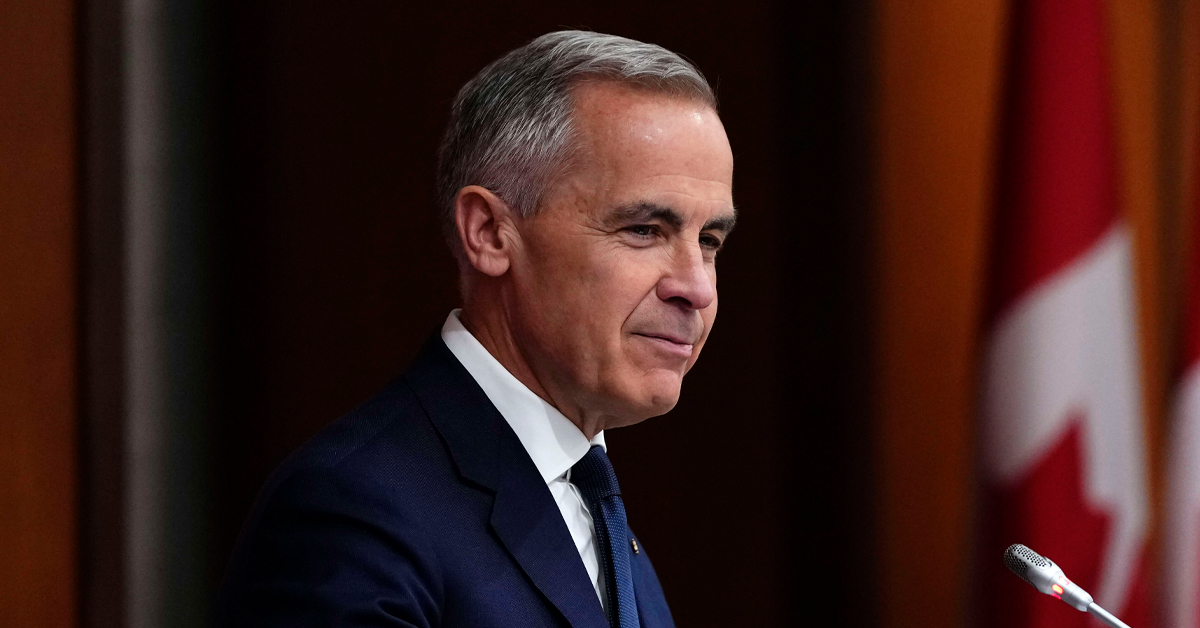
Minister of Environment and Climate Change Julie Dabrusin and Energy Minister Tim Hodgson unveiled the federal government’s latest net-zero rebrand yesterday at Toronto’s Pearl Street Energy Centre.
Coined the Climate Competitiveness Strategy, the Liberals sell the trillion-dollar debt plan as an investment and government-subsidized green-market initiatives as “moral imperatives.”
Today, we announced Canada’s new Climate Competitiveness Strategy, an important part of Budget 2025 — a plan that connects strong climate ambition with economic growth. 1/2 pic.twitter.com/SuhMvmu8V4
— Julie Dabrusin (@juliedabrusin) November 9, 2025
“Investing in a clean future is both a moral imperative and the greatest commercial opportunity of our time,” the strategy reads. “As the world moves toward net zero, Canada’s climate competitiveness will define Canada’s leadership on the world stage. By 2035, the clean technology market will triple, and demand for clean electricity will double. To compete, Canada’s investment must keep pace.”
There’s a global race to net-zero by 2050. It’s time for Canada to compete — and win.
— Tim Hodgson (@timhodgsonmt) November 9, 2025
The Climate Competitiveness Strategy will ensure we meet the world's growing demand for low-carbon energy while keeping our environment clean and economy sustainable.
Budget 2025 is our plan… pic.twitter.com/6zYTSJhL0Z
Wrapped in patriotic rhetoric about “Canada Strong,” the plan promises to “catalyse over $1 trillion in investment over the next five years, driving growth in nuclear, hydro, wind, energy storage, and grid infrastructure to make Canada a leader in the low-carbon economy.”
It seems like more half-baked taxpayer-backed subsidies, tax credits, and funds that will pile billions onto Canada’s bloating national debt.
Mark Carney’s 2025 Budget: Canada Strong or Canada Broke?
— Rebel News (@RebelNewsOnline) November 10, 2025
Full story by @TamaraUgo: https://t.co/b0kgMS6hH7 pic.twitter.com/x9XPZtRoMW
The plan details a buffet of industry-geared tax credits: 15% for “clean electricity,” 30% for “clean technology manufacturing,” and extensions for carbon capture through to 2035. Eligibility rules are conveniently loosened for Crown corporations and biomass projects, looking more like political handouts than true competition.
Then there’s the doublespeak on carbon pricing. Ministers vow “long-term certainty” via a “post-2030 trajectory” and a “strengthened federal benchmark.” What this means: higher industrial carbon taxes, enforced by a federal backstop wherever provinces resist. The goal is to force compliance under the guise of “harmonised” markets.
Naturally, industry will pass costs downstream, and families will foot the bill at the pump and the checkout.
Methane regulations for oil, gas, and landfills are touted as “easy wins,” but tighter rules mean higher compliance costs — again, borne by consumers. The Liberals sell this as necessary, citing extreme weather events as evidence that “climate change is a growing threat to Canada and the world."
“Over the last decade, the average yearly cost of weather-related disasters and catastrophic losses has risen to the equivalent of 5 to 6% of Canada’s annual GDP growth,” they claim, yet instead of strengthening the ability to adapt and withstand these events, the government is expanding its centralized control.
Budget 2025’s green vision is a familiar Liberal pattern: announce trillions in “investment,” deliver billions in deficits, and wrap it up with a progress bow.
Like Prime Minister Mark Carney’s former company, Brookfield Asset Management and its net-zero playbook, the Liberals’ plan dresses up decarbonization as growth while relying on taxpayer-funded subsidies to enrich politically favoured industries.
Brookfield, with its vast energy and infrastructure empire, is perfectly positioned to cash in on net-zero mandates, subsidies, and guaranteed contracts—boosting the value of assets it already owns while taxpayers shoulder the risk. Even Carney’s “blind trust” can’t stop his former company from profiting off policies he helped shape.
As Canadians’ energy bills double and they’re forced to choose between heating and eating, fewer of them are buying into the ‘green’ moral imperative being sold by billionaire jetsetters like Prime Minister Carney.
After all, it’s not competitive if it’s just cronyism dressed up in carbon credits.
Featured Stories

10:48

14:02

COMMENTS
-
 Robin Dutton commented 2025-11-13 10:38:15 -0500A blizzard of bafflegab indeed. Sounds like more failed battery plants and electric busses that don’t work. Next, let’s attempt to decarbonize oil and create a expensive uncompetitive product that no one wants, then force people buy it. The Green Grift continues.
The first key to an affordable country is inexpensive energy. Anyone gone grocery shopping lately? The prices continue to increase exponentially. The cost of production and transportation is passed down the line. Not rocket science to see the cause and effect. -
Fran g commented 2025-11-12 12:58:08 -0500Even monster gates has moved on from climate bullshit. Im sure hes moved to more lucrative evil. Hes slimy just like carnage.
-
Bernhard Jatzeck commented 2025-11-10 21:46:46 -0500When someone has to make a pronouncement using a blizzard of bafflegab and waffle, it’s a clear sign that they’re trying to hide something. Investments are supposed to make money, not bankrupt the shareholders and debt should not have to be carried for several generations.
Then again, we’re still paying for PET’s malarkey. -
Bruce Atchison commented 2025-11-10 19:52:36 -0500Socialism never works. Managing the economy always chokes off entrepreneurship and innovation. People need to be rewarded for their efforts. No one thrives when government forces its notions on the economy. Why can’t Canadians see this basic truth?