Liberals spent $9.15B on ‘climate financing’ without follow through
The $9.15 billion UN Climate Finance Programming, meant to aid developing nations with climate change, was reviewed and found to lack clear commitment-level results.

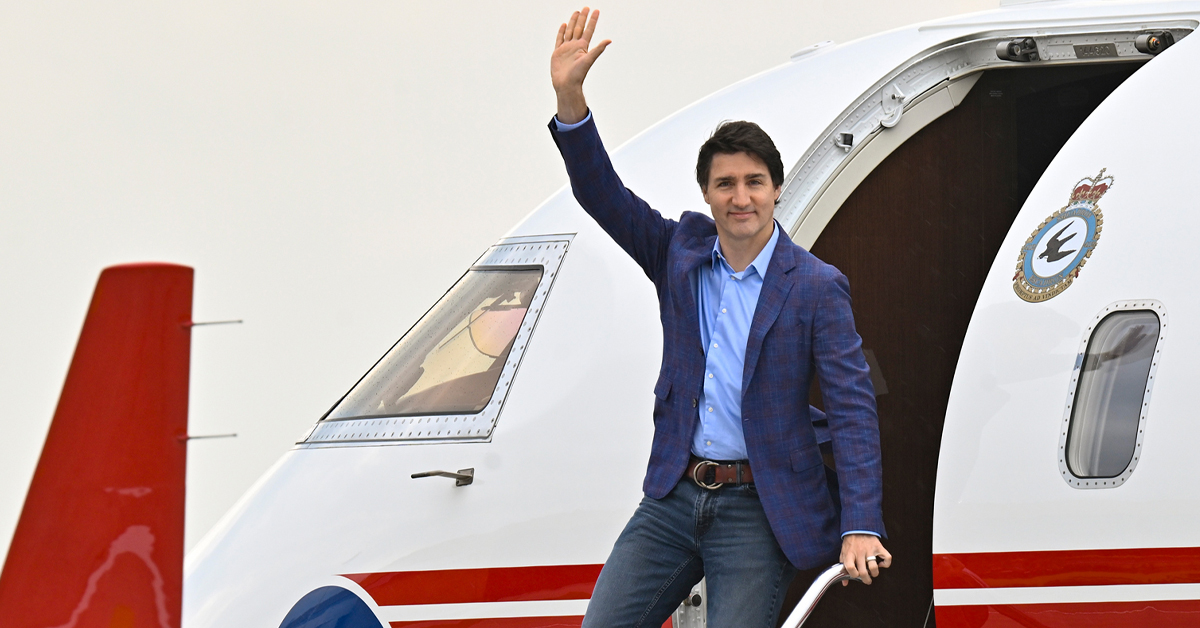
An internal report reveals that a costly federal climate program, expanded by then-Prime Minister Justin Trudeau during a failed 2020 UN Security Council campaign, became a "tick box exercise" for managers.
Foreign Affairs staff found budget targets "challenging" and "questioned whether disbursements prioritized meeting targets without knowing what results were achieved," according to the report.
Cabinet committed $9.15 billion to its Climate Financing Program, with $6.2 billion spent, primarily in Asia ($2.19 billion) and Africa ($1.96 billion), according to Blacklock’s.
Report @GAC_Corporate says globetrotting $6B Climate Finance fund was a "tick box" exercise. Trudeau expanded the program during failed 2020 bid for UN Security Council seat: "Canada is back." https://t.co/moX5as8F9H @EnvironmentCa pic.twitter.com/X088SrFrv0
— Blacklock's Reporter (@mindingottawa) November 13, 2025
The program was designed to help developing nations deal with climate change. As stated in the Evaluation Of Global Affairs Canada’s Climate Finance Programming, "The Government of Canada pursues a broad range of objectives that include climate objectives that focus on limiting global warming and curbing emissions."
Though staff grew from four to 30, Evaluation noted little follow-up on achievements. The department wrote, "In applying the broad climate financing objectives, the Government of Canada provided limited guidance to define Canada’s ambition in terms of sought results, focusing instead on fulfilling an increasing number of budget targets.” A review confirmed little focus on defining commitment-level results.
The report stated an "Evaluation found several points of misalignment between Canada’s broad climate finance objectives, the structure of the commitment funding profile and budget targets," noting a "lack of prioritization of climate finance policy objectives and definition of success."
Carney disappoints at UN summit with jargon-filled economic rant: Ezra Levant
— Rebel News (@RebelNewsOnline) September 26, 2025
The prime minister has yet to reach a trade deal with the United States as unemployment soars across Canada.
On last night's episode of The @EzraLevant Show, @franco_nomics of the Canadian Taxpayers… pic.twitter.com/4nRsBliduk
Prime Minister Justin Trudeau called the international aid "urgent," claiming "Climate action can’t wait." He expanded the program in 2020 while Canada failed to secure a temporary UN Security Council seat, losing to Norway and Ireland.
Trudeau stated Canada is "determined to help the United Nations make greater strides." Then-Finance Minister Bill Morneau added this signifies Canada is "back, that we’re engaged, that we’re a global leader."
The Department of Foreign Affairs heavily campaigned for Canada's UN Security Council seat. An Inquiry Of Ministry revealed the Minister had "well over one hundred bilateral meetings and phone calls" since November 2019, where the campaign was a constant topic.
Audit finds Canada’s $60M UN sustainability commitment lacked clear results
— Rebel News (@RebelNewsOnline) November 13, 2025
Cabinet approved nearly $60 million for the initiative, which distributed grants to several Canadian universities and Indigenous organizations.https://t.co/MiThQiVQdg
A recent federal audit found it “difficult” to measure the positive impact of a $59.8 million subsidy program launched in 2021 to promote the United Nations’ Sustainable Development Goals (SDGs), citing vague objectives and weak tracking of results.
The Department of Social Development concluded that the program’s broad focus and inconsistent reporting made it nearly impossible to assess whether it advanced awareness or tangible progress toward the UN’s Agenda for Sustainable Development.
The five-year initiative aimed to fund projects promoting 17 global goals, including poverty reduction, gender equality, climate action, and peace and justice. However, auditors found “most funded projects were broadly focused,” with unclear metrics and limited evidence of results.
Alex Dhaliwal
Journalist and Writer
Alex Dhaliwal is a Political Science graduate from the University of Calgary. He has actively written on relevant Canadian issues with several prominent interviews under his belt.
Featured Stories


14:26


COMMENTS
-
 Bernhard Jatzeck commented 2025-11-14 22:42:06 -0500Let me guess: the “financing” had a positive effect on someone’s financial climate?
 -
Bruce Atchison commented 2025-11-14 19:23:28 -0500The BEST way to eliminate most poverty is to let free enterprise be free to do its wondrous work. The UN contradicts this with their top-down management style. Letting people create wealth, instead of confiscating it through taxation, does enrich the citizenry. That’s basic economics.