



Quebec Premier decries ‘Radical Islamists’ amidst prayer ban
Legault's comments come as tensions are running high over large groups of Muslims praying in public spaces, including in front of the city's iconic Notre-Dame Basilica.

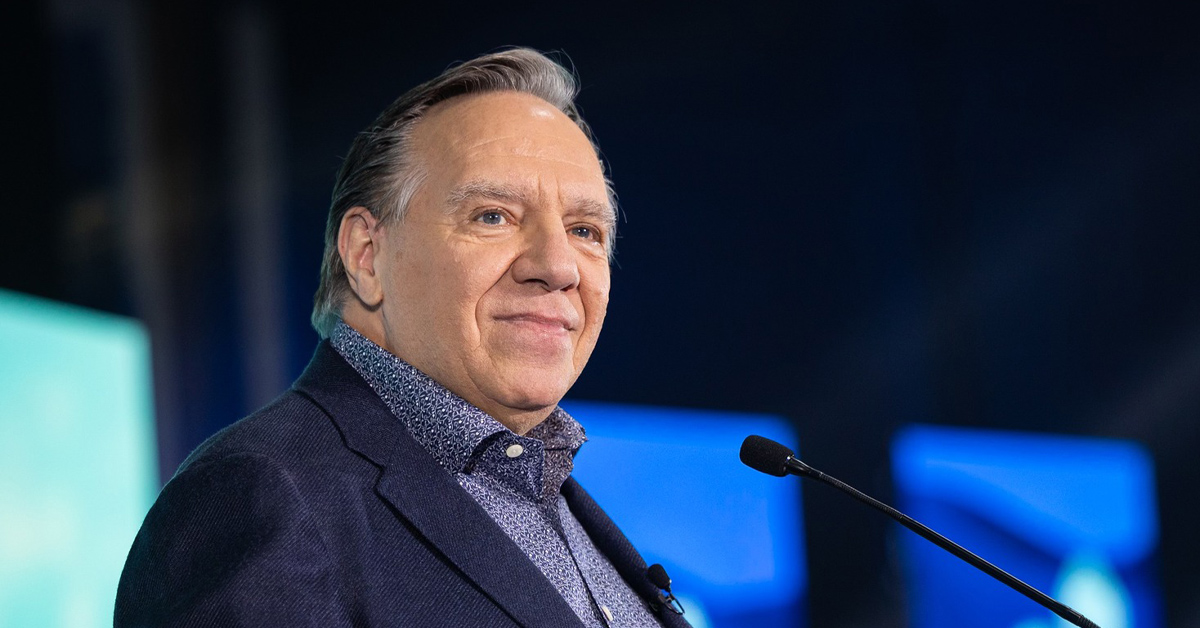
Premier François Legault declared on September 30 that "radical Islamists" threaten Québec's values, particularly women's equality. This follows public backlash over Muslim groups praying in public in recent months.
Legault affirmed, "We are not going to let anyone attack the freedom dearly acquired by Quebec women."
Several contentious public prayers by Muslim groups outside churches — including the Notre-Dame Basilica — have led to backlash from concerned Christians and other Montreal residents.
The province pledged to fight "attacks against our common values" and advocates for federal immigration control to prevent overburdening the country.
In December 2024, Legault announced his intention to ban public prayer to counter Islamists disrespecting Québec's secular values, following Muslim groups praying publicly in Montreal, including for Eid al-Adha.
“Seeing people on their knees in the streets, praying, I think we have to ask ourselves the question. I don’t think it’s something we should see,” he said at the time.
Secularism Minister Jean-François Roberge has since called public prayers a "serious and sensitive issue," noting the government's "discomfort" with the "increasingly prevalent phenomenon." He stated, “The Premier of Quebec has given me the mandate to strengthen secularism, and I am firmly committed to fulfilling this mandate diligently.”
In August 2025, Québec announced plans to ban prayer in public places. The Canadian Muslim Forum expressed concern, stating the government should address real problems, not police Charter rights.
The Justice Centre for Constitutional Freedoms earlier called the proposed ban "militant, anti-religious and dogmatic," arguing it contradicts the secularism law's principles of state religious neutrality, citizen equality, and freedom of religion.
The government may also expand Bill 21, the 2019 law banning religious symbols for public sector workers, to include daycare staff and limit religious accommodations, based on 50 recommendations, to further enforce secularism.
The Supreme Court will hear a challenge to the legislation, which the federal government opposes due to its use of the notwithstanding clause. The Bloc Québécois argues Ottawa's stance threatens provincial constitutional powers.
Bill 84, introduced earlier this year, mandates immigrant integration, not multiculturalism, by requiring acceptance of Québec's social contract: democracy, French, gender equality, and secularism.
Québec's Roberge declared multiculturalism obsolete in Quebec, stating it would be relegated to the "dustbin of history."
After reports in late 2024 of Muslim students praying in Québec public schools, Education Minister Bernard Drainville announced a bill to reinforce secularism in schools. It's unclear if the notwithstanding clause, overriding Charter Rights for five years, will be invoked.
Alex Dhaliwal
Journalist and Writer
Alex Dhaliwal is a Political Science graduate from the University of Calgary. He has actively written on relevant Canadian issues with several prominent interviews under his belt.
Featured Stories

03:31
10:27


COMMENTS
-
Bruce Atchison commented 2025-10-06 22:13:43 -0400It isn’t prayer but the blocking of streets that’s the problem. But stupid people will NEVER understand that.
