



Supreme Court rules against mandatory minimum sentences for child sex crimes
The Supreme Court, in a 5-4 ruling, struck down mandatory minimum sentences for two child pornography offenses as unconstitutional.

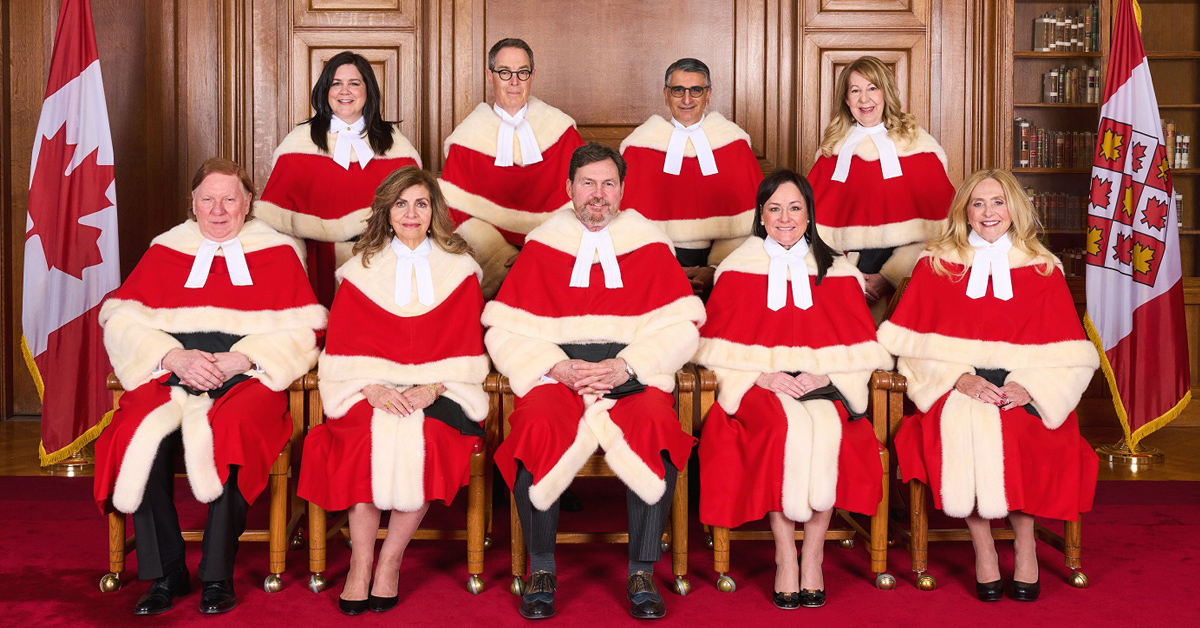
Canada's top court narrowly struck down the one-year mandatory minimum sentence for child pornography possession and access, citing its potential impact on an 18-year-old sexting case.
The nine-judge panel heard the case of two Quebec men challenging sentencing rules. They earlier plead guilty, arguing mandatory minimum sentences violated their Charter right against cruel and unusual punishment.
The Crown appealed to the Supreme Court, arguing that child pornography access and possession must be strongly condemned. It stated that sentences should reflect the severity of these offences and the harm caused to victims, families, and society.
The Supreme Court, in a 5-4 ruling, struck down mandatory minimum sentences for two child pornography offenses as unconstitutional, upholding the Quebec Court of Appeal's decision, as first reported by the National Post.
Justice Mary Moreau, writing for the majority, detailed the court's decision by assessing the constitutionality of minimum sentences through “reasonably foreseeable” hypothetical scenarios.
The court noted that convictions for child pornography possession or access could range from organized offenders with thousands of files to an 18-year-old who unknowingly received and viewed a single file depicting a 17-year-old.
The decision states that this common digital communication scenario was central to the debate. It notes that a conditional discharge might be the best sentence in such cases, as a one-year prison term could be “grossly disproportionate.”
Moreau states mandatory minimum sentences from Parliament are “constitutionally vulnerable” when they cover “a wide range of conduct,” as is the case for child pornography possession and access crimes.
Since 2015, the Supreme Court has invalidated mandatory minimum sentencing laws as cruel and unusual punishment, violating the Charter.
Meanwhile, the Liberal government, through Justice Minister Sean Fraser, introduced a bill to toughen bail and increase sentences for serious, violent, and sexual offenses, without changing mandatory minimum sentences.
Fraser pledged more laws soon to address sexual abuse and other “horrific crimes” against children.
Alex Dhaliwal
Journalist and Writer
Alex Dhaliwal is a Political Science graduate from the University of Calgary. He has actively written on relevant Canadian issues with several prominent interviews under his belt.
Featured Stories


COMMENTS
-
Bruce Atchison commented 2025-11-01 20:39:21 -0400Depending on the severity, pedophiles need longer sentences. Prison is a deterrent for most people. So serving hard time would move most felons to seek help for their porn addiction.

