B.C. to sue Ottawa over ‘absurd’ equalization program

British Columbia will not join Newfoundland and Labrador’s lawsuit over equalization. Rather, they will launch their own suit.
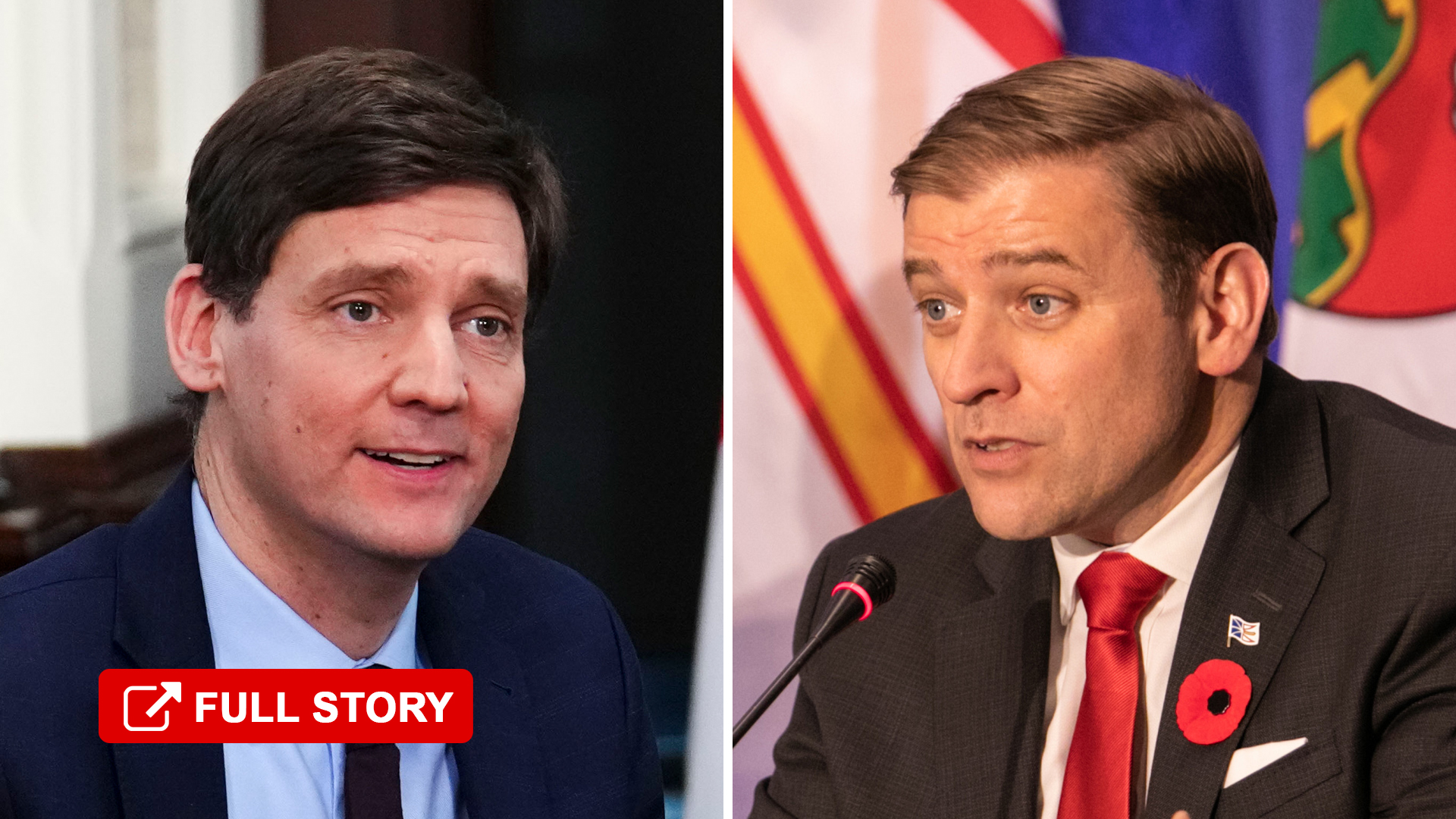
On the final day of meetings between Canada’s premiers, B.C. Premier David Eby clarified he would no longer tolerate disrespect to his residents.
“B.C. taxpayers are sending tax dollars to Ontario through equalization. That is completely absurd,” Eby told reporters. “Ontario is not struggling to provide schools or hospitals.”
Ontario will receive $576 million in equalization for the 2024/25 fiscal year, while B.C. gets nothing.
“Let me tell you,” Eby said, “we could certainly use [an] investment like that.” Saskatchewan and Alberta do not receive equalization transfers either.
Alberta Premier Danielle Smith and Saskatchewan Premier Scott Moe expressed a willingness to join legal action but did not clarify further.
The Trudeau Liberals have announced equalization payments to Newfoundland and Labrador for the first time in 15 years.
— Rebel News (@RebelNewsOnline) December 20, 2023
MORE: https://t.co/RaJwg845YE pic.twitter.com/NfBBTFAMYJ
In December 2022, Finance Minister Chrystia Freeland said Québec would receive $14.04 billion in equalization for the 2023/24 fiscal year. Manitoba got $3.51 billion, followed by Nova Scotia, New Brunswick, and Prince Edward Island (PEI) at $2.8 billion, $2.63 billion, and $561 million, respectively. Ontario received $421 million.
Newfoundland and Labrador also joins the equalization frenzy for the first time in 15 years. They will take home $218 million this fiscal year.
Premier Andrew Furey admits the transfer formula is “fundamentally broken for Canadians right now.” The current formula does not address the rising costs of serving its aging province.
“There is a calculation problem, a formula problem,” he said. Newfoundland and Labrador claims Ottawa shortchanged them $1.2 billion in each of the last five years.
The feds rejected calls to overhaul the funding formula, prompting the Maritime province to launch a suit May 30 against the payment scheme.
Québec will receive $14.037 billion in equalization payments this fiscal year, followed by Manitoba at $3.51 billion. 'Have-not' provinces will receive $23.963 billion in equalization in 2023/24.https://t.co/mCEiq7UMZ2
— Rebel News (@RebelNewsOnline) June 23, 2023
“It's not OK,” Premier Eby previously said. He notes the growing cash flows to Québec and Ontario, in particular, demonstrates “special treatment” for those provinces.
B.C. has not received federal funding for replacing Vancouver’s George Massey Tunnel, flood mitigation in the Fraser Valley, or to upgrade the Iona Island Wastewater Treatment Plant.
“B.C. taxpayers are struggling, just like everyone else, with affordability issues,” Eby said Monday.
Premier Moe concurred the formula is “very flawed” and hopes to have “grown-up” conversations moving forward. He prefers a formula that distributes half the money on a per capita basis and the remainder under the existing framework.
Premier Smith supports the idea. “We also have pressures associated with the high growth in education and health care as well,” she said. “I think there needs to be a revamp of the equalization formula.”
The Trudeau Liberals are increasing equalization payments to 'have-not' Quebec, Manitoba, Ontario and the Maritime provinces next year. Taxpayers there can expect $23.96 billion in equalization payments — a $2 billion increase from 2022/23.
— Rebel News (@RebelNewsOnline) December 24, 2022
MORE: https://t.co/zJ1XixseJO pic.twitter.com/upWfhY9nzK
In 2009, then-Prime Minister Stephen Harper said equalization payments would grow annually with the national economic growth rate—regardless of the gap between richer and poorer provinces.
Under the equalization program, provinces qualify for payments based on their “fiscal capacity” or their ability to generate revenue, plus any additional revenues from natural resource royalties.
As part of budgetary legislation for Budget 2023, the feds quietly locked the new equalization formula until 2029, courtesy of Bill C-47, An Act to implement certain provisions of the budget tabled in Parliament. The Trudeau government increased equalization transfers by $2 billion to $23.963 billion this fiscal year.
Payments have increased despite a shrinking gap between ‘have’ and ‘have-not’ provinces from 27% in 2014/15 to 6% in 2018/19.
Alex Dhaliwal
Journalist and Writer
Alex Dhaliwal is a Political Science graduate from the University of Calgary. He has actively written on relevant Canadian issues with several prominent interviews under his belt.
Featured Stories


12:53