





Canadian teens’ screen time soars post-COVID
Public Health, despite implementing restrictions that contributed to increased screen time, reports that teens significantly exceed recommended daily limits, leading to higher rates of anxiety, depression, irritability, and hyperactivity.

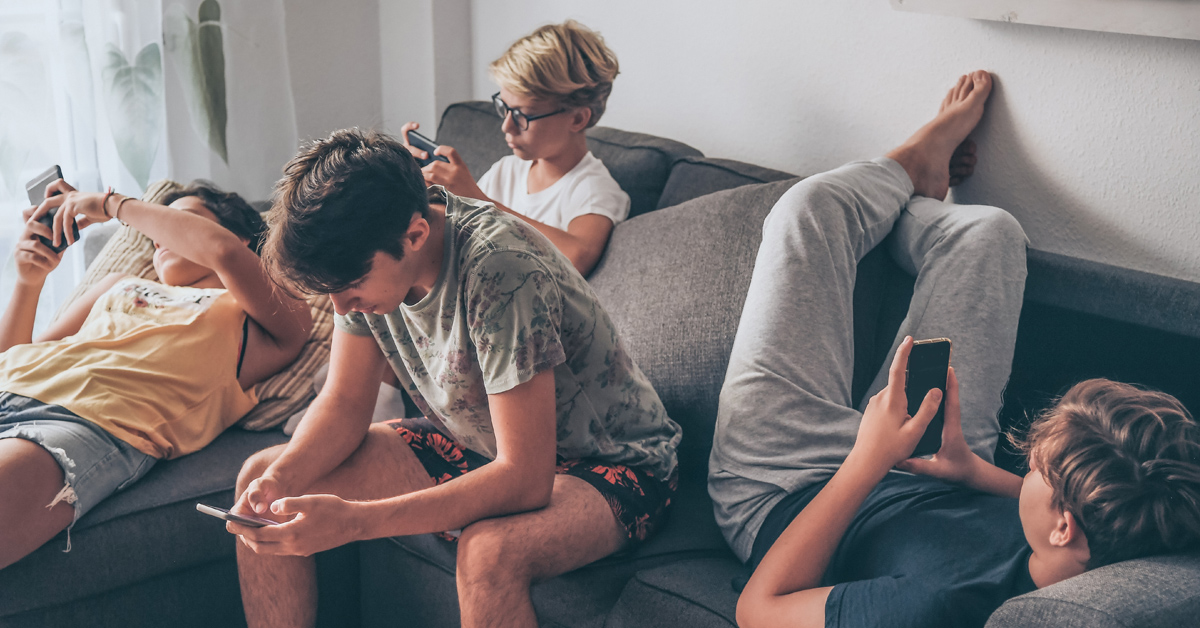
A new Public Health Agency of Canada report found that the vast majority of high school students are exceeding recommended screen time limits, a trend amplified by Covid-era school closures and forced social isolation.
Surveying 26,000 students nationwide, the agency found that 89-96% of teens surpass the advised two-hour daily screen time cap, as reported by Blacklock’s.
Screen time's up for Covid generation, @GovCanHealth data show as fewer high schoolers participate in sports, clubs or religious groups: 'Frequent internet use is especially common.' https://t.co/z2nbSAwvVo #cdnpoli pic.twitter.com/PkHhZtmOFV
— Blacklock's Reporter (@mindingottawa) August 20, 2025
Alarmingly, this excessive screen usage is affecting young women and girls more than boys. The report, “The Health of Young People in Canada: Focus on Mental Health,” found that up to 54% of girls and 40% of boys reported being online “almost all the time.”
This further serves to showcase how pandemic restrictions reshaped youth behaviour. While screen use skyrocketed, participation in traditional activities plummeted. Fewer than 60% of teens now engage in team sports, only a fifth join religious groups, and less than one in ten participate in Scouts, Girl Guides, or similar programs.
The internet, now nearly universal among Canadian adolescents, has become a dominant force, with heavy usage linked to increased depression, anxiety, irritability, and hyperactivity.
These findings follow a 2021 agency report, “Impacts of the Covid-19 Pandemic on Canadian Children,” which noted that nine in ten parents reported daily screen use by their children during lockdowns. Parents of children with cognitive, behavioural, or emotional challenges were particularly concerned, with nearly three-quarters describing themselves as “very” or “extremely” worried about excessive screen time.
“Due to the pandemic many families have spent most of their time at home with limited to no opportunities to engage in organized sports or physical activities outside the home,” the agency acknowledged.
In 2022, Public Health Agency officials faced scrutiny at Commons health committee hearings. Vice President Candice St-Aubin acknowledged the agency is still assessing the long-term effects of lockdowns, emphasizing ongoing research with Statistics Canada and the Canadian Institutes of Health Research. Tammy Clifford, Vice President of the Institutes, described the pandemic’s impact on youth as “substantial and complex,” and cited the need for deeper investigation.
The science is clear! School closures do more harm than good.
— Tamara Ugolini 🇨🇦 (@TamaraUgo) January 6, 2022
Despite what the unions and lobbyists say, students and educators want to be in the classroom!
Sign our petition to get kids Back To Class 👇🏻https://t.co/PyxomiGjLY via @RebelNewsOnline
The data paints a troubling picture of a generation tethered to screens, with real-world engagement sidelined. School closures, under the guise of ‘stopping the spread’ of COVID-19, disrupted critical childhood activities like sports and clubs, leaving many teens isolated and overly reliant on digital devices.
The mental health toll is undeniable, with long-lasting consequences.
On Sunday, January 9, a group of concerned families and educators gathered in downtown Toronto at Queen’s Park, Ontario's legislature to advocate against Premier Doug Ford's indiscriminate province-wide school closures.
— Rebel News (@RebelNewsOnline) January 10, 2022
FULL REPORT by @TamaraUgo: https://t.co/jHAn41xemq
In 2020, an anonymous Ontario junior elementary school teacher highlighted how excessive public health measures, like constant sanitization and social distancing, disrupted interactive learning and harmed the mental well-being of students and educators.
During the early stages of the pandemic, those who questioned restrictive measures were often labelled as selfish or reckless.
By the end of April 2020, myself and a group of protesters began petitioning the Town of Cobourg and Northumberland County to stop their unjustified and unwarranted closures of publicly funded green spaces — Northumberland Forest and later Cobourg beach, specifically
— Tamara Ugolini 🇨🇦 (@TamaraUgo) February 8, 2025
“Is this… pic.twitter.com/C6Y4AvsqMO
However, as the Public Health Agency's research continues to unfold on the harm their own restrictions continue to cause, it’s clear the evidence was always there. Critics were dismissed and vilified instead of being heard, as authorities focused on enforcing broad, often harmful restrictions rather than engaging with those who had valid concerns.
Featured Stories


14:09


