

Help fight to save a piece of history at the University of Alberta!
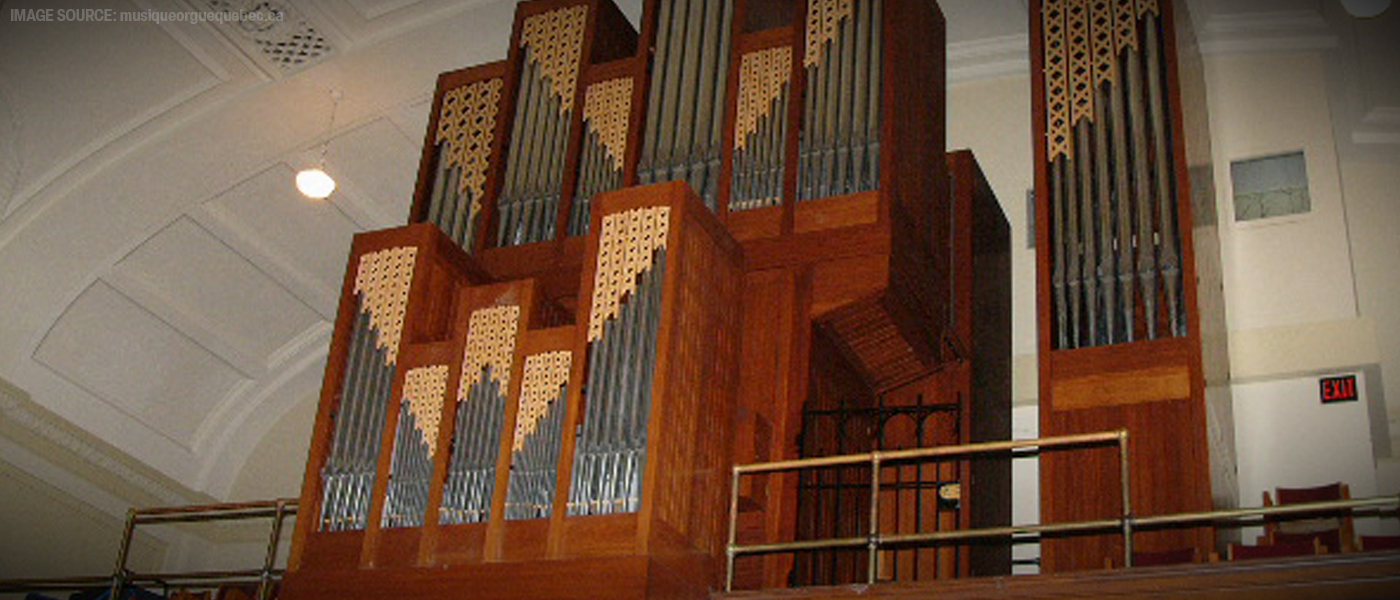
The historic Casavant pipe organ stands in the centre of the University of Alberta's historic Convocation Hall, where an 'inclusive' campaign designed to 'modernize' the room would see it removed from the premises.

They say it’s about modernization. They say it’s about inclusion. But when institutions start tearing out history in the name of progress, people have every right to ask what is really being modernized — and who is being included.
At the University of Alberta, that argument now means removing the memorial pipe organ from Convocation Hall.
Convocation Hall is not just another room on campus. It is one of the university’s most historic ceremonial spaces — a grand early 20th-century hall where generations of students have crossed the stage, families have celebrated milestones, musicians have performed, and the life of the institution has been marked in public.
It's where honourary degrees are awarded. It's where formal ceremonies take place. It's where memory and milestone meet architecture.
The approach to the hall is lined with the names of University of Alberta students and staff who lost their lives in the First World War, giving the space a solemn memorial dimension that goes far beyond bricks and mortar.
At the centre of that setting stands the Casavant pipe organ.
A real concert instrument built by Casavant Frères, one of Canada’s most respected organ builders, known internationally for craftsmanship and installed in cathedrals, universities and concert halls around the world.
For decades, this organ has anchored convocations, recitals, memorial events, student performances, and ceremonies of every kind.
Its pipes, chambers, mechanics, and tonal design were created for that room — it's not separate from the hall, it is part of the hall.
When it sounds, it does more than make music. It fills the chamber with the kind of resonance only a true pipe organ can create — the sound of ceremony, gravity, celebration and continuity.
Now, under the guise of modernization and inclusion, the university is moving to remove it. That is why at SaveThePipeOrgan.com, we are launching a focused email campaign.
We're not emailing random people. This is about reaching the individuals and offices with the power to stop this, review it, or answer for it.
First, we are contacting Dr. William H. Street, Chair of the Department of Music, and Robert Wood, Dean of the Faculty of Arts.
Because if anyone inside the university should understand the artistic, educational and cultural value of this instrument, it is the academic leadership responsible for music and the arts.
Were professors and students properly consulted? Did faculty leadership support this decision? What alternatives were proposed?
How does one justify losing a major teaching and performance instrument built specifically for this venue?
And most importantly: if the people entrusted with music and the arts will not defend one of the university’s most important instruments, who will?
Silence from those closest to the organ will be interpreted as consent.
Second, we are contacting Kate Chisholm, Chair of the Board of Governors, Bill Flanagan, President and Vice-Chancellor, and the full University of Alberta Board of Governors.
This is no longer just a facilities issue. It is a governance issue. Boards exist to protect institutions from short-sighted decisions, reputational damage and failures of stewardship.
Were they fully informed of the heritage implications? Were alternatives to removal reviewed? Were alumni, donor, and public reactions considered? Was consultation required?
Do they support dismantling a memorial and cultural asset under the branding of modernization?
The board needs to understand that they are not merely custodians of budgets and construction schedules; they are custodians of institutional legacy. If this proceeds, it will be remembered not as a renovation success, but as a governance failure.
Let’s also be honest about why this story is important, because it's about more than an organ.
People have watched, for years, the gradual erasure of history through the removal of monuments, symbols and public memory.
Sometimes debates are justified. Sometimes context is needed. But too often, institutions choose subtraction instead of stewardship.
A plaque replaces a monument. A display replaces a living tradition. A press release replaces public debate.
That is what many people see happening here. Accessibility matters. Inclusion matters. Sure, those goals should be pursued seriously and fully.
But accessibility and heritage are not enemies. Serious institutions find ways to protect both. This campaign is demanding exactly that.
Pause the removal, consult the public, protect the memorial character of Convocation Hall.
Because once heritage is gone, it's gone forever.
One email can be ignored. One hundred creates concern. One thousand creates meetings. Five thousand changes outcomes.
So, this is the ask:
- Go to SaveThePipeOrgan.com
- Send the email
Then, forward it to friends, alumni, musicians, veterans, and anyone who believes history should be preserved, not quietly dismantled.
This is not about nostalgia. It is about whether institutions still answer to the people whose history they hold in trust.
Sheila Gunn Reid
Chief Reporter
Sheila Gunn Reid is the Editor-in-Chief, Alberta Bureau Chief, member of the board of directors, and host of The Gunn Show at Rebel News. Sheila also serves as President of the Independent Press Gallery of Canada. A mother of three and longtime conservative activist, Sheila is the author of bestselling books, including her most recent release, Independence Blueprint: What Alberta Can Learn From Quebec.
https://mybook.to/sheilaFeatured Stories

10:48


14:02

COMMENTS
-
Bruce Atchison commented 2026-04-22 19:40:42 -0400People who forget the past are doomed to repeat it. Socialists erase the past and cancel the future for an ever-miserable present.
-
 Fran g commented 2026-04-22 16:09:12 -0400I forget how I learned about this, but when I did, I was upset. So thanks Sheila for bringing this up.
 -
Tony Salotti commented 2026-04-22 07:26:14 -0400Let’s hope they keep it . Good Luck !