


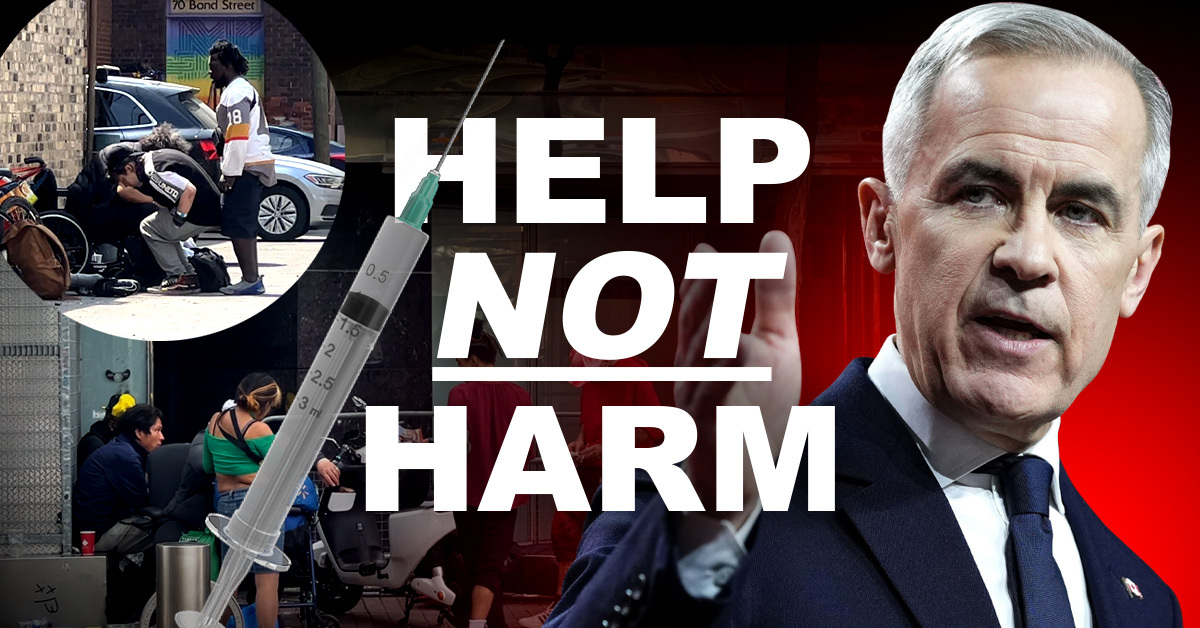

Ontario’s medical regulator backs off safer-supply safeguards without waiting for a judge
The College of Physicians and Surgeons of Ontario froze rules meant to stop prescribed opioids from being resold, the same day the Toronto Overdose Protection Society and two anonymous patients filed a constitutional challenge.


Just minutes before the end of the day on Friday, November 13, the Toronto Overdose Protection Society and two anonymous patients filed a statement of claim in Toronto's Superior Court of Justice against the College of Physicians and Surgeons of Ontario.
The case, file CV-26-00022602-00CP, is classified as civil constitutional law. The patients appear only as "A, A" and "B, B." Their lawyer is Mani Kakkar of Circle Barristers.
That same day, CPSO said it had been served with a legal challenge that included a motion for an injunction, and that it "agreed to pause enforcement" of its new safer-supply prescribing rules to give itself time to respond.
The college's board had previously approved those rules on October 13, with compliance expected by November 16.
No judge had ruled, but the regulator paused enforcement anyway.
The amendments did not prohibit safer supply. Rather, they introduced additional oversight requirements for physicians, including obligations to:
- prescribe it only alongside opioid agonist therapy, such as methadone or Suboxone;
- mark prescriptions "safer supply" and "no carries," meaning doses had to be taken in front of a pharmacist and none could go home;
- assess patients in person at least once a month.
CPSO said the changes were meant to keep prescribed opioids from being diverted onto the street. "The diversion of safer supply medication raises serious concerns for patient and public safety," Registrar and CEO Dr. Nancy Whitmore said when the board approved them.
That concern isn't theoretical. London police said their hydromorphone seizures jumped from just under 1,000 tablets in 2019 to about 30,000 in 2023. Roughly 15,000 of those were Dilaudid, a drug used in safer-supply programs. In July 2024, police said they had found packaging or labelling linking seizures to safer supply in 26 cases, while cautioning that those programs aren't the only source.
As reported, The Ottawa Hospital went looking for a contractor to track whether hydromorphone from its own safer-supply program was leaking onto the street. And in February 2025, British Columbia ended take-home safer supply and required witnessed dosing, citing the same risk.
This intended oversight had its fair share of critics.
An open letter from Ontario Substance Use Healthcare Providers, signed by more than 700 physicians, health-care workers and community members, urged the college to pause and consult first. Others, including Hamilton pharmacist Rami Safi and patient Aaron Simkin, who takes prescribed Dilaudid, said witnessed dosing several times a day would upend work and daily life and could push people back to the street market.
The court record names the lead plaintiff as the Toronto Overdose Protection Society. That's one word off the Toronto Overdose Prevention Society, which opened an unsanctioned pop-up site in Moss Park in August 2017. Public reporting hasn't confirmed that they're the same organization, and the case summary doesn't name the group's leaders or say how it's funded.
This court filing isn't a ruling. If the new rules would harm patients, a judge can say so. If prescribed hydromorphone is being resold to people it was never meant for, the public deserves that hearing too, not a pause that leaves the safeguards unenforced.
Featured Stories

11:20

04:27

