Cabinet claims ‘victory’ on internet tax suspension
Cabinet viewed scrapping the internet tax as part of active negotiations with the U.S. on trade, despite Carney admitting it was a concession.

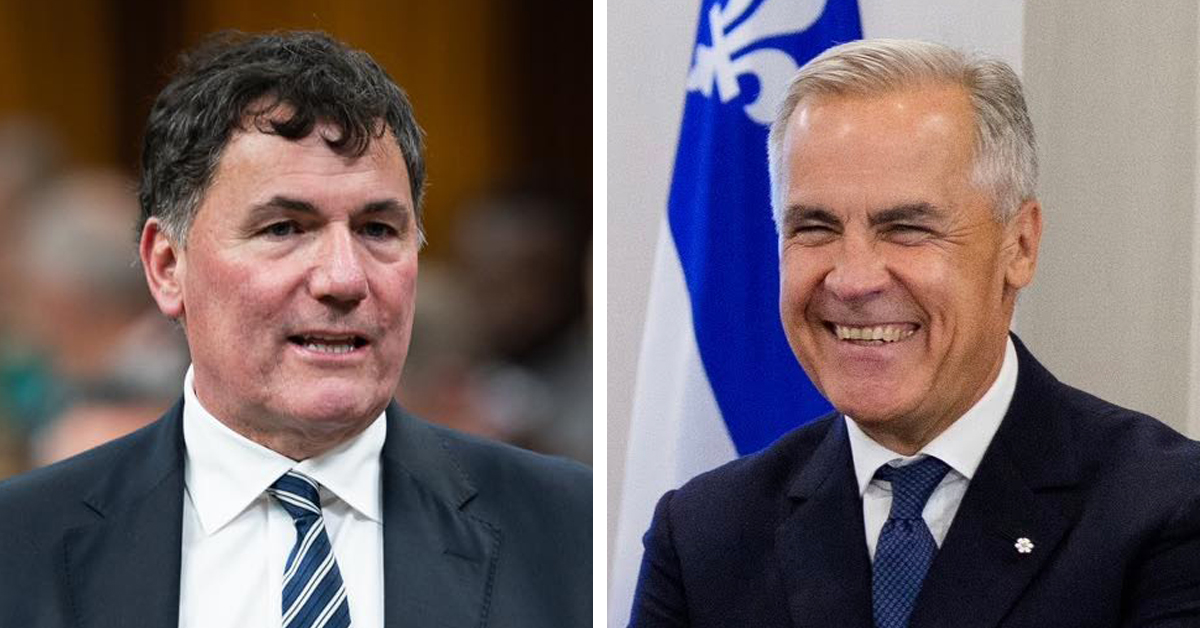
Intergovernmental Affairs Minister Dominic LeBlanc denied that suspending the $3.7 billion Google tax, opposed by U.S. President Donald Trump, was a concession to the White House, stating it was in the nation's best interest.
That contradicts Prime Minister Mark Carney's admission that Canada gained nothing from pledging to repeal its internet tax.
"Did you get anything in exchange?" a reporter asked Carney on June 30. "It is part of a bigger negotiation," replied Carney. "It is something we expected."
As reported by Blacklock’s, LeBlanc testified that suspending the Digital Services Tax Act was discussed with American officials, as part of “ongoing conversations that go back months.”
PM Carney says his government will "get the best deal for Canadians" in trade negotiations with the US after backing down on imposing a Digital Services Tax on American firms.
— Rebel News (@RebelNewsOnline) July 2, 2025
"We are making progress," he claims. pic.twitter.com/F0lw2MkXFw
Conservative MP Adam Chambers questioned Canada's approach, citing numerous concessions to the Americans, including scrapping the digital sales tax, removing tariffs (some disclosed only after the election), and withdrawing softwood lumber complaints.
During Thursday's Commons trade committee testimony, MP Chambers asked LeBlanc to name one American concession. LeBlanc replied, "I understand you refer to these as concessions."
LeBlanc views this as active negotiation, while Chambers argues they're purely concessions.
The minister clarified, “I’ve called them decisions we make in the best interest of continuing a discussion with the United States that will hopefully get to the agreement.”
Canceling $4B @Google tax targeted by Trump was no concession @DLeBlancNB assures MPs: "I don't think I've called them concessions; I've called them decisions." https://t.co/bkQSHEU1fI @AdamChamb @CanadaTrade pic.twitter.com/Vc0jTYMihb
— Blacklock's Reporter (@mindingottawa) October 3, 2025
Cabinet consistently promoted the internet tax, first detailed in a 2021 Ways And Means Motion by then-Finance Minister Chrystia Freeland, as beneficial for Canada's finances. The Budget Office's 2023 report, Digital Services Tax, projected the tax would generate $3.7 billion in its initial two years.
The Digital Services Tax Act, imposing a 3% charge on large multinationals, was abandoned by Cabinet at 10:38 pm Eastern on Sunday, June 29, just prior to its first payments due Monday, June 30.
Critics warned Canada that its internet tax could raise prices for consumers and be a barrier to U.S. digital service exports, according to a January 6 Congressional Research Service report, Canada's Digital Services Tax Act.
A February 13 White House Fact Sheet stated that Canada and France collected over $500 million annually from American companies through these taxes.
PM Carney announces Canada will drop its retaliatory tariffs against the United States.
— Rebel News (@RebelNewsOnline) August 22, 2025
Starting next month, Canada will "match the United States" and remove tariffs "on US goods specifically covered" under the existing USMCA trade deal, Carney says. pic.twitter.com/KIGdUBfK4i
Cabinet confirmed the tax would not be collected, stating Finance Minister Francois-Philippe Champagne would soon introduce legislation to rescind the Act.
Champagne, despite recent support for the internet tax, backed Carney. He admitted rescinding the Digital Services Tax Act would advance a "new economic and security relationship" with the United States.
Prime Minister Carney suspended the internet tax, stating it "doesn't make sense to collect tax from people and then remit them back," adding that the decision "provides some certainty." Carney and President Donald Trump missed a July 21 trade deal deadline.
White House press secretary Karoline Leavitt stated that Canada dropping the internet tax was a "big victory for our tech companies and our American workers here at home." She added that Carney "caved" to Trump, who "knows how to negotiate."
On August 22, Carney revoked most counter-tariffs, except for steel, aluminum, vehicles, and autoparts, claiming Canada “has the best trade deal with the United States.”
He initially pledged to eliminate counter-tariffs on U.S. goods "specifically covered under CUSMA," matching Trump's 35% tariffs on Canadian goods outside the agreement. However, the official order shows Canada's counter-tariffs are not reciprocal, as CUSMA non-compliant products are exempt, contrary to earlier federal government statements.
Alex Dhaliwal
Journalist and Writer
Alex Dhaliwal is a Political Science graduate from the University of Calgary. He has actively written on relevant Canadian issues with several prominent interviews under his belt.


COMMENTS
-
 Bernhard Jatzeck commented 2025-10-04 00:43:55 -0400Ah, yes, the “he who fights and runs away, lives to fight another day” argument…..
 -
Bruce Atchison commented 2025-10-03 18:00:18 -0400What utter propagandist liars the Liberals are! It was Trump who got them to drop the Internet tax, not the lying Liberals.