


Leaders’ Debates Commission won't define journalism amid legal dispute with Rebel News
Without a legal definition or regulation, journalism remains a profession shaped by practice, not law, says a parliamentary report.

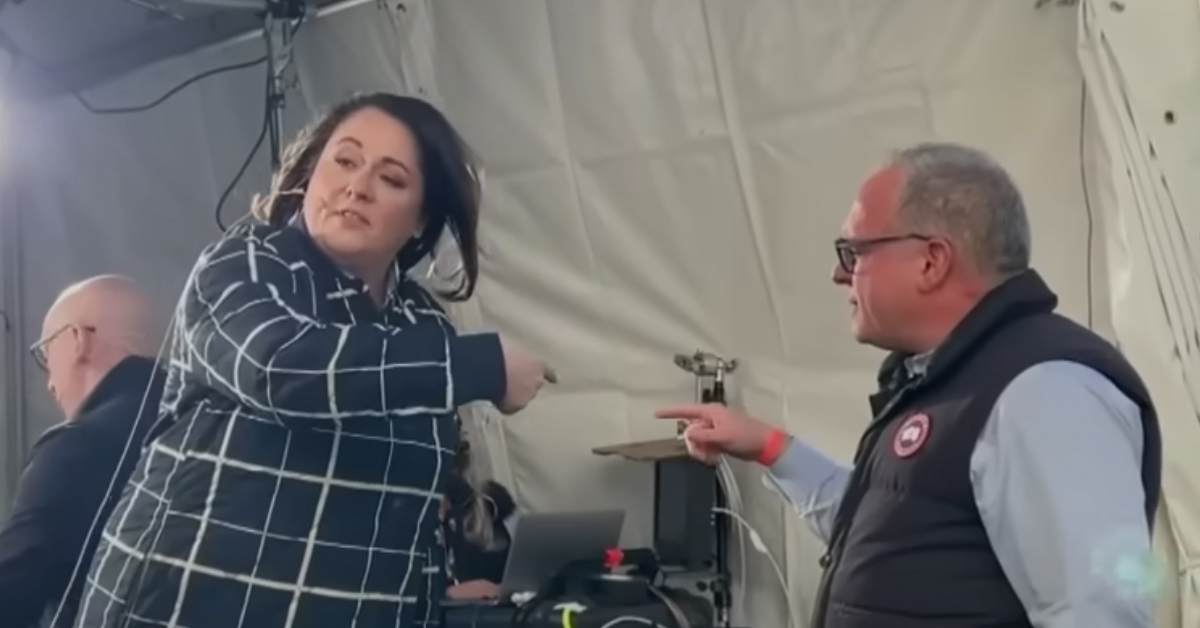
The Leaders' Debates Commission will not define "journalism," stating it has no business doing so after being cited twice for arbitrary definitions, according to a report to Parliament.
“It is neither the Commission’s role nor its responsibility to attempt to legally define what constitutes journalism,” said the report Debates: Democratic Exercises Serving The Voting Public. “This is a wider societal issue, and the leaders’ debates are not the forum in which to litigate this.”
This report only surfaced after court proceedings in which a Federal Court judge ruled the attempted ban of Rebel News from the 2019 and 2021 federal leadership debates as "unreasonable," "procedurally unfair," and "troubling."
According to Blacklock’s, the report emerges amid the ongoing resultant dispute between Commission lawyers and Rebel News.
In 2025, Rebel News was finally accredited by the Commission following a court ruling, but faced criticism from other journalists. CBC's Rosemary Barton accused the media outlet of spreading “misinformation” on April 16, a claim later corrected by the CBC Ombudsman.
The Debates Commission's attempt to establish accreditation methods from various media organizations, including the Independent Press Gallery (which accredits Rebel News), failed to reach a consensus.
Democratic Exercises highlighted a lack of consensus on the definitions of a media organization, journalism, and journalists, noting that journalism is not a regulated profession with a legal definition.
Critics, including the Green Party, have called for the Commission to be disbanded and are notably challenging their 2025 debate disqualification in Federal Court.
The CBC lied about Rebel News for hours. And when I went to ask for the right to reply, they refused and lied about me more. Their lies were so bad even the debates commission didn’t believe them.
— Ezra Levant 🍁🚛 (@ezralevant) April 22, 2025
David Cochrane & Rosemary Barton are deeply unethical. pic.twitter.com/8Nekse68vj
Prime Minister Mark Carney supported the Commission's work, stating leaders shouldn't question its decisions, as it's for Canadians, not for him, to directly comment on.
A reporter questioned the value of the Leaders' Debates Commission. Carney responded, "I think there’s value in having an independent body that sets the rules." The Commission, created by cabinet in 2018 and led by former CBC manager Michel Cormier, largely controls national debates.
Trust in Canadian news media has significantly declined in recent years, with Public Opinion Research Tracker data indicating negative views on quality, variety, and depth. Statistics Canada ranks reporters as less reliable than politicians and lawyers.
Respondents in Credibility Attacks, a separate but related report, revealed frequent accusations towards the media of political bias (56%), incompetence (54%), and unethical behaviour (46%).
During the election, the CBC's own ombudsman reported a surge in complaints, exceeding the previous three months combined, which could be attributable to outrage over the way they hosted the leaders' debates earlier this year.
Viewers criticized the debate, with one describing the treatment of independent journalists as "denigration" that "needs to stop," while another called it "discriminatory, puerile, and unprofessional."
The CBC ombudsman acknowledged that "many complaints were found to have merit" but provided no specifics or accountability for their reporters.
CBC contributor refuses to apologize over misinformation!
— Alexandra Lavoie (@ThevoiceAlexa) March 18, 2025
Once again, the mainstream media has been caught lying—this time about Rebel News. When confronted, CBC contributor Chantal Hébert preferred to run away.
Who still blindly trusts the mainstream media? Chances are, not… pic.twitter.com/kZXeLSR2Tc
Former Ombudsman Jack Nagler cautioned against relying on any single source, including the state broadcaster, for complete information.
Nagler notes that journalists are not experts. "Their mission is simply to give the rest of us information that we can consider as we form our own opinions."
"We aren't hearing enough conflicting information," Nagler added, noting the problem of "news silos" or "information bubbles" that have emerged in recent years.
Alex Dhaliwal
Journalist and Writer
Alex Dhaliwal is a Political Science graduate from the University of Calgary. He has actively written on relevant Canadian issues with several prominent interviews under his belt.
Featured Stories
04:41

08:26


COMMENTS
-
Bruce Atchison commented 2025-10-09 15:44:11 -0400Socialists don’t like truth-telling journalists. They only reward line-towing propagandists.
-
 Bernhard Jatzeck commented 2025-10-09 00:41:05 -0400“I don’t know much about journalism, but I know it when I see it.” Uh-huh….