Manitoba premier calls out U.S. ‘ambulance chasers’ for criticizing wildfire management
Congressman Tom Tiffany says that “preservationist” policies, influenced by corporate environmental groups, caused forest management failures in Canada and the United States.

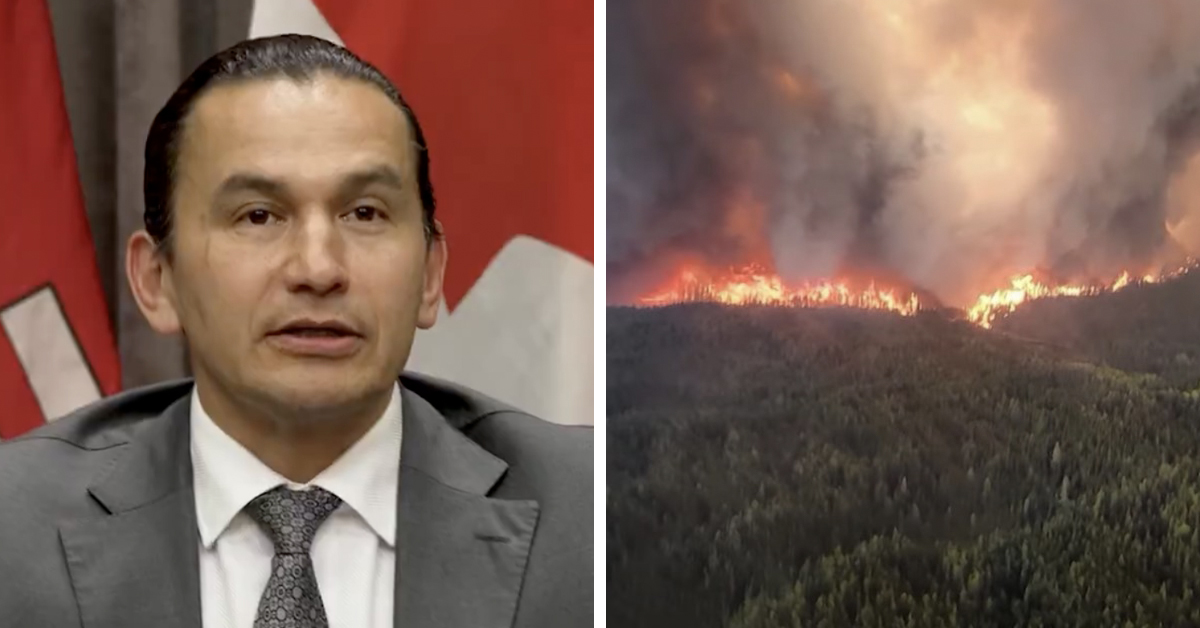
Manitoba Premier Wab Kinew criticized two U.S. congressmen who requested that Canada improve forest fire management, citing smoke heading south. Experts told CBC that Canada is also impacted by wildfire smoke originating south of the border.
“I’ve shaken the hands of American firefighters helping us in northern Manitoba,” Kinew stated July 10, “and I would challenge these ambulance chasers … to do the same.”
Kinew criticized lawmakers Tom Tiffany and Brad Finstad for trivializing Canada’s deadly wildfire season, cautioning not to "throw other people under the bus during a state of emergency."
The premier declared another province-wide state of emergency on July 10 due to northern wildfires, following a similar declaration in late May, with at least two people having died so far this year.
I met American firefighters up north who came to help - and they had nothing but praise for Manitoba.
— Wab Kinew (@WabKinew) July 10, 2025
To those in U.S. Congress trying to score points off our wildfire crisis: now’s not the time.
People are grieving. Communities still at risk. Let’s focus on helping. pic.twitter.com/5AY95dxotK
On July 7, two Republican congressmen from Wisconsin and Minnesota wrote to U.S. Ambassador to Canada Kirsten Hillman, stating their constituents were forced to deal with “suffocating Canadian wildfire smoke.” Four other Republicans also signed the letter.
Tiffany and Finstad questioned Ottawa's wildfire mitigation plans and the lack of active forest management in Canada, which they believe is a "key driver" of fires and smoke drifting south.
“With all the technology that we have at our disposal, both in preventing and fighting wildfires, this worrisome trend can be reversed if proper action is taken,” the letter said.
Natural Resources Canada told the Epoch Times that the U.S. and Canada have a "long history" of wildfire cooperation, exchanging resources and personnel. The agency attributes wildfires to "climate change, including prolonged drought."
"Canada takes wildfire prevention, response, and mitigation very seriously," the Canadian Embassy stated, forwarding the letter to relevant agencies for a response.
Wildfires have burned 5.4 million hectares as of July 15, causing ongoing poor air quality in parts of Canada and the United States.
CBC confirmed firefighters, first responders, and volunteers "continue to work tirelessly to protect lives and property" from wildfires. Of Manitoba's 297 fires this year, 126 were human-caused, 166 natural (lightning), and five remain under investigation, according to government data.
According to the Canadian Interagency Forest Fire Centre, there are 566 active fires across Canada, with 13 new fires starting on July 15.
Lightning started roughly half of them last year and burned the most area, according to the Canadian National Fire Database. That remains the case for Manitoba this year as well.
90% of Manitoba, Saskatchewan wildfires are human caused, says gov't data
— Rebel News (@RebelNewsOnline) June 3, 2025
Preliminary data for this year indicates that most wildfires in Manitoba and Saskatchewan have been human-caused, though their impact on the total area burned is yet unknown.https://t.co/J1rn21s5u2
Last Thursday, Foreign Minister Anita Anand responded to the letter, referencing the G7's unified statement on fighting forest fires and the Kananaskis Wildfire Charter, an agreement pledging co-operation on wildfire prevention and mitigation.
Manitoba’s Assistant Deputy Minister Kristin Hayward clarified that there are 25 emergency responders from Minnesota aiding the current response.
Congressman Tiffany told Rebel News that improper forest management is not just happening in Canada but parts of the U.S. too. Wildfire smoke from California and Washington has also impacted air quality in Western Canada.
Tiffany explained that "preservationist" policies, influenced by corporate environmental groups, caused forest management failures by halting logging, damaging both the economy and environment. He proposed "conservation and management" as superior methods, deeming the "preservationist mindset" ineffective.
Canada has used prescribed burning—controlled fires that burn fuel on forest floors—as a mitigation tactic. This undercuts the intensity of future wildfires and makes them easier to control, according to Parks Canada.
In 2023, Canada had a particularly destructive wildfire season, with smoke causing dangerous air quality across Canada and the U.S., leading to school closures, event cancellations, and increased hospitalizations.
Alex Dhaliwal
Journalist and Writer
Alex Dhaliwal is a Political Science graduate from the University of Calgary. He has actively written on relevant Canadian issues with several prominent interviews under his belt.


COMMENTS
-
 Fran g commented 2025-08-02 16:49:27 -0400Agree with Bruce, but dont forget Manitoba premier is Liberal, so thats a problem
 -
Fran g followed this page 2025-08-02 16:48:17 -0400
-
Bruce Atchison commented 2025-07-15 19:51:05 -0400Those two congressmen are right, not Manatoba’s premiere. Poor forestry practices led to a pile of branches and dead trees to become fuel for raging fires. And we in Alberta suffer from American forests burning.