



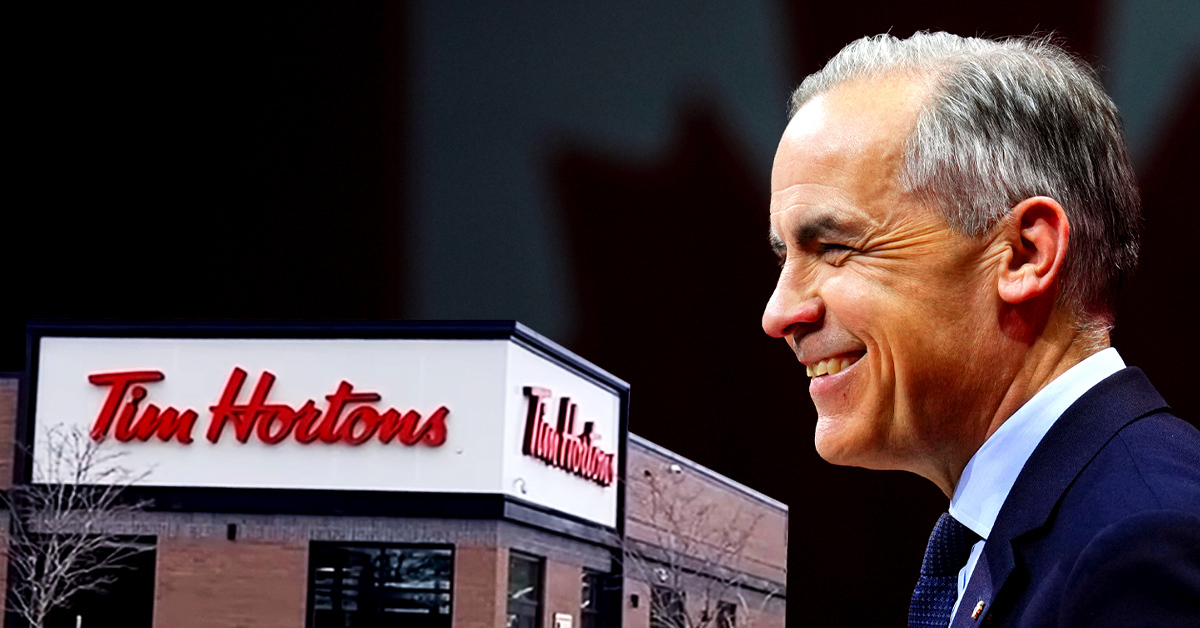

Tim Hortons claims to prioritize hiring Canadians but job postings tell a different story
It’s a Canadian icon in name only, flooding stores with temporary foreign workers while Canadian youth hunt for entry-level jobs.

Tim Hortons has positioned itself as a Canadian icon, wrapping itself in the flag while simultaneously lobbying the government to expand and entrench the Temporary Foreign Worker (TFW) program.
Lately, it seems Tim Hortons has been feeling the fall out of their deteriorating brand.
As Dunkin’ Donuts announces its expansion into Canada, the once Canadian staple now claims it will commit to hiring local — whatever that means.
However, their active job listings on the government of Canada’s Job Bank tell a difference story.
Tim Hortons currently has roughly 800 active postings recruiting temporary foreign workers across the country, including management roles paying up to $36 per hour. One such posting for the rural, southeastern Ontario Havelock location was removed only recently.
As Rebel News continues to expose Tim Hortons’ heavy reliance on the TFW program — which is nothing against the workers themselves who are simply navigating a system ripe for exploitation — this has triggered tough questions about corporate priorities while Canadian youth struggle with a growing jobs crisis.
One in five young Canadians report being unable to find an entry-level job, and positions such as a counter worker at Tim Hortons used to give those entry-level opportunities to youth. Instead, many locations now appear dominated by temporary, foreign staff.
Street interviews at the Tim Hortons location in Havelock revealed strong public sentiment toward hiring Canadians first.
“I think it’s terrible,” said one patron, on the influx of foreign labour. “We’ve got to stay true to our core as well. When we lose the balance, we fail as a humanity.”
Another local resident observed: “I just know that these are the type of positions that kids can start off working… I go to my local Tim Hortons, I don’t see that population being represented.”
Several interviewees admitted they now avoid the chain when possible, citing a feeling that it has become “foreign” to them and lamenting the lack of alternatives in rural areas with drive-thrus.
One current employee confirmed the skewed staffing reality, noting scheduling practices that place more English-speaking staff during the busy morning rush, with TFWs often assigned to later shifts.
Tim Hortons has responded to this scrutiny not with greater transparency, but by trespassing Rebel News journalists, including Ezra Levant and David Menzies, across multiple locations.
During this Havelock report, Ontario Provincial Police were dispatched after store owners complained that two female journalists were speaking to customers.
This is another perfect example of how Tim Hortons locations are abusing resources, especially in a small community without it’s own police force.
Canadians already pour hundreds of millions of dollars into the TFW program every year, and now they’re forced to foot the bill for police to handle fallout from critical media coverage too.
As Canada enters a ‘technical’ recession and youth unemployment is rising, the core issue remains pretty straightforward: entry-level service jobs that once built work experience for Canadian teens and young adults are now being sidelined by a federal program meant for genuine labour shortages.
“Put Canadians first,” was the repeated message from the sidewalk.
“Hire Canadians before foreign workers. I don’t have anything against people coming to our country… but it also shouldn’t be on the backs of Canadians. And especially Canadian youth.”
Tim Hortons’ actions continue to test whether a national brand still believes its future lies with the communities it serves or with cheaper, temporary labour that undercuts them.
The public is watching.



COMMENTS
-
Bruce Atchison commented 2026-06-05 19:23:53 -0400Tim Horton’s deserves to be boycotted. A drop in sales will show them something’s wrong. Maybe they’ll get a clue. Money talks so customers need to walk.

