

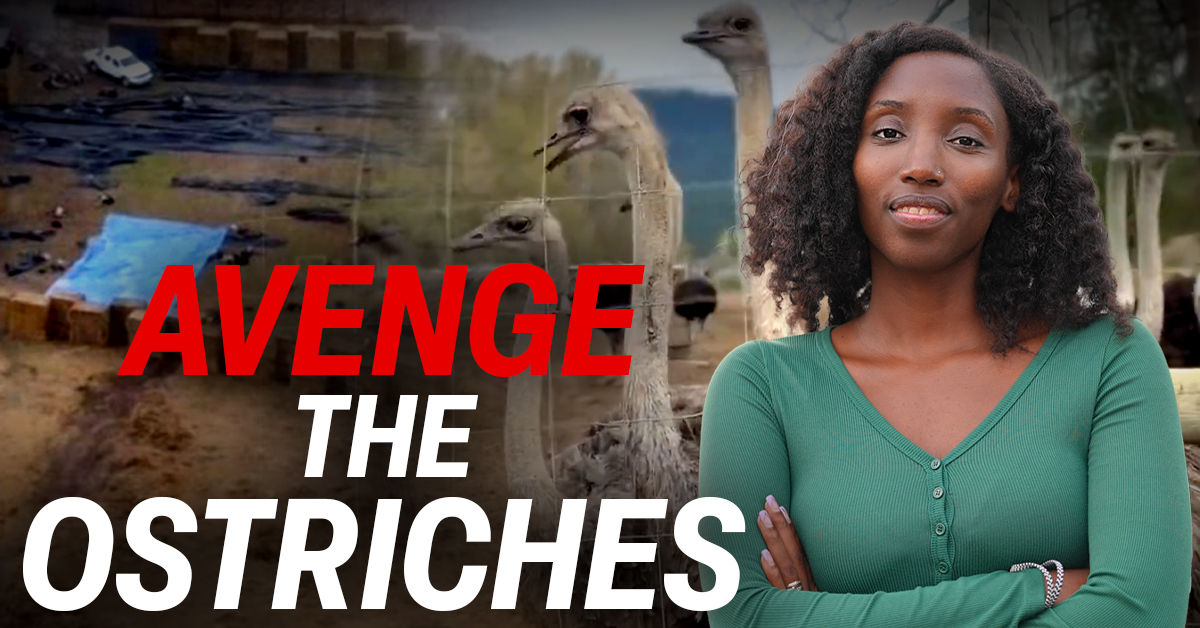

Expert says deceased ostriches ‘probably weren’t infected’ with avian flu at time of cull
The federal agency wouldn't detail the planned cull of Edgewood, B.C. ostriches, part of its "stamping out" policy against avian flu.

Infectious disease veterinarian Scott Weese suggests the hundreds of ostriches killed by the Canadian Food Inspection Agency (CFIA) this month “probably weren’t infected” with avian influenza at the time of the cull.
“We don’t really know” if the H5N1 avian flu virus, detected in the flock of over 300 ostriches, was fully controlled, says Weese, an infectious disease expert at the Ontario Veterinary College. Logistical challenges hindered rigorous testing, and simply “hoping for the best” to manage the virus — which is what would have been done — is not a control strategy.
Experts like Weese question the CFIA's methods and transparency regarding the Nov. 6 cull, an action still being protested by the owners and supporters of Universal Ostrich Farms in southeastern B.C.
Weese told the Canadian Press that this case raises valid questions about CFIA methods and offers lessons. He emphasized that greater CFIA transparency is vital to “rebuild trust” and combat public “mistrust” and “misinformation.”
The federal agency wouldn't detail the planned cull of Edgewood, B.C. ostriches, part of its "stamping out" policy against avian flu. This policy, which has killed millions of poultry, aims to protect human/animal health and Canada's $6.8 billion poultry industry and $1.75 billion in exports.
The farm stated their ostriches were for scientific advancement, not consumption.
Despite the CFIA defending the use of professional marksmen as “the most appropriate and humane option,” Weese found the “gunfire thing certainly wasn’t appealing” and urged the agency to explain the expert-advised alternatives that were ruled out.
U.S. experts and industry leaders, including the American Ostrich Association (AOA), contradict Ottawa's stance, asserting ostriches are not chickens and should not be subject to blanket kill orders. The AOA has formally requested the U.S. Department of Agriculture to cease issuing them.
An October 2024 letter to U.S. Agriculture Secretary Robert F. Kennedy Jr. argued that ostriches are fundamentally different from conventional poultry due to their biology and immune systems. They don't migrate or fly, and infected birds have a high recovery rate with minimal zoonotic risk.
On his “Worms and Germs Blog,” Weese noted that while the farmers “handled it horribly,” the disease spread from the outbreak was minimal. However, he emphasized the high risk of H5N1 mutating to easily spread among humans.
“We just got lucky,” Weese stated after the cull, warning against the continued presence of a “high consequence infectious disease that has pandemic potential.” While highly pathogenic avian flu usually disappears after eradication, he noted the persistent global spread of the H5N1 subtype since late 2021, emphasizing “it hasn't gone away.”
Joselynn, a Fraser Valley teen and Canada's first confirmed human H5N1 case, publicly condemned the cull, previously telling Rebel News: “Let them live. They don't deserve to die, they didn't do anything.”
B.C. currently has 28 infected premises, primarily commercial poultry farms in the Fraser Valley, along migratory routes. Since 2022, CFIA reports 266 provincial outbreaks, resulting in over 9.6 million culled or dead birds.
VIDEO: CFIA appears to have finished killing the ostriches at at Universal Ostrich Farms https://t.co/ds2VPQPlyY pic.twitter.com/PPRzYCTFa4
— Syd Fizzard 🍁 (@SydFizzard) November 7, 2025
Regarding Universal Ostrich Farms, an anonymous tip led to a CFIA quarantine on Dec. 28, 2024, following 69 reported ostrich deaths. Avian flu confirmation in two dead ostriches on Dec. 31 prompted an immediate CFIA cull order.
The farmers challenged the cull order in court, arguing the birds had “herd immunity,” making them scientifically valuable. They rallied supporters both online and in person, characterizing the order as government overreach.
Their fight gained international attention when U.S. Health Secretary Robert F. Kennedy Jr. asked the CFIA to reconsider. However, the Supreme Court of Canada dashed their hopes on Nov. 6 by refusing to hear their case.
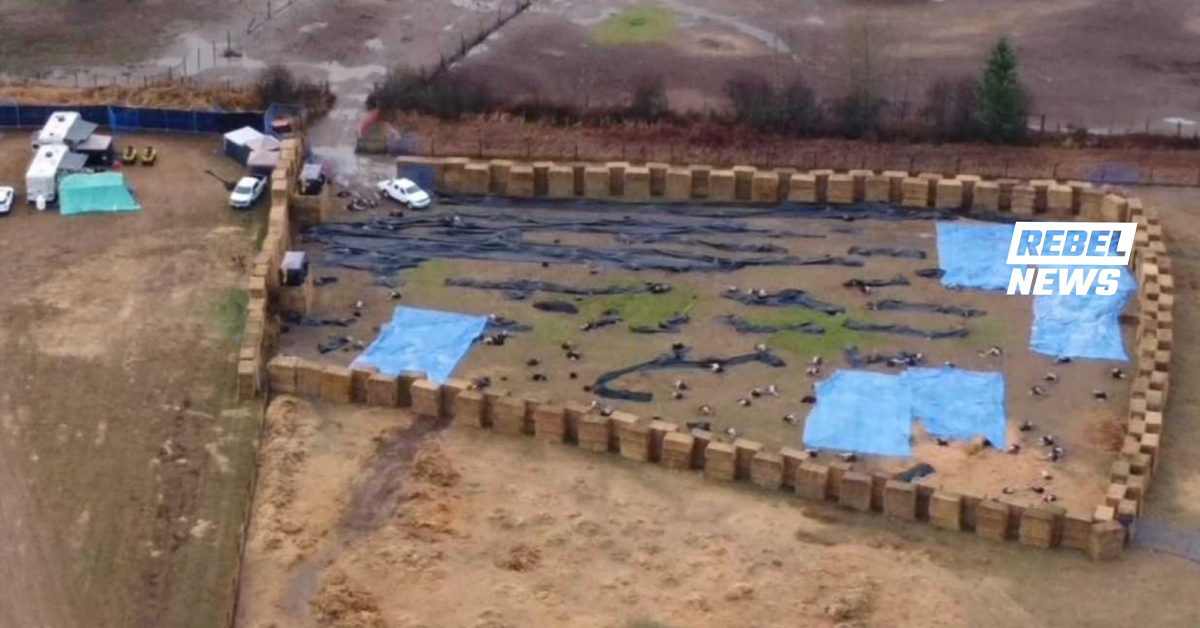
The cull began that night around 6 p.m., with gunfire heard from the large hay-bale pen built by CFIA officials.
Katie Pasitney of Universal Ostrich Farms called the shooting inhumane, telling Rebel News that the flock, which her family had raised for 35 years and hatched most of the birds, had been “murdered by cowards.”
“We knew them, we named them, [and] we loved them,” she continued, adding “they were murdered a couple nights ago [...] by cowards.”
Ignoring the farmer's claim of an inhumane cull, the CFIA instead pointed to a Nov. 13 statement confirming operations were finished, the ostriches were “deep burial”-disposed in a B.C. landfill, and disinfection protocols were given to the farmers.
Alex Dhaliwal
Journalist and Writer
Alex Dhaliwal is a Political Science graduate from the University of Calgary. He has actively written on relevant Canadian issues with several prominent interviews under his belt.
Featured Stories


13:57


COMMENTS
-
 Bernhard Jatzeck commented 2025-11-19 22:03:29 -0500Oopsie….. (Yeah, right.)
 -
Bruce Atchison commented 2025-11-19 19:20:11 -0500It’s the CFIA who are garbage, not the ostriches. And I hope that anonymous complainer will be outed. Usually such people hold a grudge and cease on any opportunity to get revenge on their rival.

