
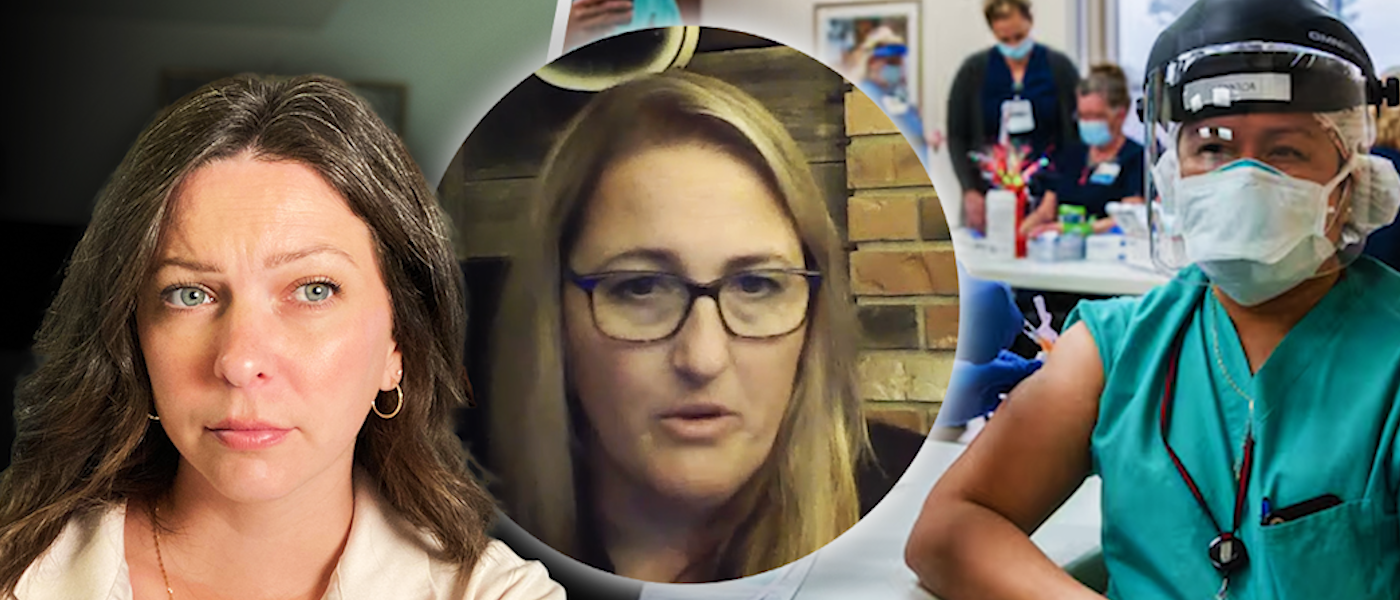


Former Alberta investigator exposes federal 'behavioural engineering' behind Canada’s pandemic response
The COVID-19 pandemic exposed a critical insight that was happening behind closed doors, mechanisms of persuasion and grooming that were designed to address far broader challenges beyond just the virus itself.

When Alberta-based medical and regulatory investigator Natasha Gonek lost her job over COVID-19 vaccine mandates, she didn’t retreat—she began digging. With a career steeped in sudden-death investigations, regulatory oversight of health professionals, and occupational health and safety, Gonek turned her investigative eye toward Canada’s pandemic response.
What she found, she says, was a disturbing pattern of behavioural manipulation, suppressed data, and top-down decision-making that bypassed public scrutiny.
“I was one of the casualties of the COVID measures and employer mandates,” Gonek explains. “That actually gave me a lot of spare time, and I used it to research and really dive in.”
Before the pandemic, Gonek worked with Alberta’s Office of the Chief Medical Examiner and as a regulatory investigator for healthcare misconduct. “My background has been extremely heavy in the medical side—investigating medical practices, errors, procedures, and policy,” she says. “Seeing when things don’t add up is what I’ve always done.”
That skillset made her a rare insider with a front-row seat to pandemic policy as it unfolded. In her work with frontline healthcare professionals, she began hearing firsthand accounts from nurses and doctors about stark differences between what was happening on the ground and what the media was reporting. “Those were very substantial red flags,” she says. “The way the narrative was groomed was quite substantial.”
One of Gonek’s earliest discoveries was a 2020 Alberta Health Services document titled Attitudes and Adherence to COVID Measures—a “behavioural nudge” strategy. “I flagged that to employers very early on,” she recalls. “They shouldn’t be putting out documents like that.”
From there, Natasha’s work expanded. Using access-to-information requests, she traced layers of working groups, committees, and advisory boards—such as the COVID-19 Immunity Task Force—directly back to federal ministries. “You had the vaccine vigilance working group, the vaccine surveillance working groups, causality committees for vaccine injuries, coroners and medical examiners working groups. Layers and layers. But who were they reporting to?”
The answer, Gonek says, points to Canada’s highest offices—the Privy Council, Health Canada, the Public Health Agency of Canada, and the Ministry of Innovation, Science and Industry. Many of these advisory boards were packed with industry insiders. “These were people in the vaccine industry on that COVID-19 immunity task force group,” she says. “They were directing funding for biotech companies, for vaccine options, and even for communication strategies to address vaccine hesitancy.”
Internal government documents from summer 2020, which Gonek has archived, reveal a behavioural approach focused on persuasion rather than transparency — months before the rollout of the novel mRNA injections. “They were grooming those messages in July and August of 2020 to ensure there wasn’t vaccine hesitancy,” she says. “They were talking about how to robustly handle disinformation campaigns while admitting in the same meetings they didn’t have long-term evidence.”
The potential implications of this are serious; skirting informed consent for psychological conditioning and manipulation.
Which leads Natasha’s findings to law enforcement. At the request of sworn members of the Edmonton Police Service, Gonek reviewed 9,000 pages of FOIP documents showing that police leadership knew pandemic measures could not withstand a legal test—yet implemented them anyway. “Our law enforcement’s health was compromised because of the measures put onto them,” she says. “If your police leadership had knowledge of this, they can’t be the ones to investigate. We need independent investigators.”
For Gonek, the issue goes far beyond COVID-19. “If you believe it’s over, you obviously haven’t been to a care home or hospital,” she warns. “Long-term care facilities are still locking patients down over a single PCR test. COVID just demonstrated a bigger issue—these mechanisms were put in place to handle more than just COVID.”
Despite mounting disclosures and mounts of archived documents, Gonek notes that federal agencies are increasingly redacting officials’ names from documents previously released unredacted. “That tells me people are worried they’ve done something wrong and don’t want their name attached,” she says. “But where was the concern about the general public?”
Even courts and oversight bodies succumbed to top-down directives, making accountability seem increasingly elusive. When the courts are compromised and law enforcement stays silent, where is the public left to turn? For now, Natasha and others are quietly archiving evidence, confident the time for reckoning will come.
“You don’t get to just move on when we have so many people hurt and suffering,” Gonek concludes. “This isn’t a witch hunt, but we do need to address that there were decisions made and people harmed. That needs an investigation.”
Natasha has publicly shared her documents here. For those with additional information or wishing to connect, please contact her at [email protected].
Featured Stories

03:31
10:27


COMMENTS
-
 Fran g commented 2025-10-03 19:35:42 -0400I love people like Natasha, excited there are many people tracking down info to make these people accountable. Some should be striped of their career, and others should be in jail.
 -
Bruce Atchison commented 2025-10-01 22:59:50 -0400What a psy-op the whole COVID panic-demic was. It’s time to expose this far and wide.
