

NDP MP threatens residential school ‘deniers’ with jail
Bill C-254 proposes a maximum two-year jail sentence for publicly promoting hatred against Indigenous people.

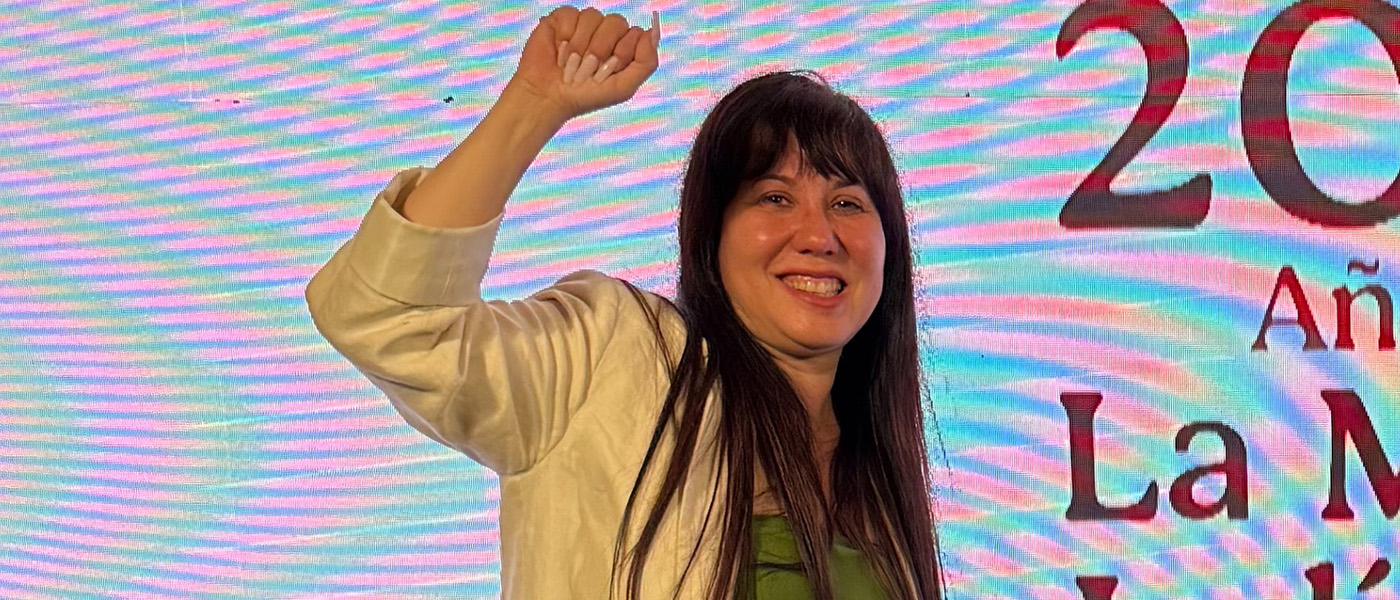
Canadians could face jail time for "justifying the Indian Residential School system" under an NDP bill introduced by MP Leah Gazan, who stated the maximum penalty is necessary to "end Residential School denialism."
Bill C-254, An Act To Amend The Criminal Code, proposes a maximum two-year jail sentence for publicly promoting hatred against Indigenous people by denying, downplaying, condoning, or justifying the Indian Residential School system, or misrepresenting facts. Exceptions are made for truthful statements or those relevant to public interest.
Bill C-254, identical to the lapsed 2024 Bill C-413, completed its First Reading Friday, according to Blacklock’s.
The RCMP's eight-year investigation into B.C. residential schools confirms no evidence of murders or clandestine burials, according to the Real Indigenous Report.https://t.co/SFy1yyDvvt
— Rebel News (@RebelNewsOnline) September 2, 2025
Gazan dedicated the bill to residential school survivors, stating that awareness of "truth of violence, loss, and resilience" is vital for national healing and reconciliation, as highlighted by the Truth and Reconciliation Commission (TRC).
In 2015, the TRC called residential schools "cultural genocide," a term accepted by then-Prime Minister Justin Trudeau. Federal agencies then labeled the system genocidal after the alleged 2021 discovery of 215 children's remains at a former Kamloops, B.C. school by Tk’emlups te Secwepemc First Nation.
On Friday, Gazan urged all MPs to support her bill. “As the Truth and Reconciliation Commission reminded us, without truth there can be no reconciliation.”
“Yet today denialism is spreading, twisting facts, denying genocide and reigniting harm,” she added. “It is not only hurtful, it is dangerous.”
Canadians face jail for "justifying the Indian Residential School system" under @NDP bill. Sponsor @LeahGazan says penalties are needed to "end Residential School denialism." https://t.co/JKFC4QWMoC #cdnpoli pic.twitter.com/43ngh0u8tR
— Blacklock's Reporter (@mindingottawa) November 3, 2025
While acknowledging residential school harms, Canadians reject criminalizing debate and prioritize proof over politics. Most Canadians (63%) oppose criminalizing "residential school denialism," a view shared by 45% of Indigenous respondents, despite calls from Special Interlocutor Kimberly Murray and MP Gazan.
Murray, who testified November 28, acknowledged public skepticism about the existence of graves, stating, “It is one thing to say you don’t believe there are burials. That’s your opinion and you can have freedom of speech to say that.”
Murray also condemned denials of Indigenous burials, calling such speech “incitement to hate” against Indigenous people.
However, Tk’emlúps te Secwépemc reclassified suspected Kamloops graves as “anomalies” in May 2024, three years after public outrage, a papal visit, and church damage over the alleged burial site.
The First Nation declared a 2024 Day of Reflection, using language similar to its 2021 declaration but replacing “children” with “anomalies.”
Four years after the initial announcement, and most Canadians still await physical proof. Despite $12.1 million allocated for recovery and analysis, no remains have been exhumed.
Parks Canada emails, obtained via Access to Information, indicate that ground-penetrating radar often produces "false positives" and "anomalies." Therefore, until further investigation, the Kamloops sites should be referred to as "possible graves."
A recent Angus Reid Institute poll indicates 63% of Canadians and 56% of Indigenous respondents believe exhumation is necessary to confirm children's remains at the site. Even among Indigenous respondents, over half in these provinces seek verification for burial claims.
An eight-year RCMP investigation found no evidence of murders or clandestine burials at B.C. residential schools. Investigators found two murder allegations and one clandestine burial allegation to be baseless and unsubstantiated.
Without evidence, claims were difficult to investigate due to the age of incidents (over 60 years), lack of records, and the death of those involved; experts noted wet soil would have destroyed any remains.
Alex Dhaliwal
Journalist and Writer
Alex Dhaliwal is a Political Science graduate from the University of Calgary. He has actively written on relevant Canadian issues with several prominent interviews under his belt.
Featured Stories

10:48


14:02

COMMENTS
-
 Bernhard Jatzeck commented 2025-11-03 21:03:29 -0500So demanding actual physical evidence for the claims is criminal? If her hare-brained schemes goes through, a large portion of this country’s population will become convicts.
 -
Bruce Atchison commented 2025-11-03 19:41:32 -0500What lunatics those NDP folks are! It’s free speech to question the prevailing narrative of the government. Making it a crime to doubt the presence of dead children on boarding school property isn’t hateful. This also shows how evil these socialists are.
-
John Landry commented 2025-11-03 18:51:58 -0500It breaks my heart to know millions of dollars of blood money is being spent on this while living natives need paved roads, clean water and proper housing. The ghouls squabble over souls they do not know, then take the money for political goals. I’m sure if the dead could talk, they would ask for rest
while the living pad the nest. -
 doug w commented 2025-11-03 15:36:25 -0500No one is saying the residential schools were like a summer camp. What ppl are saying is that the claim of 250 bodies buried when there is no evidence of that & they didn’t try to dig and find them. Perhaps the indians who are screaming the most should look in the mirror at the political parties they support, the schools were given the green light by the libs as recently as pee error idiot trudo.