Canada suffers 'significant losses' from improper wildfire management, report shows
Western Canadian wildfires with significant losses are increasing due 'to … historical fire management.'

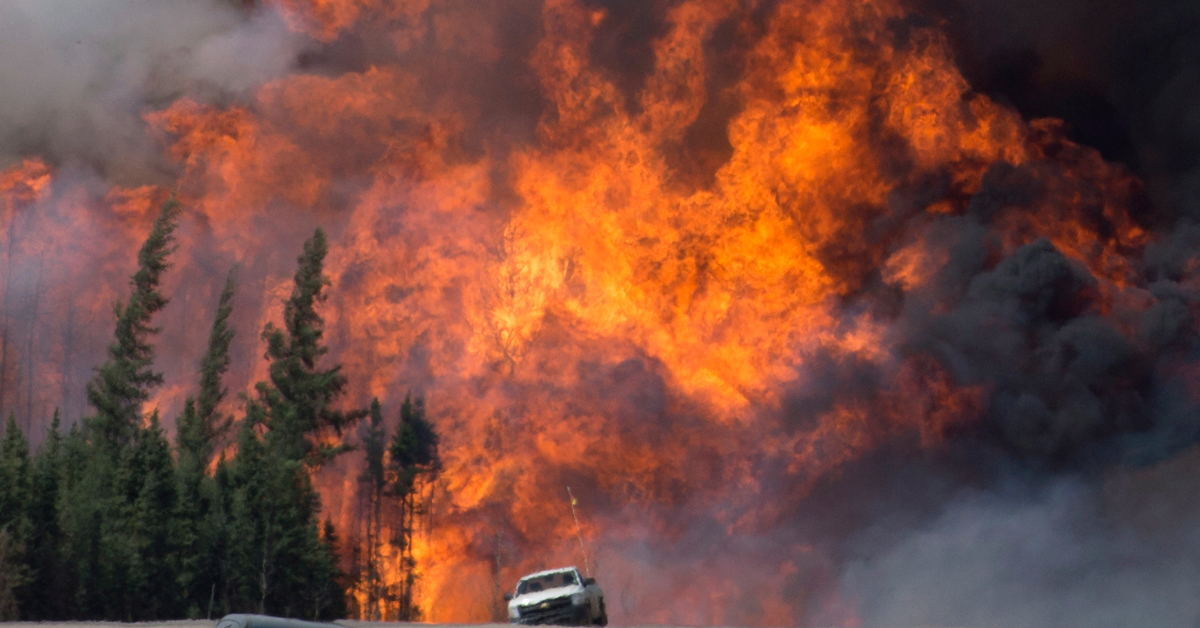
Wildfire costs, including lost timber fees and declining tourism, could reach billions, reports the Department of Natural Resources, following their first attempt to calculate expenses from a random selection of fires.
The report, Estimated Direct And Indirect Costs Of Extreme Wildfires In Western Canada, compiled costs from firefighting, insurance, lost timber, reduced crop production, smoke-related health impacts, and increased risk of flooding or landslides. It cited “numerous gaps in our understanding of wildland fire and its associated impacts in the area of socioeconomic analysis.”
Western Canadian wildfires with significant losses are increasing due “to climate change, historical fire management, and demographic and socioeconomic changes,” reads the report.
.@NRCan attempts first-ever calculation of true cost of wildfires incl. lost timber fees & tourism receipts: "This is a necessary first step to fill a significant gap." https://t.co/RlNUQClpTb @ParksCanada pic.twitter.com/4bpcrkwXjs
— Blacklock's Reporter (@mindingottawa) July 16, 2025
The 2016 Fort McMurray wildfire, one of Canada's largest insured losses, cost $7.2 billion, with over $4 billion in insurance payouts on 44,094 claims for damaged properties and vehicles. More than 88,000 residents were evacuated, according to Blacklock’s.
B.C.'s 2017 Cariboo and Thompson-Nicola wildfires cost $1.86 billion ($132.5 million insured), destroying a million hectares and causing $302.9 million in lost stumpage fees and a 70% drop in tourism revenue.
That follows the 2018 fires in northwest B.C. ($1 billion), the 2015 La Ronge fire in Saskatchewan ($198 million), and a 2014 fire at Kakisa in the Northwest Territories ($89 million).
The report stated ‘climate change’ only partly explained the costly fires, adding that past fire management increased biomass, leading to faster, larger, hotter wildfires. Researchers believe it provides a crucial first step to determining the economic cost of wildfire prevention, mitigation investments, and risk assessments.
“In a changing climate with continued population growth and land development, more frequent events are possible,” reads Costs Of Extreme Wildfires.
Guilbeault says "years of forest management" paid off in Jasper.
— Sheila Gunn Reid (@SheilaGunnReid) July 29, 2024
30% of the town burned.
His own ministry's 2022 Jasper Park Mgmt Plan says not enough was done to clear pine beetle fuel load out of the park. Feds were warned in 2017 about potential for a catastrophe… pic.twitter.com/j7IrALmW5d
Rep. Tom Tiffany recently told Rebel News about improper forest management in Canada and the United States, prompting pushback from Manitoba Premier Wab Kinew.
Tiffany explained that "preservationist" policies, influenced by corporate environmental groups, caused forest management failures by halting logging, damaging both the economy and environment. He proposed "conservation and management" as superior methods, deeming the "preservationist mindset" ineffective.
Canada has used prescribed burning—controlled fires that burn fuel on forest floors—as a mitigation tactic. This undercuts the intensity of future wildfires and makes them easier to control, according to Parks Canada.
However, inaction by agency leadership led to the devastating Jasper, Alberta blaze in July 2024, damaging 30% of the town's infrastructure, revealed a former Park planner.
Who is responsible for the Jasper wildfire destruction?
— Rebel News (@RebelNewsOnline) July 28, 2024
Lorne Gunter from the Edmonton Sun joined @EzraLevant to discuss the policies and people who hold responsibility for the fires that recently burnt down Jasper, Alberta.
Ezra Levant spoke with Edmonton Sun columnist Lorne… pic.twitter.com/8oNE2QY1eG
Peter Scholz, former Jasper National Park senior planner, resigned after five months, blaming Parks Canada and superintendents for explosive fire risk from accumulated dead wood due to pine beetle infestation. Parks Canada offered no comment.
“Not doing your job because of ecoactivists, who now will blame climate change rather than take responsibility for their own willful ignorance regarding proper forest management,” Scholz wrote in a post to LinkedIn.
In 2023, Parks Canada slashed its wildfire preparedness budget by 23%, from $4.42 million to $3.4 million, with no explanation for the cut.
Parks Canada never disclosed how much was removed via controlled burns or clearing. The agency conducted only eight prescribed burns in 2023 across six national parks—down from 28 burns in 2015.
Alex Dhaliwal
Journalist and Writer
Alex Dhaliwal is a Political Science graduate from the University of Calgary. He has actively written on relevant Canadian issues with several prominent interviews under his belt.
Featured Stories

06:06


COMMENTS
-
 Roger Mills commented 2025-07-17 10:29:37 -0400Aaron Gunn did a great documentary; Activists vs Loggers: The War for B.C.’s Old Growth Forests; We used to have many pages thick news papers, the Internet has and electronic data has killed that. E-mail has eliminated more paper being used. There are only so many houses being built. The US has had duties on our soft wood lumber forever. Some trees are being palatalized and being used as fuel to make Electrical Power. Either use the forests for thins and manage well or Mother Nature will have fires and then renew itself.
 -
Robert Pariseau commented 2025-07-16 21:32:40 -0400Indeed, BJ. “Screw the West…”
-
Bruce Atchison commented 2025-07-16 21:23:42 -0400Remember how agitated Ottawa became in 2023 when smoke invaded their isolated bubble? As long it’s the west, Ottawa doesn’t care. Washington seems to be the same way too.
-
Bernhard Jatzeck commented 2025-07-16 20:36:15 -0400Indeed, RP. After all, we didn’t vote “correctly”, so why should the Liberal government do anything for us?
-
Robert Pariseau commented 2025-07-16 19:14:59 -0400Or you can simply say it’s because it’s Western Canada.